
IICRC Water Damage Restoration in Los Angeles: A Homeowner’s Guide
IICRC water damage restoration in Los Angeles follows the S500 Standard and Reference Guide for Professional Water Damage Restoration, which mandates moisture mapping, category classification, written drying goals, and daily monitoring logs on every residential job. A company can claim “IICRC certified” without any of these documents ever reaching your hands. This guide shows you what the standard actually requires so you can tell who’s running to the book and who’s running a marketing line. If you’d rather skip the inspection and get a crew out now, call us at (361) 317-7269 – a live person answers, 24/7.
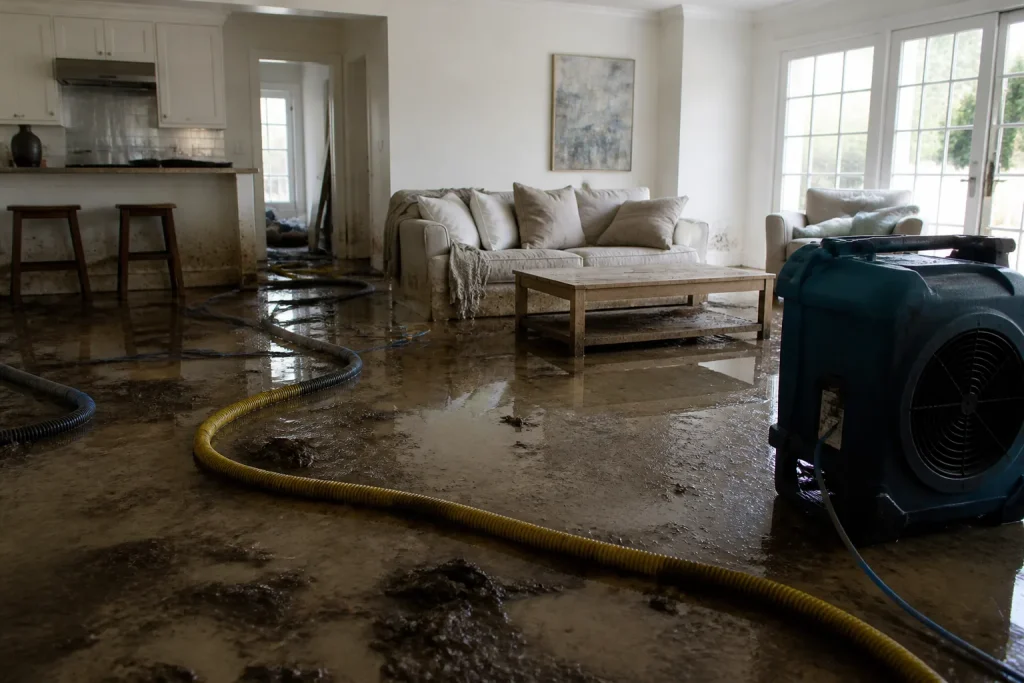
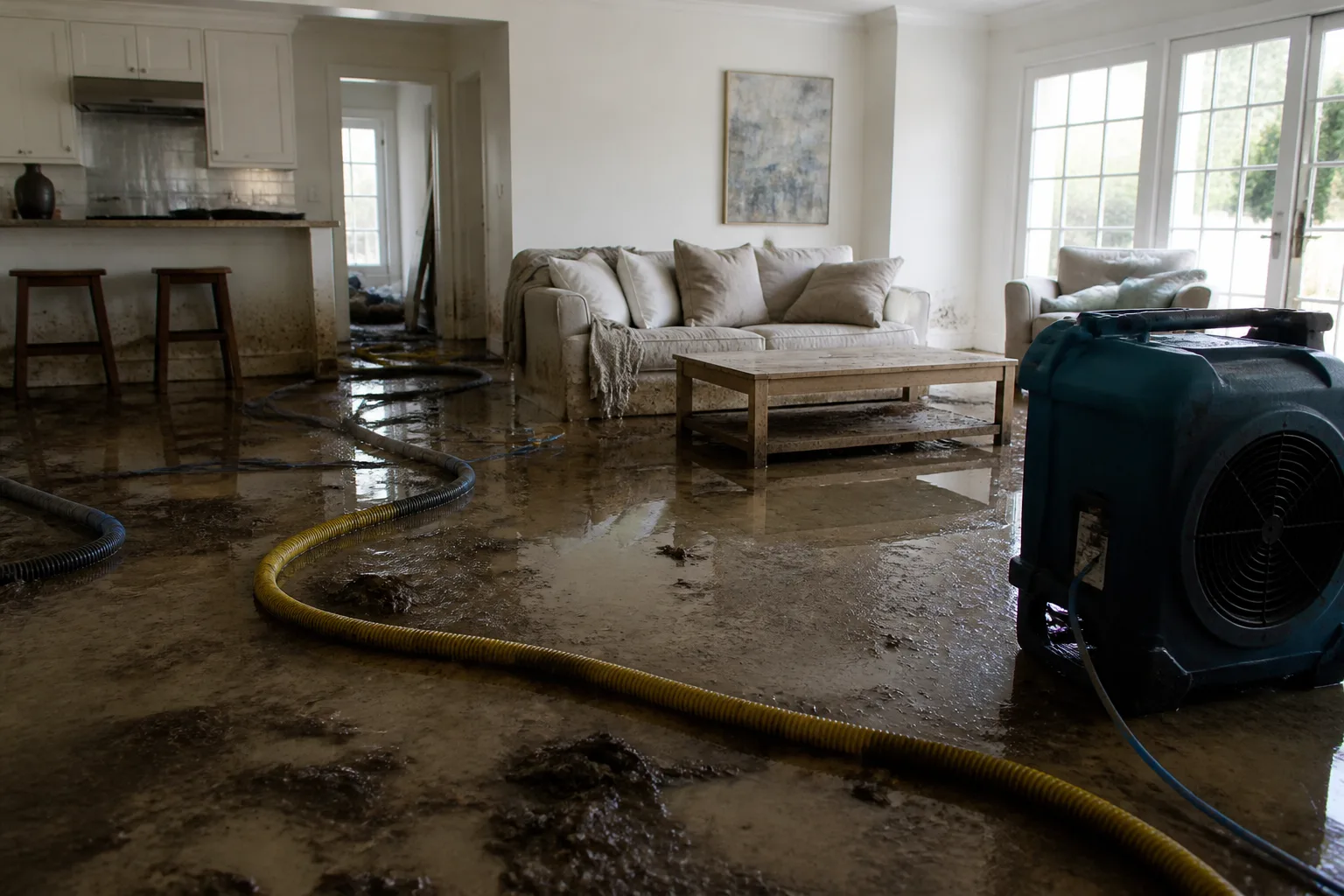
Last month we walked a job in Silver Lake where the homeowner had already fired one “IICRC certified” crew. They’d set three fans in a hallway for four days, never produced a moisture reading, and tried to bill $4,200 for “structural drying.” The drywall was still wet behind the baseboards. Situations like this are more common than you’d think in Los Angeles, where water damage companies outnumber building inspectors and nobody checks the paperwork.
What the IICRC S500 Standard Actually Mandates
The S500 isn’t a suggestion. It’s a procedural standard that tells technicians exactly how to document, monitor, and verify a dry structure. Here’s what must happen on your job site if a company is truly working to it:
- Moisture mapping – Technicians record baseline moisture content of affected and unaffected materials at the start, usually with pinless and pin-type meters. You should see a hand-drawn or digital map of your home showing exactly where readings were taken and what they were.
- Category classification – Every water loss gets classified Category 1, 2, or 3 based on contamination level. This determines what can be dried in place versus what must be removed. The classification must be noted in writing before drying begins.
- Drying goals set in writing – The crew establishes target moisture content for each material type, typically referencing the dry standard of an unaffected area in your own home. Not a guess. A number.
- Daily monitoring logs – Every 24 hours, someone records temperature, relative humidity, specific humidity, and moisture content of affected materials. Equipment gets moved or adjusted based on these readings. The log should be available to you on request.
We use Dri-Eaz and Phoenix dehumidifiers on our Los Angeles jobs, paired with XPOWER air movers, and every unit’s output gets logged against the daily readings. If a company can’t show you the correlation between equipment placement and moisture reduction, they’re not running S500. They’re running fans and hoping.
Certified Company vs. Certified Technician: Why the Distinction Matters
This is where most homeowners get tripped up. A company can be an “IICRC certified firm” because one person in the office passed a test. That doesn’t mean the technician who shows up at your door in Los Feliz at 11 PM knows how to read a psychrometric chart.
The S500 standard is applied by people, not letterhead. Here’s what to verify:
- Ask for the specific certification number of the technician assigned to your job. IICRC issues individual certifications – WRT (Water Restoration Technician), ASD (Applied Structural Drying), CDS (Commercial Drying Specialist). A firm membership doesn’t guarantee any of these are present on site.
- Ask who performs the daily monitoring. Some companies send a certified tech for day one, then rotate in uncertified helpers for subsequent visits. The S500 requires competent monitoring at every check.
- Ask if the same technician stays with the job through completion. Continuity matters. Different eyes miss trends that one trained set would catch.
At Keegan, our technicians are certified individually, not just the company. We don’t rotate strangers through your home. The person who writes the initial scope is the person who signs off on the dry standard.
How S500 Documentation Protects You in an Insurance Dispute
Los Angeles homeowners file more water damage claims than fire and theft combined, and insurers have gotten aggressive about denying coverage for “improper or incomplete drying.” Without documentation, you’re carrying that burden.
S500-compliant records serve as third-party-verifiable proof that restoration was performed to industry standard. Here’s what that looks like in practice:
- Photo documentation with moisture readings visible – Shows the before state, equipment placement, and progressive drying with timestamps.
- Psychrometric data – Temperature, relative humidity, and vapor pressure readings that prove the environment was controlled, not just blasted with air.
- Equipment logs – Serial numbers, placement diagrams, and runtime hours that correlate with moisture reduction.
- Final verification – Post-drying moisture readings meeting or exceeding the established dry standard, signed by the technician.
We format every Los Angeles job’s documentation to support your insurance claim directly. When an adjuster questions whether drying was necessary or sufficient, we hand them a packet that answers before they ask. Undocumented drying isn’t just sloppy – it’s a liability that can land on you if mold develops six months later and the insurer calls it a maintenance issue.
When to call a pro: If water has affected drywall, insulation, or subflooring, or if you can’t identify the full extent with a visual inspection, you need equipment and documentation you can’t rent at Home Depot. Call (361) 317-7269 and we’ll put the scope and price in writing before any work starts.
Water Damage Categories Explained with Los Angeles Examples
The S500 defines three categories based on contamination. Misclassification leads to under-removal (Category 3 treated as Category 1) or unnecessary demolition (Category 1 treated as Category 3). Here’s how they show up in actual Los Angeles homes we’ve worked:
Category 1 – Clean Water
Originates from a sanitary source. Broken refrigerator supply line in a Marina Del Rey condo. Overflowed bathtub with no contaminants. Rainwater entering through a roof vent in Pasadena during a Santa Ana wind event. Category 1 can become Category 2 or 3 if it sits too long or contacts contaminated surfaces. Timing matters in Los Angeles heat – microbial growth can begin in 24 to 48 hours.
Category 2 – Gray Water
Contains significant contamination. Washing machine overflow with detergents. Dishwasher discharge. Sump pump failures in Burbank basements during rare heavy rains. Category 2 requires more aggressive cleaning and often removal of porous materials that absorbed the water. Carpet padding typically goes. Some carpet may be salvageable with proper treatment.
Category 3 – Black Water
Grossly unsanitary. Sewage backup. Toilet overflow with feces. Intrusion from a neighbor’s contaminated unit – common in Los Angeles multi-family buildings with shared drain lines. Rising groundwater, which happens more than people expect in low-lying LA areas near the LA River during winter storms. Category 3 demands removal of porous materials, extensive cleaning of non-porous surfaces, and often antimicrobial treatment. Anyone who tells you they can “dry in place” a Category 3 carpet is not working to S500.
We classify on site, in writing, before equipment is placed. The homeowner signs off. No surprises, no reclassification after the fact to cover a shortcut.
Questions to Ask Any Company Claiming IICRC Compliance
Most Los Angeles restoration companies will say yes to everything on the phone. These questions force specificity:
- “Will you provide a written moisture map before drying begins?” – If they hesitate or say “we’ll email it later,” that’s a no. The map guides equipment placement. It exists before drying starts or it doesn’t exist.
- “What was my dry standard and how did you establish it?” – The answer should reference an unaffected area of your home or published species-specific values for your region. “We use 12% for wood” without context is a guess, not a standard.
- “Can I see the last three days of monitoring logs?” – Even if you’re on day one, they should have logs from other jobs that show the format. Blank forms or “the office handles that” means the tech isn’t logging.
- “Who on site holds WRT or ASD certification, and can I verify it?” – IICRC maintains a public verification system. A legitimate tech has no problem with this.
- “Will you put the drying goal and equipment plan in writing before starting, with a fixed price?” – This is where The Garrison Standard separates from the pack. We do. Many don’t.
Related services in Los Angeles: If your water damage has progressed to mold or involved fire suppression systems, see our guides to Mold Remediation in Los Angeles and Fire Damage Restoration in Los Angeles.
The Bottom Line
IICRC certification means something specific. It means moisture mapping, written drying goals, daily psychrometric logs, and final verification against an established standard. It does not mean a truck with a logo and a stack of fans.
In Los Angeles, where water damage companies compete on response speed and ad spend, the ones who actually follow S500 are the ones who hand you paperwork at the end. That paperwork is what protects your home, your health, and your insurance coverage.
At Keegan Water Damage Restoration, every job runs to The Garrison Standard: written price before work starts, background-checked uniformed technicians, professional-grade Dri-Eaz, Phoenix, and XPOWER equipment, and documentation formatted for your insurer. Every repair is backed by our 365-Day Done Right Promise – if it fails, we return and make it right at no charge.
If you’re in Los Angeles and need a crew that shows up inside the window, explains every step, and puts the price in writing before touching anything, call (361) 317-7269. A live person answers, 24 hours a day, including nights, weekends, and holidays. Estimates are free.
Frequently Asked Questions
Ask for their certification number and verify it through the IICRC’s online portal. WRT (Water Restoration Technician) and ASD (Applied Structural Drying) are the relevant credentials for water damage work. Call (361) 317-7269 if you’d like us to walk you through what to look for.
Most standard homeowners policies cover sudden and accidental water damage, like a burst pipe, but exclude gradual leaks or flooding without a separate flood policy. S500-compliant documentation from your restoration company strengthens your claim significantly. We format every job’s records to support direct adjuster coordination. Call (361) 317-7269 for a free estimate and insurance guidance.
For active water intrusion, same-day response is critical – microbial growth can begin within 24 to 48 hours in Los Angeles’s warm climate, faster in summer months. Mitigation and extraction should happen immediately. Full reconstruction is scoped, scheduled, and priced in writing, not rushed. Call (361) 317-7269 – we answer live, 24/7.
Extraction removes standing water with pumps and vacuums. Structural drying removes bound water from building materials using dehumidification, air movement, and controlled temperature – the psychrometric process the S500 standard governs. Extraction happens first. Drying happens after, with daily monitoring until materials hit their established dry standard. Call (361) 317-7269 for an assessment of what your home needs.
Written by Shane Pruitt, Owner at Keegan Water Damage Restoration, serving Los Angeles since 2005.
Need Damage Restoration Help?
Call Keegan Water Damage Restoration - licensed & insured, here with fast after-hours help in Los Angeles.
(361) 317-7269