
Mold Remediation: Repair or Replace? How Los Angeles Homeowners Decide
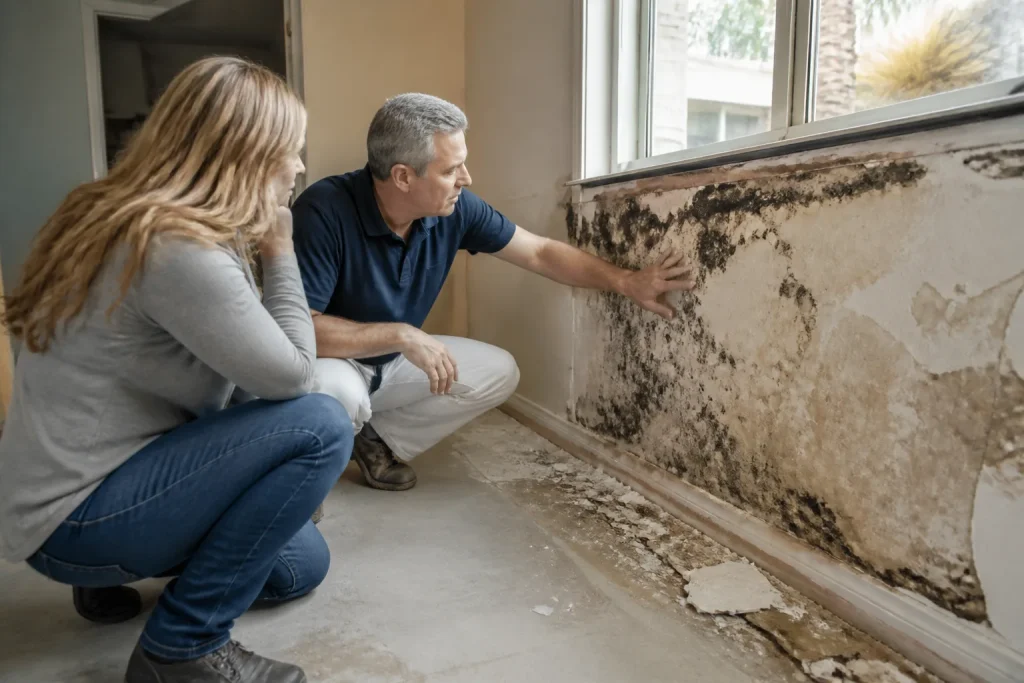
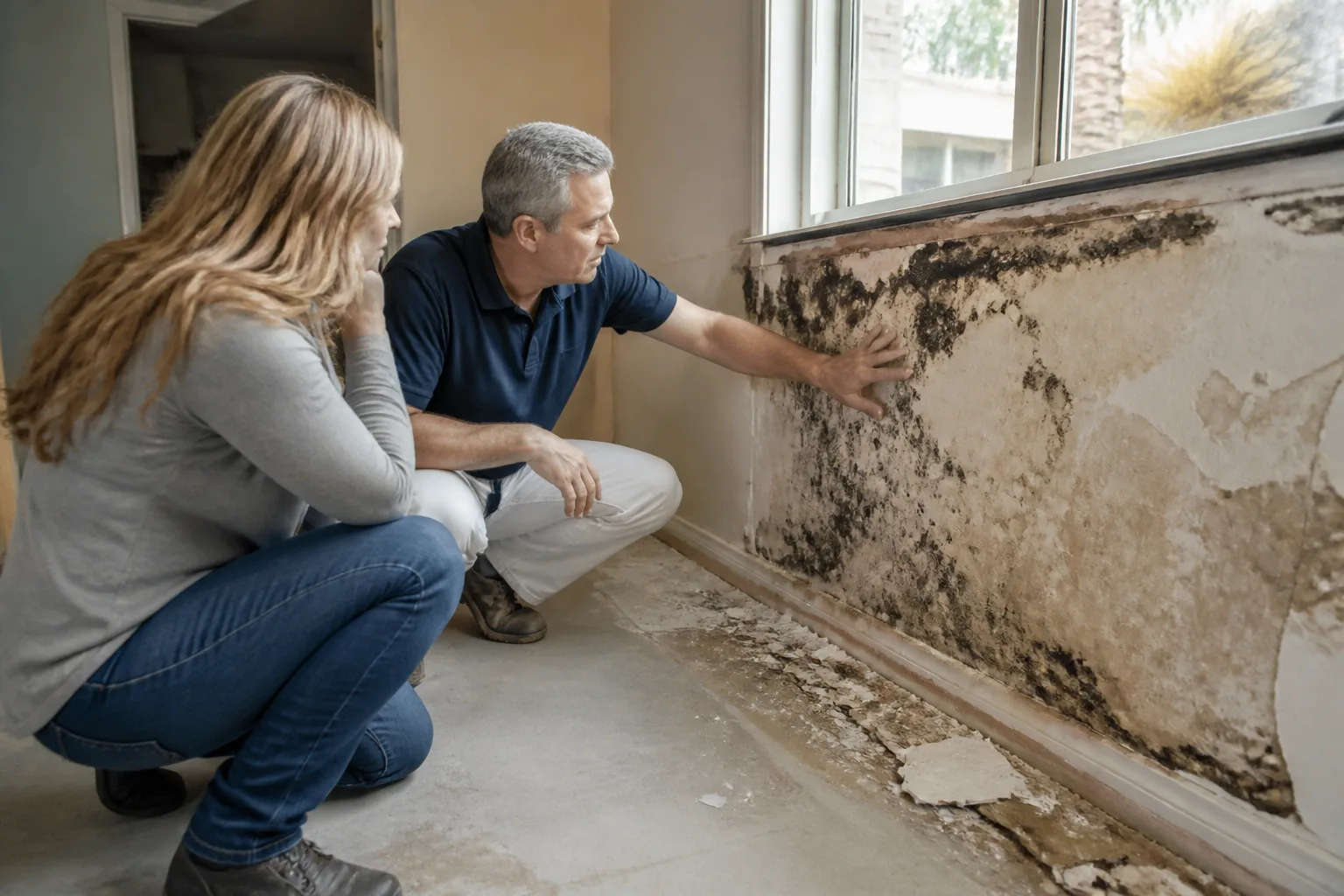
Most Los Angeles homeowners assume the repair-or-replace decision comes down to how much mold they can see. It doesn’t. A one-square-foot patch on modern drywall almost always means tear it out and replace it. A two-square-foot colony on old-growth Douglas fir framing often means clean, treat, and keep. The material underneath the mold matters far more than the size of the colony. If you’re staring at a wall right now trying to guess which way this goes, call us at (361) 317-7269 and we’ll walk you through it over the phone.
We’ve been running mold jobs across Los Angeles, and the calls follow a pattern. Someone finds mold, searches “mold remediation repair or replace Los Angeles,” and gets a dozen articles showing dramatic before-and-after photos. None of them explain why the same species of mold on two different walls gets two completely different treatments. Here’s how we actually make the call on every job we run to The Garrison Standard.
Why Material Type Matters More Than Mold Size
The IICRC S520 Standard for Professional Mold Remediation separates building materials into three categories: porous, semi-porous, and non-porous. This framework drives every repair-or-replace decision we make in Los Angeles homes.
Porous materials absorb moisture and mold hyphae deep into their structure. Standard drywall, insulation, ceiling tiles, and carpet fall here. Once mold colonizes these materials, surface cleaning doesn’t reach the root structure. We almost always remove and replace porous materials, even for small colonies.
Semi-porous materials include wood framing, concrete, and some engineered woods. These can often be cleaned and treated if the colony hasn’t compromised structural integrity. Old-growth Douglas fir, common in pre-1950s Los Angeles construction, is denser and more resistant to deep penetration than modern fast-growth lumber. We’ve saved original framing in Hancock Park, Pasadena, and Echo Park homes that would have been scrap wood if built with today’s materials.
Non-porous materials like metal, glass, and sealed tile can almost always be cleaned and kept. The mold sits on the surface.
The mistake we see repeatedly: a contractor quotes “clean and treat” for drywall because the visible colony is small. Six months later, the mold returns through the back side because the hyphae never left. In Los Angeles’s tight housing market, that callback can cost a homeowner a sale or a tenant.
Los Angeles Building Materials That Change the Equation
Los Angeles has three common substrate types that behave differently under mold colonization. Knowing which one is in your walls changes the repair-or-replace math.
- Original horsehair plaster (pre-1940s): Plaster itself is semi-porous and can often be cleaned if the lath behind it is intact. The problem is the organic binder in historic plaster and the wood lath. We’ve seen cases in Los Feliz and Silver Lake where the plaster looked salvageable but the lath was rotted. The replace decision wasn’t about the mold, it was about whether the substrate could hold a new finish coat.
- 1950s – 1970s drywall: This era used lower-density gypsum and paper facing that’s highly porous. Once mold gets in, replacement is almost always the right call. The drywall in a 1960s Van Nuys ranch house acts nothing like the plaster in a 1920s West Adams bungalow, even with identical mold species.
- Stucco exterior, drywall interior: Stucco is semi-porous and can be cleaned, but the paper-backed lath or foam backing behind it often isn’t. Los Angeles stucco homes with moisture intrusion from failed flashing need the interior wall opened to assess what’s actually wet. We’ve opened walls in Santa Monica where the stucco looked fine and the paper backing was black with mold.
The climate matters too. Los Angeles’s marine layer keeps coastal neighborhoods damp longer than inland areas after a leak. A mold job in Venice often involves more extensive replacement than the same leak in Studio City because the materials stayed wet longer.
What Post-Remediation Clearance Testing Actually Is (and What It Costs in LA)
Here’s where a lot of Los Angeles homeowners get confused. Clearance testing is not the mold inspection that found the problem. It’s a separate verification step performed after remediation is complete, by a third-party industrial hygienist who was not involved in the cleanup.
The hygienist collects air and surface samples, compares them to outdoor baseline levels, and issues a pass/fail report. If the remediator also performs the clearance testing, that’s a conflict of interest. We won’t work with that arrangement, and neither should you. Independent verification is built into The Garrison Standard on every job we run.
In Los Angeles, third-party clearance testing typically runs $400 – $800 for a standard residential job, depending on the number of sample locations. Complex jobs with multiple containment areas or large square footage can reach $1,200 – $1,500. This cost is often covered by insurance when the mold resulted from a covered peril, but policies vary on whether they require clearance testing at all.
The test determines whether materials that were cleaned actually passed, or whether replacement is now necessary because spore counts remain elevated. We’ve had cases in Koreatown where we expected clean-and-treat to pass, the clearance failed, and we replaced the material at our own cost under the Done Right Promise. That’s why we put the scope in writing before starting, including what happens if clearance doesn’t pass.
How Insurance Claims Push Toward Clean-and-Treat (and How to Respond)
Insurance adjusters in Los Angeles often scope mold jobs toward the cheapest compliant fix. That usually means clean-and-treat over replacement, even when replacement is the technically correct call under IICRC S520. The adjuster’s software may not distinguish between 1920s plaster and 1980s drywall, or between a small visible colony and extensive hidden growth.
We document every job with moisture mapping, thermal imaging, and photo evidence of substrate condition. This documentation goes to your adjuster in a format that supports the scope of loss. When we can show that drywall is delaminated, that plaster lath is compromised, or that previous water damage has already weakened the substrate, the replace argument becomes harder to deny.
The local pros use Phoenix and XPOWER dehumidification equipment to establish dry standard before any remediation begins, and we photograph every step. If your policy covers mold remediation, that documentation matters. If it doesn’t, the written scope we provide before work starts lets you make an informed decision about what to self-fund.
We also coordinate directly with adjusters when requested. Some Los Angeles homeowners prefer we handle that conversation; others want to manage it themselves. Either way, you get the same written price before work starts, with no movement at the door.
Warning Signs of a Contractor You Shouldn’t Hire
There are two red flags we see too often in the Los Angeles mold remediation market.
First: the contractor who offers remediation and clearance testing from the same company. This violates the basic principle of independent verification. The person who cleans your home cannot be the person who certifies it clean. We always recommend a third-party industrial hygienist, and we can suggest several we’ve worked with across Los Angeles County if you don’t have one.
Second: the contractor who gives a firm repair-or-replace answer before seeing the substrate. Phone estimates for mold work are guesses. We need to see the wall, test the moisture content with calibrated meters, and often open a small inspection area before we know whether your particular combination of mold species, material type, and moisture history calls for removal or treatment.
We pulled a job last month in a garage over in Highland Park where the homeowner had two estimates: one for $1,200 to “treat the visible mold,” another for $4,800 to “remove all drywall and replace.” Neither contractor had opened the wall. When we cut the inspection hole, we found the back side of the drywall was clean and the real problem was a rotted sill plate behind the baseboard. The correct scope was neither estimate. That’s why we do written assessments, not phone guesses.
When to Call a Professional
Call when you smell mustiness but can’t find the source. Call when you’ve had any water intrusion in the last 60 days, even if it “dried on its own.” Call when you see any visible mold colony larger than a square foot, or when anyone in the home has respiratory symptoms that worsen indoors.
Don’t wait for the mold to spread while you research. In Los Angeles’s warm climate, active mold colonies can double in affected area within 30 days under favorable moisture conditions. Our phones are answered by a live person 24 hours a day, including nights and weekends, and we can have a technician on-site to assess the same day in most cases.
Related services in Los Angeles: If your mold resulted from a recent leak or flood, you may also need Water Damage Restoration in Los Angeles or Fire Damage Restoration in Los Angeles for associated damage. Our Mold Remediation in Los Angeles page has more detail on our full containment and remediation process.
The Bottom Line
The repair-or-replace decision in mold remediation comes down to three factors: what the material is, whether it can pass independent clearance testing after cleaning, and whether the substrate itself remains structurally sound. In Los Angeles’s mix of historic and modern construction, two walls with identical mold can need opposite treatments.
Key takeaways:
- Porous materials (standard drywall, insulation, carpet) almost always need replacement, regardless of visible colony size
- Semi-porous materials like old-growth framing can often be cleaned if the wood hasn’t delaminated or rotted
- Clearance testing must be performed by an independent third party, never by the remediator
- Insurance scopes often default to clean-and-treat; documentation of substrate condition supports the replace argument
- Any contractor who commits to repair or replace before inspection is guessing, not diagnosing
If you’re in Los Angeles and need help deciding whether to repair or replace mold-damaged materials, Keegan Water Damage Restoration offers free written estimates. Call (361) 317-7269. We’ll put the scope and price in writing before any work starts, back every repair with our Done Right Promise, and coordinate documentation with your insurance adjuster if a claim is involved.
Frequently Asked Questions
Standard paper-faced drywall almost never passes clearance testing after surface cleaning because mold hyphae penetrate the paper facing and gypsum core. In rare cases with non-porous specialty drywall or very early-stage surface growth on the painted side only, cleaning may suffice. We assess this during our initial inspection and put the recommended scope in writing before work begins. Call (361) 317-7269 for a free estimate.
Replacement remediation in Los Angeles typically runs $15 – $30 per square foot of affected area, including containment, removal, disposal, treatment of remaining substrates, and reconstruction of removed materials. Small, contained jobs may fall below this range; extensive whole-room remediation with HVAC decontamination can exceed it. Third-party clearance testing adds $400 – $800. We provide itemized written pricing before any work starts. Call (361) 317-7269 for an exact quote on your specific situation.
Most Los Angeles homeowners policies cover mold remediation resulting from a covered water damage peril, but coverage limits and treatment preferences vary by carrier. Some policies cap mold coverage at $10,000 regardless of actual cost. Insurers typically scope toward the least expensive compliant fix, which means clean-and-treat when replacement is technically indicated. Our documentation of substrate condition, moisture mapping, and IICRC S520 compliance supports the replacement scope when it’s the correct call. We coordinate directly with adjusters and format all documentation to support your claim.
We can usually determine the correct scope within 60 – 90 minutes of arrival, including moisture mapping, thermal imaging, and if needed, a small inspection opening to assess substrate condition. For complex jobs involving multiple rooms or hidden cavities, we may need two hours to build a complete scope. Either way, you get the written price before we start any work, with no pressure to decide on the spot. Our live dispatch answers calls 24/7 and can typically schedule same-day assessment in Los Angeles.
Written by the team at Keegan Water Damage Restoration.
Need Damage Restoration Help?
Call Keegan Water Damage Restoration - licensed & insured, here with fast after-hours help in Los Angeles.
(361) 317-7269