
XPOWER Water Damage Restoration in Los Angeles: A Homeowner’s Guide
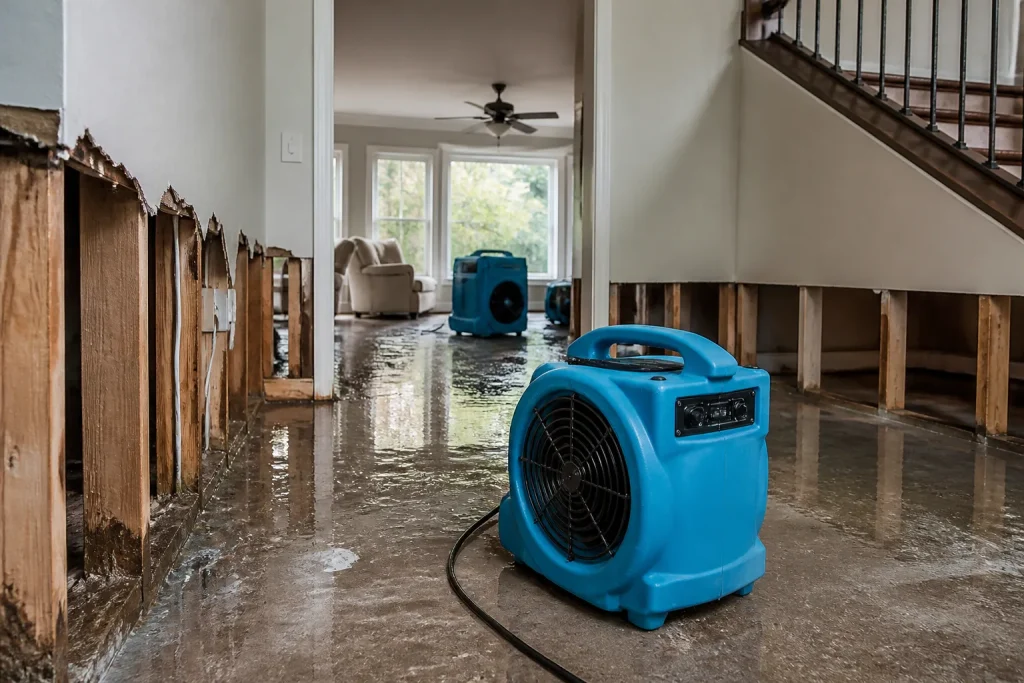
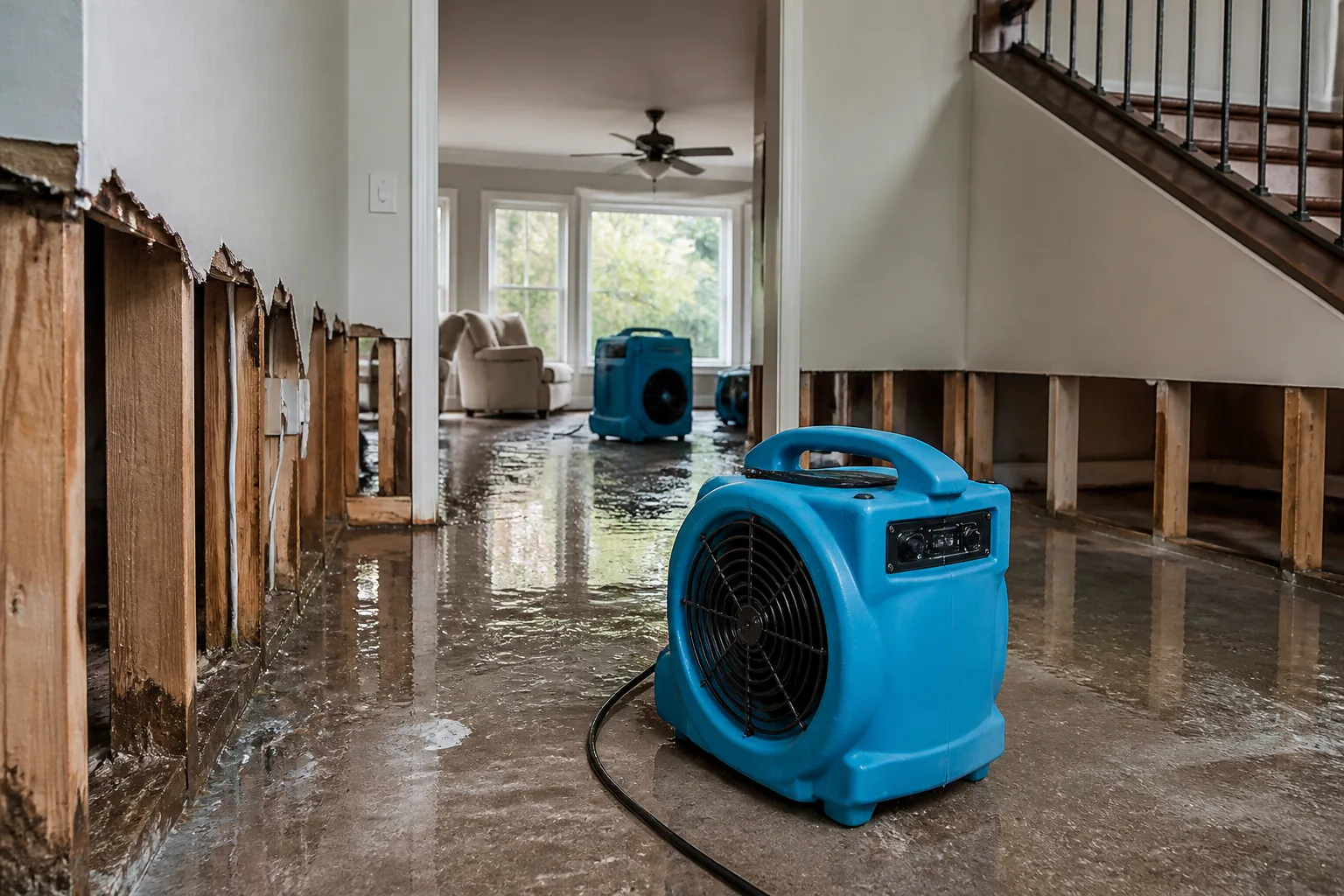
XPOWER equipment is a legitimate, lower-cost alternative to premium brands like Dri-Eaz and Phoenix for water damage restoration in Los Angeles, but the brand name on your invoice should match the machine running in your living room. When contractors charge tier-one rates while deploying XPOWER units, the $40 – $80 daily margin per machine stays in their pocket, not in better drying outcomes for your home. If you’d rather not audit your own restoration job, call us at (361) 317-7269 – we document every unit, model, and serial number before we start.
We see this mismatch more often than homeowners realize. Last month we walked a job in North Hollywood where the Xactimate estimate listed Phoenix air movers at $28 per day each, but the crew had rolled in with XPOWER B-21s – solid machines, but ones that rent for roughly half the Phoenix rate. The homeowner only noticed because she photographed the equipment tags on day one, something we recommend on every Los Angeles water damage job.
How Xactimate Equipment Billing Actually Works
Most homeowners in Los Angeles have never seen an Xactimate estimate until water is already soaking their subfloor. Xactimate is the pricing software that insurance adjusters and restoration contractors use to scope water damage jobs. It categorizes drying equipment into tiers with set daily rates: air movers, dehumidifiers, air scrubbers, and specialty units each carry standard prices based on industry averages.
Here’s where it gets interesting for homeowners. Xactimate’s air mover category does not distinguish between a $900 Dri-Eaz Velo Pro and a $220 XPOWER B-21. Both fall under the same line item. The contractor selects the category, the software applies the rate, and the invoice generates automatically. If your contractor is charging the tier-one rate while running budget equipment, that gap is pure margin.
We don’t think that’s how restoration work should run. At Keegan Water Damage Restoration home, we put the equipment list in writing before any machine crosses your threshold. If we scope Phoenix or Dri-Eaz units for a job, those are the machines that show up. If an XPOWER unit makes more sense for a secondary space, we note it and price accordingly. The Garrison Standard doesn’t leave room for bait-and-switch on equipment any more than it does on labor.
What homeowners should verify:
- Photograph every equipment tag on day one – model name, serial number, and manufacturer logo
- Request the Xactimate equipment summary before work begins
- Ask specifically: “Are these the machines that will be here tomorrow, or are substitutes allowed?”
- Check your final invoice against those photos; discrepancies are more common than you’d expect
XPOWER B-21 and B-53: Real Specs Compared to Premium Brands
XPOWER’s B-21 and B-53 air movers are the models we see most often on Los Angeles water damage jobs. They’re not junk. The B-21 pulls about 1,150 CFM on high draw, weighs under 18 pounds, and draws roughly 2.3 amps. The B-53, a larger axial fan, moves closer to 2,000 CFM at 2.8 amps. For comparison, a Phoenix Axial Air Mover runs about 3,000 CFM at 3.0 amps, while a Dri-Eaz Velo Pro pushes 2,700 CFM at 2.9 amps.
The performance gap is real, but it’s narrower than the price gap suggests. For a small bathroom dry-out in a Sherman Oaks bungalow, three XPOWER B-21s might achieve the same drying timeline as two Phoenix units. The math changes in a 2,400-square-foot Encino ranch with open-plan living and engineered hardwood over concrete slab. There, CFM and static pressure matter more, and premium units earn their keep.
Where XPOWER equipment fits well:
- Secondary bedrooms, closets, and laundry rooms under 150 square feet
- Supplemental airflow behind cabinets or inside wall cavities with Injectidry attachments
- Jobs where power availability is limited and lower amp draw prevents panel overloads
- Final-phase drying when moisture content is already dropping and aggressive airflow isn’t needed
Where we’d spec Dri-Eaz or Phoenix instead:
- Primary living areas over 400 square feet with significant water intrusion
- Hardwood or concrete slab drying where air velocity and static pressure drive evaporation rates
- High-humidity Los Angeles microclimates near the coast, where latent moisture loads are heavier
- Any job with Category 2 or 3 water where faster drying reduces microbial amplification risk
Why Equipment Brand Matters Less Than the Technician’s Log
Here’s the part that surprises most homeowners: a skilled technician with a moisture meter, a hygrometer, and a daily log will outperform an amateur with the best equipment in the industry. Psychrometrics – the science of how temperature, humidity, and air movement interact to evaporate water – matters more than brand loyalty.
Every Los Angeles water damage job we run includes daily moisture mapping. That means we record:
- Relative humidity and temperature at the source, unaffected areas, and outside the structure
- Specific moisture content readings in wood framing, drywall, and subfloors, measured with pin and pinless meters
- Grain depression calculations to confirm the dehumidifier is actually removing moisture, not just recirculating wet air
- Equipment placement adjustments with timestamps and rationale
A contractor running XPOWER units who logs grain depression daily and moves machines based on readings is delivering better outcomes than one who drops Phoenix units and disappears for three days. The equipment is a tool. The technician’s discipline is the job.
That said, equipment brand becomes relevant again when you’re paying premium rates. If your invoice assumes Dri-Eaz or Phoenix pricing, you deserve to know whether the contractor’s savings on rental or purchase costs are reflected in your bill or retained as margin.
When to Call a Professional for Water Damage in Los Angeles
We don’t recommend homeowners attempt water damage restoration beyond the very first step: stopping the source and removing standing water with a wet/dry vacuum if it’s safe to do so. After that, the risks escalate quickly. Category 1 clean water becomes Category 2 gray water in 24 – 48 hours in Los Angeles’s warm climate. Hidden moisture in wall cavities breeds mold within 72 hours. Electrical hazards from wet outlets or submerged appliances can be fatal.
Call a professional when:
- Water has affected drywall, insulation, or subflooring
- The water source was a dishwasher, washing machine, or any line that may contain contaminants
- You smell mustiness or see discoloration forming within 48 hours
- Your moisture meter (or a contractor’s) shows readings above 16% in wood or 1% in drywall
- Insurance is involved and you need documentation formatted to adjuster standards
At Water Damage Restoration in Los Angeles, we answer calls with a live person 24 hours a day, including weekends and holidays. We dispatch background-checked, uniformed technicians who arrive inside the window we give you, put the full scope and price in writing before touching anything, and document every step for your insurance claim.
Related services in Los Angeles: Fire Damage Restoration in Los Angeles and Mold Remediation in Los Angeles.
How to Protect Yourself: A Simple Equipment Audit
You don’t need to become a restoration expert to protect your interests. Here’s what we tell homeowners in Los Angeles who want to verify they’re getting what they pay for.
Step one: photograph everything. On day one, before the crew leaves, walk the job with your phone. Capture clear images of every air mover, dehumidifier, and air scrubber. Zoom in on the manufacturer’s label. If a machine says “XPOWER B-21” but your estimate lists “Phoenix Axial Air Mover,” that’s a conversation worth having.
Step two: request the daily equipment log. IICRC-standard water damage restoration requires documentation of equipment type, quantity, placement, and runtime. If your contractor can’t produce this, they’re not following the standard they may be charging you for.
Step three: cross-reference your final invoice. Xactimate generates detailed equipment summaries. Match those line items against your photos. Discrepancies should be resolved before you sign off or before your insurance adjuster processes payment.
Step four: ask about the guarantee. At Keegan, every repair is backed by our Done Right Promise. If the work fails within one year, we return and make it right at no charge, with a free second visit included. We put that in writing because The Garrison Standard demands it. Ask your contractor what their guarantee covers, for how long, and whether it’s written or verbal.
The Bottom Line
XPOWER equipment has a legitimate place in water damage restoration, especially for smaller Los Angeles jobs and supplemental airflow. The problem isn’t the brand – it’s the mismatch between what’s promised, what’s delivered, and what’s billed. Homeowners who photograph equipment, request daily logs, and verify invoices against actual units protect themselves from margin-padding that adds no value to their dry-out.
At Keegan Water Damage Restoration, we run Dri-Eaz, Phoenix, and XPOWER equipment where each makes sense, document every machine by serial number, and put the full equipment list in your written scope before work starts. No surprises, no substitutions without notice, no tier-one billing for budget machines. If you’re dealing with water damage in Los Angeles and want a crew that works to a written standard, call (361) 317-7269 for a free estimate.
Frequently Asked Questions
XPOWER air movers are adequate for smaller jobs and secondary spaces, but they generally deliver lower CFM and static pressure than Dri-Eaz or Phoenix units. For large open areas, hardwood drying, or Category 2 and 3 water losses in Los Angeles, premium equipment typically achieves faster, more reliable drying. The technician’s skill matters more than the brand, but the brand on your invoice should match the brand on your floor.
Photograph every equipment tag on day one, then compare those model names against your Xactimate invoice or equipment summary. If you’re billed for Phoenix or Dri-Eaz but see XPOWER units running, ask for an explanation in writing. A reputable contractor will adjust the pricing or explain why the substitute was necessary and how it benefits your job.
A proper log records relative humidity, temperature, and specific moisture content readings at multiple locations; grain depression calculations to confirm dehumidifier performance; equipment placement with timestamps; and any adjustments made with rationale. Without this documentation, there’s no proof the drying plan is working, and insurance adjusters may challenge your claim.
Insurance covers reasonable and necessary restoration costs based on documented damage and proper drying methods. If equipment billing is inaccurate, the adjuster may reduce payment or request justification. We coordinate directly with adjusters, provide photo-documented equipment lists, and format all documentation to insurance standards. Call (361) 317-7269 if you need help navigating a claim – estimates are free.
Written by the team at Keegan Water Damage Restoration.
Need Damage Restoration Help?
Call Keegan Water Damage Restoration - licensed & insured, here with fast after-hours help in Los Angeles.
(361) 317-7269