
5 Mistakes to Avoid With Mold Remediation
The five costliest mold remediation mistakes all share one thread: they skip the science of containment and clearance testing, or they let cost pressure override the written standard. That leaves mold alive behind walls, ready to recolonize within a single rainy season. If you’d rather not find out the hard way, call us at (361) 317-7269 for a free estimate.
Here’s the fix that generates more remediation calls than almost any other: painting over mold with Kilz. Home improvement forums love to recommend it. The problem is that encapsulants seal in volatile organic compounds and moisture that mold needs to survive. It looks solved. It isn’t. The colony keeps eating, keeps spreading laterally inside the wall cavity, and six months later the homeowner is staring at a bigger patch, a mustier room, and a bill that’s tripled because now it’s in the insulation too.
We’ve been doing mold remediation in Los Angeles long enough to know the patterns. Below are the five mistakes we see most often, and what the job actually requires.
Mistake 1: Skipping Proper Containment
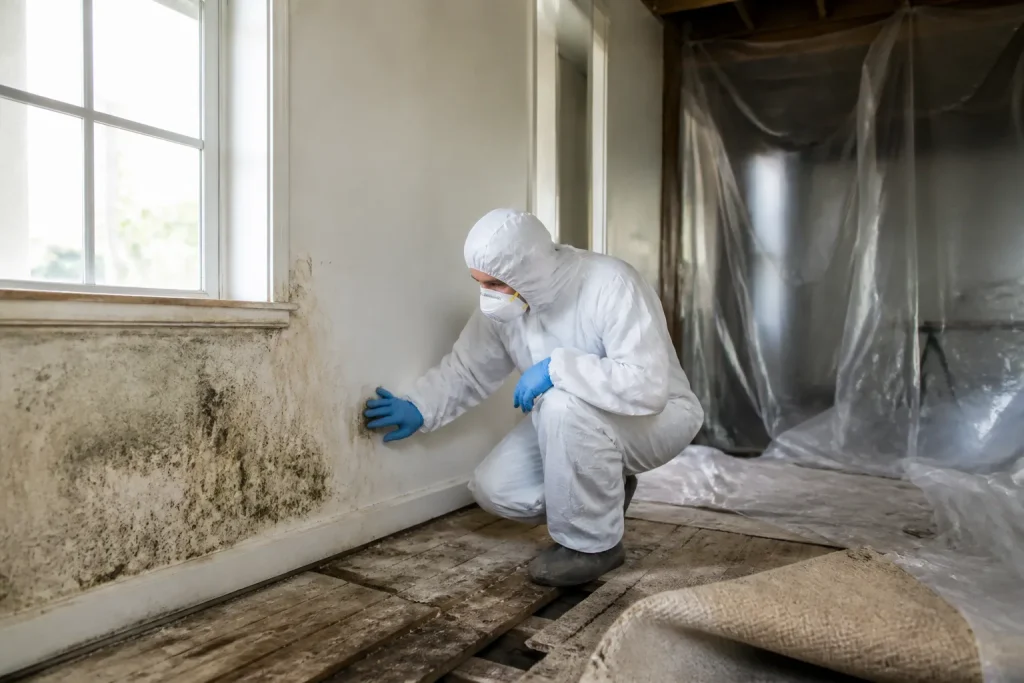
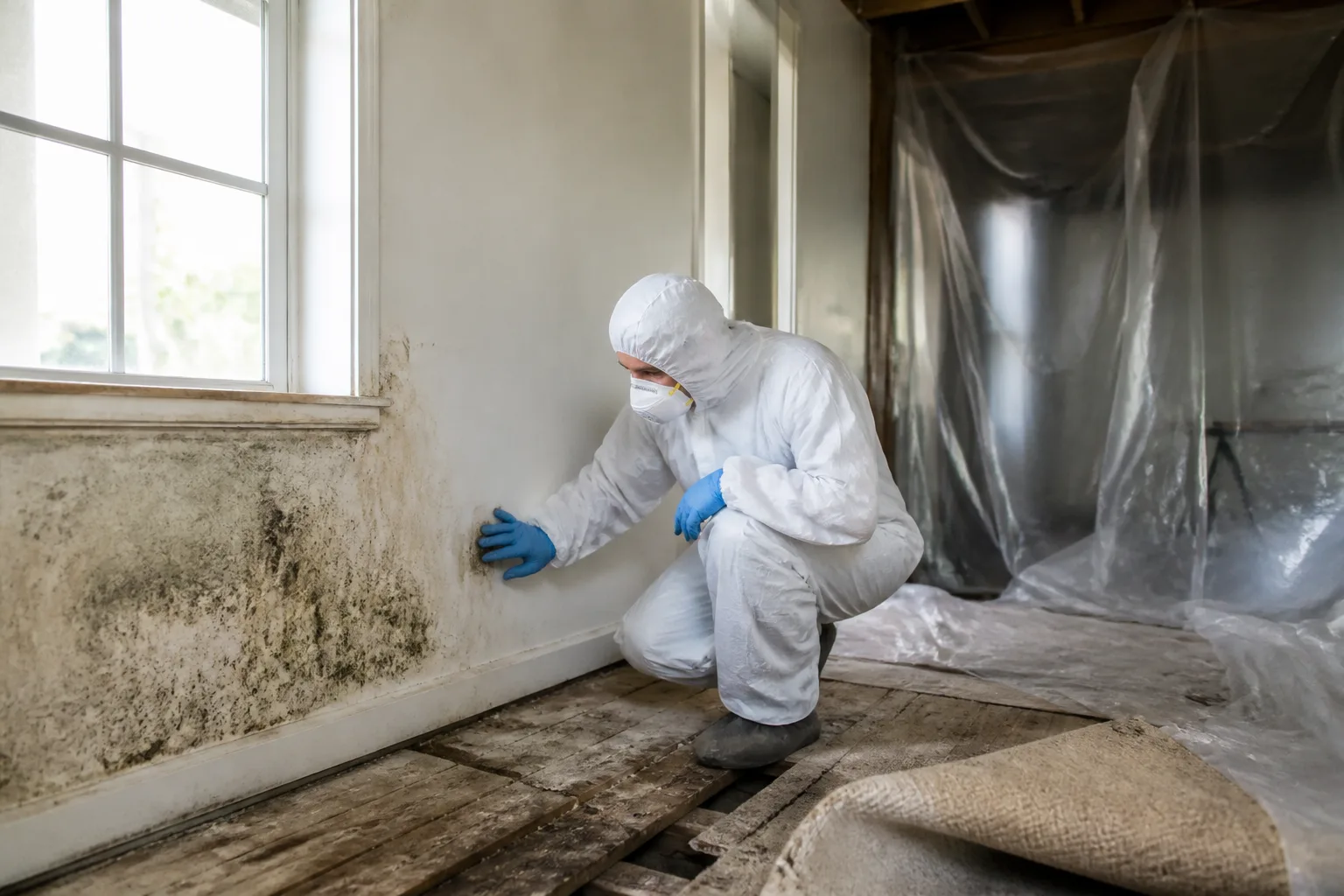
Mold remediation without containment is like performing surgery with the doors open. Every disturbance releases spores. Without engineering controls, those spores ride air currents to clean areas of the house and colonize there.
Proper containment means negative air pressure inside the work zone, established with 6-mil polyethylene barriers sealed with tape at every seam. A HEPA air scrubber, sized to the cubic footage, runs continuously to pull air through a filter rated at 99.97% efficiency at 0.3 microns. The scrubber exhausts outside the containment, creating the pressure differential that keeps spores from escaping.
We see Los Angeles homeowners hire handymen who open up a wall, bag the drywall, and call it done. Two weeks later there’s mold in the hallway closet. The spores didn’t walk there; they were carried by air that never got controlled. The local pros build containment on every job, no exceptions. It’s part of The Garrison Standard: do it by the book, or don’t do it.
What to ask any contractor: “Will you establish negative air pressure with HEPA scrubbing?” If they hesitate or quote extra for it, that’s your answer.
Mistake 2: Letting the Remediator Perform the Clearance Test
Post-remediation verification must be performed by an independent industrial hygienist. Not the company that did the work. Not their buddy with a spore trap. An independent third party with no financial interest in the job passing.
Here’s why this matters. The clearance test determines whether the job is actually done. It compares indoor spore counts to outdoor baseline levels, checks that moisture readings are within acceptable range, and verifies that no visible mold remains. If the same company that performed remediation also performs the test, there’s an inherent conflict. They want the job to pass. They’ve already been paid, or want to be paid, and a failed test means more work at their expense.
In Los Angeles, mold remediation has no state licensing requirement. Anyone can buy a fogger and call themselves a remediator. The independent clearance test is the only real accountability mechanism you have. We always recommend, and will always cooperate with, an independent hygienist. We document every job to support that process, and we welcome the scrutiny. A pass from an independent tester is the only result worth having.
Key point: A reputable remediator won’t resist independent verification. They’ll insist on it.
Mistake 3: Treating the Symptom, Not the Source
Mold is a moisture problem that happens to look like a mold problem. Any contractor who remediates without identifying and correcting the water intrusion point is guaranteeing a callback.
We’ve been called to homes in the San Fernando Valley where the mold was “removed” three times before we arrived. The source? A failed window flashing that let winter rains seep behind stucco every January. The previous contractors scrubbed and sprayed and left. The water kept coming. The mold kept returning.
Our process starts with moisture mapping. We use infrared cameras and penetrating moisture meters to trace the water path. Sometimes it’s a supply line leak inside a wall. Sometimes it’s condensation from an uninsulated duct in a hot attic. Sometimes it’s groundwater wicking through a compromised foundation after those heavy El Niño storms Los Angeles gets every few years. We find it, we fix it or coordinate the repair, and only then do we remediate. Otherwise we’re both wasting your money.
What this looks like in writing: Your scope of work should explicitly state the moisture source identified and the correction method. If it doesn’t, ask why.
Mistake 4: Using Bleach on Porous Materials
Bleach kills surface hyphae. It does not penetrate into drywall, wood framing, or insulation. The mycelium, the root structure, stays alive. It regrows. Often faster, because bleach is mostly water and you’ve just added moisture to a porous material.
The science is straightforward. Mold grows into porous substrates. Bleach is a surface disinfectant with poor penetrating ability. When applied to drywall, the chlorine stays on top while the water soaks in. The visible mold turns white and looks dead. Behind that bleached surface, the colony continues metabolizing. Within days to weeks, the discoloration returns.
Proper remediation of porous materials means physical removal of contaminated substrate. For drywall, that’s cutting out affected sections plus a safety margin. For wood framing, that’s HEPA vacuuming, abrasive cleaning if necessary, and sometimes removal if the structural member is compromised. We use professional-grade HEPA vacuums and air scrubbing equipment, including units from B-Air and Injectidry, operated to IICRC S520 standards for professional mold remediation.
The only place bleach belongs in mold work is cleaning non-porous surfaces like tile or glass after the source material has been removed. And even then, there are better products.
Mistake 5: Proceeding Without a Written Scope and Guarantee
Mold remediation in Los Angeles operates without licensing requirements. No state contractor specialty. No municipal oversight specific to mold. This means your protection is entirely contractual. A verbal estimate and a handshake leaves you with no recourse if the job fails.
The written scope should define:
- The exact areas to be remediated, with square footage
- The containment method and equipment specifications
- The moisture source identified and correction plan
- The disposal method for contaminated materials
- The clearance testing protocol and pass criteria
- The guarantee terms and duration
At Keegan, every job runs to The Garrison Standard. The price is in writing before work starts. The scope is detailed. And every repair is backed by our Done Right Promise: if the remediation fails within one year, we return and make it right at no charge, including a free second visit. No hedging, no pro-rating, no arguments about whose fault it was.
We’ve seen competitors quote low, start work, then discover “additional contamination” that doubles the price. That doesn’t happen when the scope is fixed in writing upfront. If conditions change, we document why, photograph the finding, and get written approval before proceeding. Discipline protects everyone.
When to Call a Professional
If you smell mustiness but see no mold, if the affected area exceeds ten square feet, if anyone in the home has respiratory conditions, or if the mold follows a recent water damage event, professional assessment is warranted. We answer live 24 hours a day, including weekends and holidays, because water damage doesn’t observe business hours.
Related services: Water Damage Restoration in Los Angeles | Fire Damage Restoration in Los Angeles
The Bottom Line
The mistakes above share a common cure: respect the science, demand documentation, and never let price pressure override the written standard. Containment, independent clearance, source elimination, proper removal methods, and a guaranteed scope of work. These aren’t extras. They’re the minimum for a job that actually stays done.
If you’re in Los Angeles and dealing with mold, or you’re not sure whether that dark patch warrants professional attention, call Keegan Water Damage Restoration at (361) 317-7269. We’ll give you a free estimate with the price in writing before any work starts. That’s The Garrison Standard, and it’s how we’ve operated.
Frequently Asked Questions
No. Encapsulants seal in volatile organic compounds and moisture that mold colonies need to survive. The mold continues growing inside the wall cavity, often spreading laterally, and returns worse than before within months. Proper remediation requires physical removal of contaminated materials, not surface coverage.
Independent clearance testing is the only reliable verification. A third-party industrial hygienist should perform post-remediation air and surface sampling, comparing indoor spore counts to outdoor baselines and confirming moisture levels are within acceptable range. The remediator should welcome this, not resist it. Call (361) 317-7269 if you need help interpreting existing test results.
It depends on the cause. Sudden, accidental water damage, like a burst pipe, often carries mold coverage as secondary damage. Long-term leaks or maintenance issues typically do not. We document every job with photographs and detailed scopes formatted to support your insurance claim, and we can coordinate directly with your adjuster to clarify coverage before work begins.
Because cleaning visible mold addresses the symptom, not the source. Mold requires moisture to grow. If the water intrusion point, whether a leak, condensation, or humidity issue, remains unaddressed, the colony regrows from surviving mycelium in porous materials. Effective remediation always includes moisture source identification and correction.
Written by the team at Keegan Water Damage Restoration.
Need Damage Restoration Help?
Call Keegan Water Damage Restoration - licensed & insured, here with fast after-hours help in Los Angeles.
(361) 317-7269