
5 Mistakes to Avoid With Fire Damage Restoration
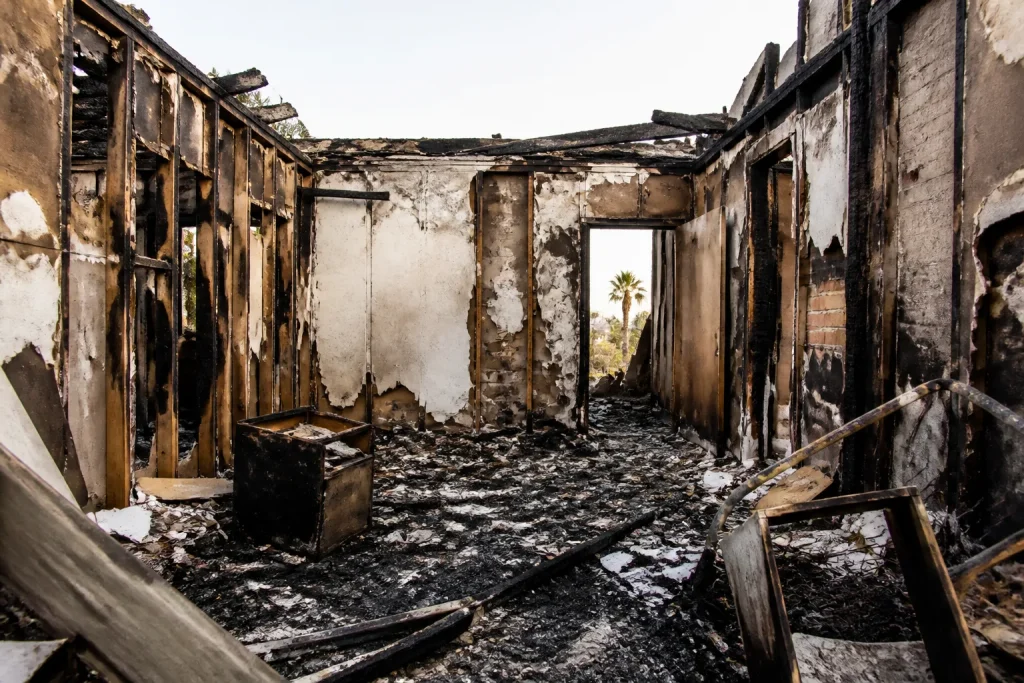
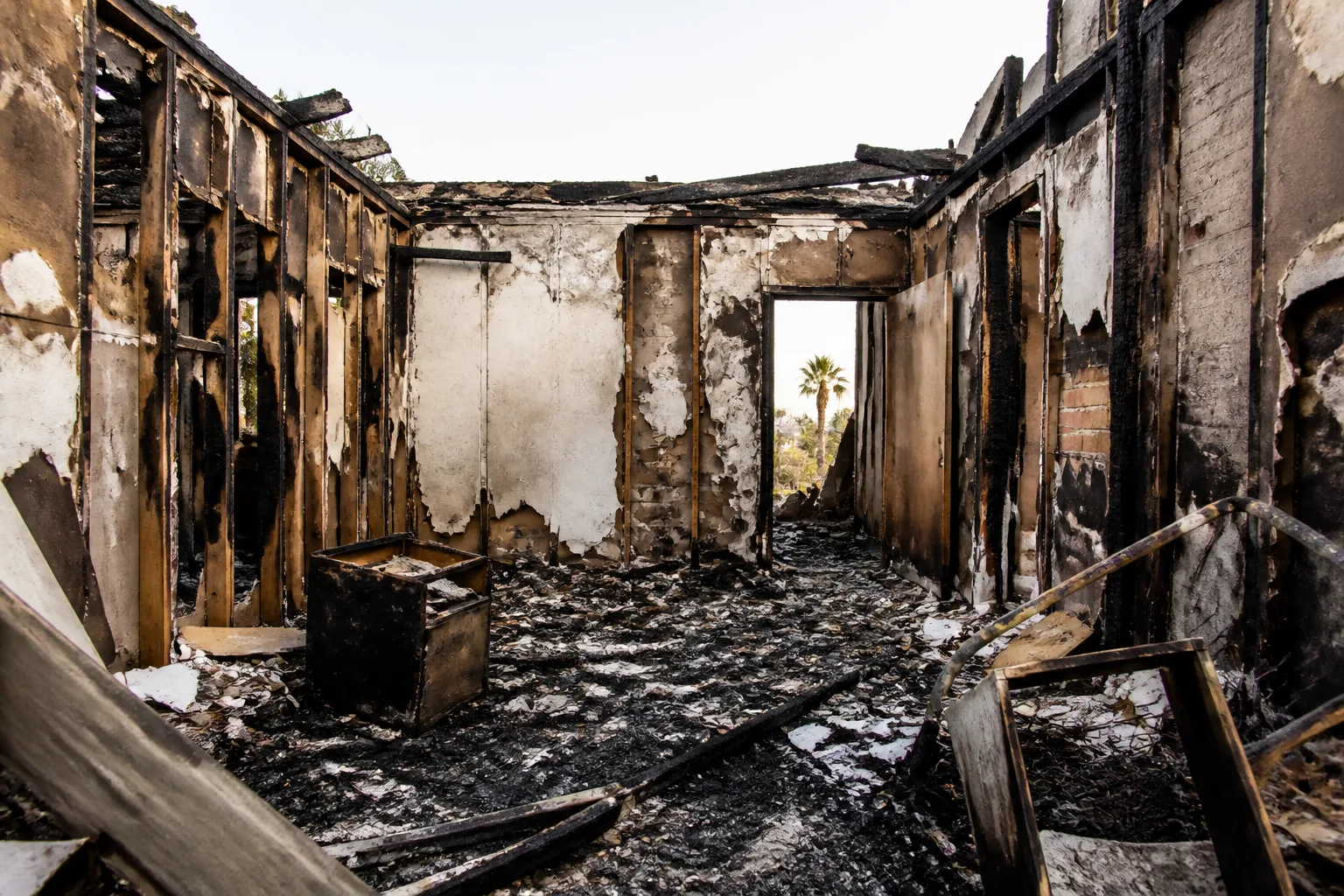
The five costliest fire damage restoration mistakes happen in the first 72 hours after the flames are out: signing away your insurance claim, throwing away damaged belongings too soon, painting over acidic soot, accepting odor masking instead of true elimination, and starting demolition without a written scope of work. These errors can reduce your insurance payout by tens of thousands of dollars and extend the time you’re out of your home by months.
If you’re dealing with fire damage right now and want a crew that puts the scope and price in writing before touching anything, call us at (361) 317-7269. We answer live, 24 hours a day.
Mistake 1: Signing an Assignment of Benefits at the Door
The single most expensive mistake Los Angeles fire victims make is signing an Assignment of Benefits, or AOB, before their adjuster has walked the property.
An AOB is a legal document that transfers your insurance claim rights to the contractor. Once you sign, the contractor controls your claim proceeds, not you. They bill your insurer directly, negotiate the settlement, and in many cases, file suit against your insurance company in your name. We’ve seen homeowners in the San Fernando Valley discover too late that their $180,000 policy benefit was settled for $97,000 by a contractor they’d met for fifteen minutes.
Contractors push AOBs at the door for a simple reason: it locks you in before you can get competing bids or independent advice. The pitch is usually urgency-based – “We need to start immediately or mold will grow” or “Your insurer will stall if we don’t take over.” Both are misleading. In California, you have the right to choose your contractor, and your insurer has a legal duty to respond within specific timeframes regardless of who files the paperwork.
How to decline without losing the contractor: Tell them you work with direct billing under your own claim, or that your adjuster requires scope approval first. Any reputable restoration company, including Keegan Water Damage Restoration in Los Angeles, will work within your claim process without requiring an AOB. If they won’t, that’s your signal to call someone else.
At Keegan, we document every job to support your insurance claim, but the claim stays in your name and under your control. The price goes in writing before work starts, and it never moves at the door.
Mistake 2: Throwing Away Smoke-Damaged Contents Before Inventory
After a fire, the instinct is to purge. Everything smells like smoke, looks stained, feels ruined. But disposing of contents before they’ve been inventoried and valued by your insurer is an irreversible financial mistake.
Here’s why: smoke damage is often recoverable through specialized cleaning. Electronics with light soot exposure can be restored by certified contents processors. Textiles respond to ozone and ultrasonic cleaning. Furniture with superficial char can be refinished. When you throw these items away, your insurer values them at depreciated replacement cost – often 40-60% less than actual replacement – and you lose the chance to prove they were restorable.
We walked a job in Culver City last year where the homeowner had already cleared three rooms into a dumpster before we arrived. Among the discarded items: a vintage leather sofa that a contents specialist could have restored for $1,200, but which the insurer now valued at $400 salvage. Multiply that across a household and the losses run deep.
The correct sequence:
- Separate damaged from undamaged items, but do not dispose of anything
- Photograph everything from multiple angles, including manufacturer labels and model numbers
- Request a contents inventory from your adjuster or restoration contractor
- Allow a certified contents specialist to assess cleanability before authorizing disposal
Professional-grade contents cleaning uses equipment like ultrasonic baths and specialized drying chambers. At Keegan, we coordinate with IICRC-certified contents processors and document every item with photos formatted for your insurance claim.
Mistake 3: Painting or Sealing Over Soot Without Neutralization
Soot isn’t just dirty. It’s chemically active, and the chemistry matters for your rebuild.
Combustion produces acidic soot – carbon particles bonded with sulfur dioxide and nitrogen oxides. This residue has a pH between 2.5 and 4.5, making it more acidic than orange juice. Left on drywall, framing, or subfloors, it continues to off-gas and degrade whatever it touches. Paint it over with standard latex primer and you’ve sealed that acid against the surface. Within 6 to 18 months, the paint delaminates, peels, or bubbles as the underlying material breaks down. The odor compounds, called char volatiles, also migrate through porous coatings and re-emerge as that persistent “smoky” smell you can’t locate.
Proper fire restoration requires pH-neutralizing cleaning before any primer touches the surface. This typically involves:
- Dry soot removal with HEPA vacuuming to prevent embedding
- Chemical sponging or wet cleaning with pH-neutralizing agents specific to the fuel source (protein fires from kitchen grease require different chemistry than wood or synthetic fires)
- Testing of surfaces with pH strips to confirm neutrality before sealing
- Application of a stain-blocking, odor-sealing primer designed for fire restoration, not standard paint
We use Dri-Eaz and Phoenix air scrubbers during this process to capture airborne particulate, and we don’t move to the coating phase until surfaces pass pH testing. In Los Angeles, where extended dry seasons can leave soot particulate airborne longer, this step is especially critical.
Mistake 4: Accepting Odor Masking Instead of Odor Elimination
The difference between a contractor who sprays deodorizer and one who eliminates odor is the difference between a temporary fix and a permanent one. Yet many homeowners can’t tell the methods apart, and some contractors exploit that confusion.
Here are the actual technologies, what they do, and what they don’t:
- Ozone treatment: Generates O3 molecules that oxidize odor compounds at the molecular level. Effective on organic odors and smoke residue, but requires evacuation of people, pets, and plants during treatment. Does not penetrate deeply into porous materials like charred framing.
- Thermal fogging: Heats a petroleum-based or water-based deodorizer to create a dry fog that penetrates the same spaces smoke traveled. Neutralizes odor in wall cavities, insulation, and ductwork. Requires trained application and proper ventilation timing.
- Hydroxyl generation: Uses UV light to produce hydroxyl radicals that break down odor compounds. Safe for occupied spaces, effective on a broad range of volatile organic compounds, but slower than ozone and works best as part of a multi-stage protocol.
What doesn’t work: spraying scented deodorizer on surfaces and calling the job done. This masks odor temporarily while char volatiles remain in the structure. Six months later, when temperatures rise or humidity shifts, those compounds reactivate and the smell returns.
A proper odor elimination protocol matches the technology to the fuel source, the materials affected, and the occupancy requirements. We document which methods were used where, with timestamps and air quality readings, so your insurer knows the work was done to standard and you have proof if odor issues resurface.
Mistake 5: Starting Demolition Without a Written Scope of Work
Once walls are open and materials are removed, undocumented damage becomes your word against the insurer’s. The time to establish what needs to be done, in what sequence, and at what price is before the first stud gets pulled.
We’ve arrived at jobs in Los Angeles where well-meaning contractors had already gutted three rooms “to get ahead of the damage” – without moisture mapping, without soot testing, without structural assessment. The result: the insurer disputed whether certain materials were actually fire-damaged or just removed for convenience, and the homeowner absorbed the cost difference.
A proper scope of work for fire restoration should specify:
- Exactly which materials are to be removed, with square footage and linear footage
- The cleaning and neutralization protocol for remaining surfaces
- The odor elimination methods and equipment to be deployed
- The reconstruction materials and finishes, matched to pre-loss condition
- The price, broken down by line item, with no allowances or open-ended contingencies
- The timeline, with milestones for completion
This is The Garrison Standard we work to on every job: written price before work starts, background-checked and uniformed technicians, and documentation that supports your insurance claim from day one. No surprises at the door, no moving targets once demolition begins.
When to call a pro: If your fire damage involves structural compromise, HVAC contamination, or water damage from suppression efforts, you need certified technicians. The intersection of fire, water, and smoke damage requires IICRC-standard protocols for each. We handle all three at Keegan Water Damage Restoration.
Related services in Los Angeles: If your fire was accompanied by water damage from sprinkler or hose suppression, see our Water Damage Restoration in Los Angeles page. For mold concerns that develop during the restoration process, our Mold Remediation in Los Angeles team follows the same written-scope protocol.
Key Takeaways
- Never sign an Assignment of Benefits before your adjuster approves the scope – it transfers control of your claim to the contractor
- Inventory and photograph all contents before disposal; many smoke-damaged items are restorable and carry higher insured value intact
- Acidic soot must be pH-neutralized before painting or sealing; skipping this causes delamination and odor return within months
- Demand real odor elimination (ozone, thermal fogging, or hydroxyl generation), not masking with deodorizer spray
- Get the complete scope of work in writing, with line-item pricing, before any demolition begins
The Bottom Line
Fire damage restoration in Los Angeles is a high-stakes process where early mistakes compound into permanent losses. The pressure to act quickly is real, but the wrong quick action – signing away your claim, throwing out restorable property, sealing in acid soot, accepting cosmetic fixes, or demolishing without documentation – can cost more than the fire itself.
At Keegan Water Damage Restoration, we’ve been part of the Garrison Partners family. We answer calls with a live person 24 hours a day, dispatch background-checked and uniformed technicians, and put every scope and price in writing before work starts. Every repair is backed by our Done Right Promise: if it fails within one year, we return and make it right at no charge.
If you’re in Los Angeles and dealing with fire damage, call (361) 317-7269 for a free estimate. We’ll walk your property, explain what actually needs to happen, and give you a written scope you can compare – no pressure, no AOB, no surprises.
Frequently Asked Questions
Call immediately, but do not authorize work beyond emergency board-up and stabilization until your adjuster has seen the property or you’ve received a written scope with line-item pricing. Emergency services like roof tarping and window boarding protect against further damage and are typically covered without dispute. The mistake is authorizing full restoration, demolition, or signing an AOB in those first hours before you understand the full picture.
Call (361) 317-7269 and we’ll talk through what’s actually urgent on your specific job.
Standard homeowner’s policies cover fire damage restoration, including smoke and water damage from suppression efforts, up to your policy limits. Coverage disputes usually arise around scope – what needs to be done versus what the insurer will pay for – not whether fire is covered. The best protection is documentation: photos before anything is moved, a written scope of work, and a contractor who formats job records to support your claim. We document every Keegan job for direct adjuster coordination.
Call (361) 317-7269 and we can review your situation – estimates are free.
Light surface soot on non-porous items can sometimes be cleaned with proper PPE and pH-neutral products, but we do not recommend DIY cleaning of structural surfaces, HVAC systems, or porous materials. Soot is acidic and can cause skin and respiratory irritation; improper cleaning can drive particles deeper into materials and make professional restoration more expensive. For anything beyond a very small, contained area, the safer approach is professional assessment. We offer free estimates, so there’s no cost to understand what you’re actually dealing with.
Call (361) 317-7269 to schedule a look.
Timeline depends on the extent of structural damage, the materials involved, and whether your claim is straightforward or disputed. A light smoke damage job with no structural impact might take 5 to 10 days for cleaning and odor elimination. A full rebuild after major fire damage typically runs 3 to 6 months, longer if insurance scope disputes arise. The single biggest factor in timeline is whether the initial scope was done right – jobs that skip proper soot neutralization or odor elimination get callbacks that add weeks. Our written scopes are designed to get it done once, correctly, with the Done Right Promise backing every repair.
For a realistic timeline on your specific property in Los Angeles, call (361) 317-7269.
Written by the team at Keegan Water Damage Restoration.
Need Damage Restoration Help?
Call Keegan Water Damage Restoration - licensed & insured, here with fast after-hours help in Los Angeles.
(361) 317-7269