
B-Air Water Damage Restoration in Los Angeles: A Homeowner’s Guide
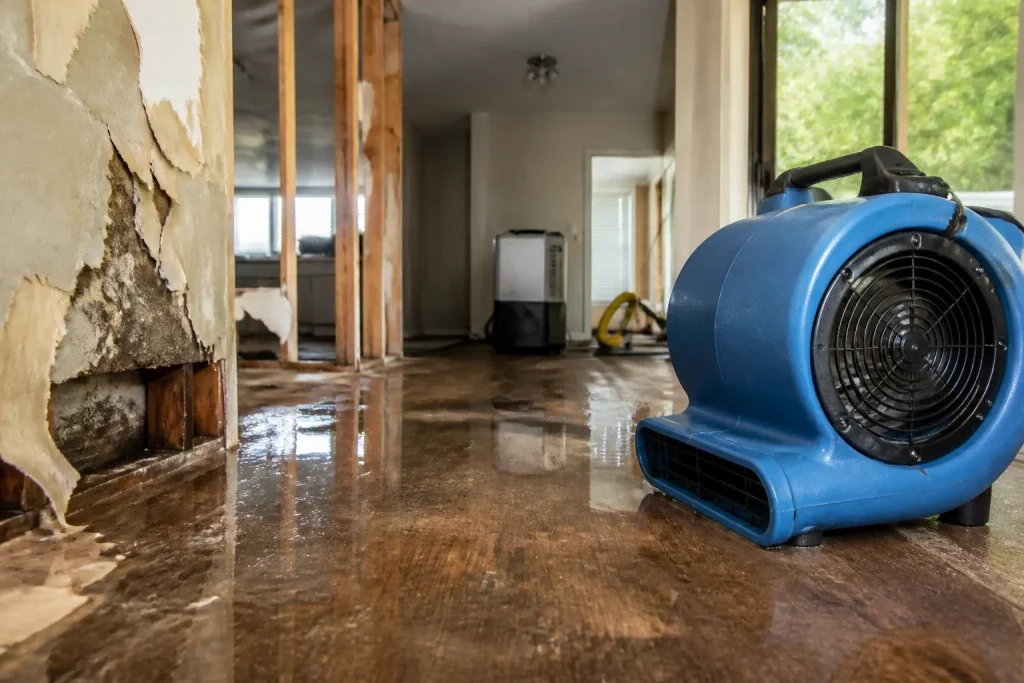
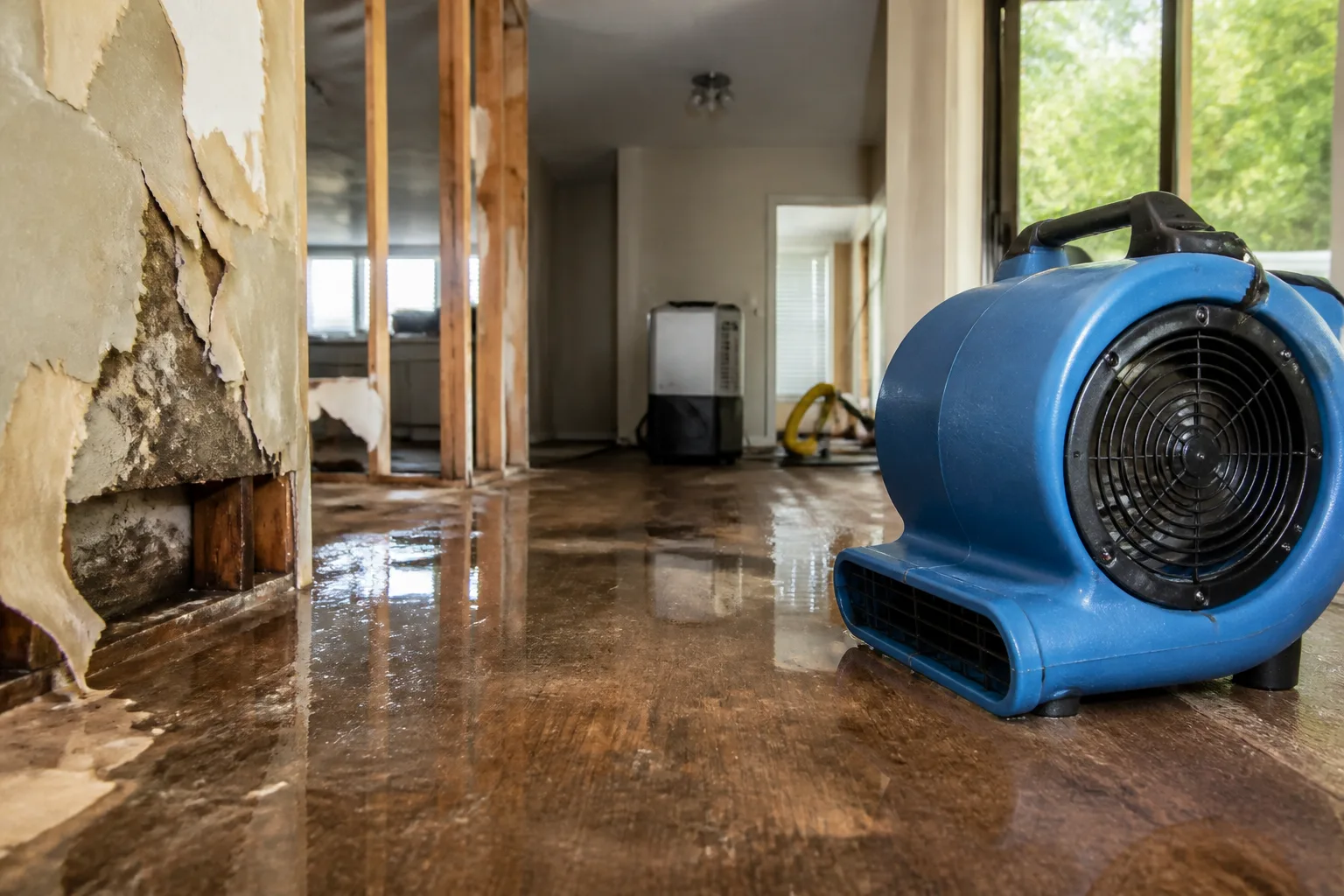
B-Air air movers are standard equipment in professional water damage restoration across Los Angeles, with the Grizzly, Bear 1.0, and Cub models serving different room sizes and water-loss categories. Proper positioning at a 45-degree angle to wall bases creates vortex airflow that pulls moisture from cavities, not just floor surfaces. If you’re dealing with active water damage in Los Angeles and need a crew that documents every reading, call us at (361) 317-7269 for a free estimate.
Here’s something we’ve learned after thousands of jobs: an air mover aimed flat at the center of a wet floor is almost always positioned wrong. We see it on re-dos all the time, crews who dropped equipment and disappeared. The moisture meter says dry on top, but the drywall behind the baseboard is still wet enough to grow mold in three weeks. In Los Angeles, where many homes have stucco exteriors and limited wall cavity ventilation, that hidden moisture is a real problem.
Which B-Air Model Fits Which Job
B-Air builds three air movers that show up regularly on professional restoration jobs. The specs matter because matching the wrong CFM to the room wastes energy and extends drying time.
- B-Air Grizzly: 2,800 CFM, the largest in the lineup. We use these for open-plan living areas, commercial lobbies, and Category 3 losses where significant standing water has been extracted. In a typical Los Angeles ranch-style home with combined kitchen-living space, one Grizzly can cover 400 – 500 square feet when positioned correctly.
- B-Air Bear 1.0: 1,900 CFM, the workhorse for standard residential rooms. Bedrooms, home offices, and single bathrooms in LA’s mid-century homes usually get one or two Bears depending on saturation depth.
- B-Air Cub: 800 CFM, compact and stackable. We deploy these for closets, pantries, and the tight water heater closets common in Los Angeles condo conversions. The Cub also works as a secondary unit for baseboard-focused drying in rooms where a larger unit would over-dry the center and miss the perimeter.
The mistake we correct most often on takeover jobs: a crew brought four Grizzlies for a 900-square-foot apartment and parked them all in the middle of each room. That’s 11,200 CFM hitting floor surfaces that were already extracted dry, while the wall bases sat stagnant. Proper drying in Los Angeles’s older buildings, especially the 1950s – 1970s stock with plaster and lath or early drywall, requires perimeter-focused airflow, not brute force in the center.
The 45-Degree Vortex Technique
Trained IICRC technicians angle B-Air units at roughly 45 degrees to the wall base. This isn’t preference, it’s physics. The angled airflow creates a low-pressure vortex that pulls moist air out of the wall cavity and replaces it with drier air from the room. Flat placement in the center of the room circulates surface air only, the easiest moisture to evaporate and the least consequential for long-term damage.
Here’s what proper positioning looks like on a typical Los Angeles job:
- Place the B-Air unit 6 – 12 inches from the wall base, snout angled upward toward the baseboard.
- Position so the airstream skims the wall surface and creates circulation back toward the unit’s intake.
- Space multiple units to create overlapping vortex zones, not competing direct streams.
- Adjust angle as wall materials change, stucco exterior walls in LA often need steeper angles than interior drywall to overcome the moisture sink effect.
We walked a job in Silver Lake last month where the previous crew had four units flat on a hardwood floor for five days. The floor was cupping from over-drying while the baseboard trim popped loose from hidden moisture expansion. We repositioned with Bears at 45 degrees, added a desiccant dehumidifier for the ambient load, and had stable readings in 48 hours. The hardwood was salvageable, but only because we caught it before permanent deformation.
Cycling and Repositioning: The Red Flag of Static Layout
B-Air equipment should move as moisture readings drop. A static layout left untouched for three to five days signals a crew that’s not monitoring, they’re just renting equipment to your insurance claim.
Our daily protocol on every Los Angeles job:
- Morning moisture mapping with penetrating and non-penetrating meters
- Equipment repositioning based on new readings, not calendar days
- Dehumidifier recalibration as grain per pound (GPP) drops
- Documentation photo of each unit’s new position
The B-Air Grizzly and Bear both have multiple speed settings. We start at high speed for initial evaporation, typically the first 24 – 36 hours after extraction, then step down as equilibrium moisture content approaches target. Running full speed into late-stage drying wastes electricity and can over-dry materials, causing shrinkage in wood trim and cabinetry. Los Angeles’s low ambient humidity, especially during Santa Ana wind events, actually accelerates this risk if technicians don’t adjust.
When we scope a job, we estimate equipment days but tell homeowners upfront: the count changes based on daily readings, not our initial guess. That’s part of The Garrison Standard we work to, the price gets written before work starts, but the equipment layout evolves with the science.
What a Daily Moisture Log Should Actually Show
Every B-Air unit on your job should appear in the daily log with specific data. If your restoration company hands you a generic “drying in progress” note, ask for this instead:
| Log Entry | What It Documents |
|---|---|
| Equipment ID | Serial number or asset tag of each B-Air unit, Grizzly #47, Bear #12, etc. |
| Room and placement position | “Master bedroom, north wall, 45-degree angle, 8 inches from baseboard” |
| Ambient relative humidity (RH) | Percentage at 3 feet height, away from direct equipment airflow |
| Temperature | Fahrenheit, same measurement point as RH |
| Grains per pound (GPP) | The actual moisture load in the air, calculated from psychrometric data |
| Material moisture content | Penetrating meter reading in affected drywall, wood, or substrate |
This log serves two purposes. First, it guides our technicians on repositioning. Second, it’s formatted to support your insurance claim with timestamped evidence that drying progressed to IICRC standards. In Los Angeles, where many carriers require documentation before approving supplemental charges, the daily log is often the difference between full coverage and out-of-pocket disputes.
We include this documentation on every water damage restoration in Los Angeles we handle, no exceptions. The Garrison Code says do it by the book, and the book requires written records.
Weight, Stackability, and LA’s Access Challenges
B-Air units are lighter than many competitors, the Cub especially, but the Grizzly still runs 35 – 40 pounds. In Los Angeles, that matters more than in most markets because of our building stock.
High-rise condos in Downtown LA, Century City, and the Wilshire corridor often have freight elevators with weight limits and restricted hours. The B-Air Cub’s 16-pound frame and stackable design lets us stage multiple units without exceeding elevator capacity. We’ve done 20-unit deployments in buildings where the freight elevator shuts down at 5 PM, the stackability means fewer trips and less corridor obstruction.
Older hillside homes in the Hollywood Hills, Los Feliz, and Pacific Palisades present the opposite problem: no elevator, steep driveways, and narrow exterior stairs. The Bear 1.0 hits a sweet spot here, enough CFM for most rooms but manageable for technicians carrying gear up multiple flights. We’ve learned to scope these jobs with equipment weight in mind, not just room dimensions.
The stackability also affects on-site storage. Los Angeles garages are often packed with stored items even in larger homes. B-Air units stack four high without damage, so we can clear floor space for the actual drying work. It’s a small detail that matters when the alternative is equipment scattered through living areas where homeowners still need to function.
When to Call a Professional Crew
If you’re reading this because water is actively spreading, stop and make the call. Standing water degrades materials on a measured timeline: drywall loses structural integrity in 24 hours, mold colonization begins in 48 – 72 hours, and wood framing starts dimensional change that affects permanent fit. Our phones are answered by a live person 24 hours a day, including nights and weekends, because water doesn’t wait for business hours.
The same applies if you’ve already got equipment running and something feels off. Units sitting flat in room centers. No daily log with specific readings. The same layout on day four as day one. These are signals that the crew isn’t managing the drying, they’re just occupying your space with rented fans.
For related concerns, we also provide fire damage restoration in Los Angeles and mold remediation in Los Angeles, both with the same documentation standards and the Done Right Promise.
The Bottom Line
B-Air equipment works when technicians understand why they’re positioning it, not just that they’re supposed to run it. The 45-degree vortex angle, daily repositioning based on moisture logs, and model selection matched to room size and building access, these are the differences between professional restoration and equipment rental with a truck wrap.
Key takeaways for Los Angeles homeowners:
- Angle matters: flat placement dries floors, angled placement dries structures
- Match the model: Grizzly for large open spaces, Bear for standard rooms, Cub for tight spaces
- Demand the log: equipment ID, placement position, RH, temperature, GPP, and material readings, daily
- Watch for static layouts: unmoved equipment after day two is a monitoring failure
- Consider access: LA’s building variety means weight and stackability affect job execution
If you’re in Los Angeles and need help assessing whether your current drying plan is actually working, or if water damage is new and you want it done right from the start, Keegan Water Damage Restoration offers free estimates. Call (361) 317-7269 and you’ll reach a live person who can dispatch a background-checked, uniformed technician with professional-grade B-Air, Dri-Eaz, Phoenix, and Injectidry equipment. The price goes in writing before any work starts, and every repair is backed by our Done Right Promise.
Frequently Asked Questions
Correctly positioned B-Air units sit 6 – 12 inches from wall bases at roughly a 45-degree upward angle, not flat in the center of the room. If you see multiple units aimed at open floor space with no angle toward walls, the crew is likely drying surfaces while missing structural moisture. Call (361) 317-7269 for a free assessment of your current drying plan.
Initial high-speed operation typically runs 24 – 36 hours after extraction, then technicians step down speed and reposition units as moisture readings drop. Total equipment days vary by saturation depth, material type, and ambient conditions, Los Angeles’s dry climate often shortens cycles compared to humid regions, but only with proper monitoring. Call (361) 317-7269 for an estimate based on your specific situation.
Most Los Angeles homeowners policies cover professional drying equipment when the loss is sudden and accidental, but carriers require documentation of necessity and proper use. We format every daily moisture log, equipment ID record, and photo to support direct adjuster coordination, and we put the scope and pricing in writing before work starts so there are no surprise disputes. Call (361) 317-7269 to discuss your specific policy and loss details.
B-Air emphasizes durability and stackability in its professional lineup, with the Grizzly, Bear, and Cub models covering a wide CFM range in relatively lightweight frames. Other brands like Dri-Eaz and Phoenix offer comparable performance in different form factors, we select equipment based on job-specific needs, not brand loyalty. The technician’s training and monitoring discipline matters more than the logo on the housing. Call (361) 317-7269 for a crew that works to IICRC standards regardless of equipment brand.
Written by the team at Keegan Water Damage Restoration.
Need Damage Restoration Help?
Call Keegan Water Damage Restoration - licensed & insured, here with fast after-hours help in Los Angeles.
(361) 317-7269