
Dri-Eaz Water Damage Restoration in Los Angeles: A Homeowner’s Guide
A Dri-Eaz dehumidifier running in your Los Angeles home should pull moisture to a specific grain-per-pound target, documented daily, or your subfloor stays wet even when the carpet feels dry. The equipment is professional-grade, but only when the technician sets the correct CFM for your coastal or inland climate zone and logs psychrometric readings until the drying goal is met. If you’d rather not verify all this yourself, call us at (361) 317-7269 and we’ll walk you through what we see on your job.
We pulled a Dri-Eaz LGR 7000XLi out of a garage in Venice last month where a contractor had left it running for six days at the factory default setting. The homeowner’s plywood subfloor was still at 18% moisture content. The machine was fine. The readings behind it weren’t. That’s the gap this guide closes.
What LGR Technology Actually Does (and Why LA’s Marine Layer Matters)
Low Grain Refrigerant dehumidifiers work differently than standard refrigerant units. Once relative humidity drops below about 40%, standard units lose efficiency fast. LGR units use pre-cooling and air-to-air heat exchange to keep pulling moisture even in drier air. In Los Angeles, this matters more than most homeowners realize.
The marine layer rolls in from Santa Monica to San Pedro most mornings, especially May through July. Coastal neighborhoods can spike from 45% to 85% relative humidity in hours. An LGR unit handles that swing without stalling out. Inland, where Pasadena or Woodland Hills sit in drier heat, the same machine works harder at the start but finishes faster once the envelope is controlled.
Here’s what to verify on your job:
- The technician logs grain-per-pound (GPP) at start, daily, and at completion – not just relative humidity
- Target GPP for structural drying in Los Angeles typically runs 40 – 55 GPP for wood framing, lower for dense materials
- The dehumidifier’s capacity matches the cubic feet of affected space, not just the square footage of wet carpet
We size every job to IICRC S500 standards, which means calculating the dehumidification requirement from the Class of water loss and the specific volume of the affected area. A 2,000 square foot home with a Class 3 ceiling-to-floor saturation needs a different LGR configuration than a 2,000 square foot home with a Class 1 surface spill.
Which Dri-Eaz Models Suit Which Southern California Conditions
Dri-Eaz builds several LGR units, but two dominate residential water damage restoration in Los Angeles. The right choice depends on your home’s construction era, the affected materials, and whether you’re coastal or inland.
The LGR 7000XLi pulls up to 130 pints per day at AHAM conditions (80°F, 60% RH). We deploy this for most single-family homes in Los Angeles built 1960 – 1990 with standard drywall and plywood subfloors. It’s got the CFM to handle open-floor-plan drying when combined with proper air mover placement. In a recent job in the Hollywood Hills, we ran two 7000XLis plus Injectidry floor mats to dry oak hardwood over a crawl space – hit our 45 GPP target in 72 hours.
The Evolution LGR is smaller, lighter, and pulls about 70 pints per day. We use this for condos in Downtown LA or older apartments with limited electrical capacity, or when we need to stage multiple zones in a larger home. It’s also our go-to when we’re working around occupied spaces and noise matters – the Evolution runs quieter than the 7000XLi.
What we don’t do: drop a 7000XLi in a 600-square-foot studio and call it a day. Oversized dehumidification can over-dry and crack trim or flooring. The Garrison Standard requires we match equipment to the job, document why we chose it, and adjust if readings drift outside target.
The Daily Moisture Readings That Actually Matter
“It feels dry” is not a drying standard. Neither is “the carpet’s dry to the touch.” We log four data points minimum on every Los Angeles job, every day, until we hit goal:
- Air temperature and relative humidity – taken at multiple heights, since stratification is real in two-story homes
- Grain-per-pound (GPP) – the actual moisture load in the air, which tells us if the dehumidifier is winning
- Surface moisture content of affected materials – wood, drywall, concrete, using pin or non-invasive meters as appropriate
- Equilibrium moisture content (EMC) target – what that material should read in your specific Los Angeles microclimate
For dimensional lumber in Los Angeles, we typically target 10 – 12% moisture content. Drywall should hit below 1% above its normal baseline for that home. Concrete slabs are trickier – we often need desiccant drying or extended LGR runs, especially in post-1990s slab-on-grade construction common in the San Fernando Valley.
The daily log gets formatted into your job file. If insurance is involved, those numbers go straight to the adjuster. No numbers, no proof, no payment. That’s why we photograph every reading, every day, with the meter model and calibration date visible.
How Equipment Documentation Builds Your Insurance Claim
Insurance adjusters in Los Angeles see a lot of water damage claims. The ones that pay fastest have three things: photo documentation, equipment logs with serial numbers, and a clear scope of loss written before work starts.
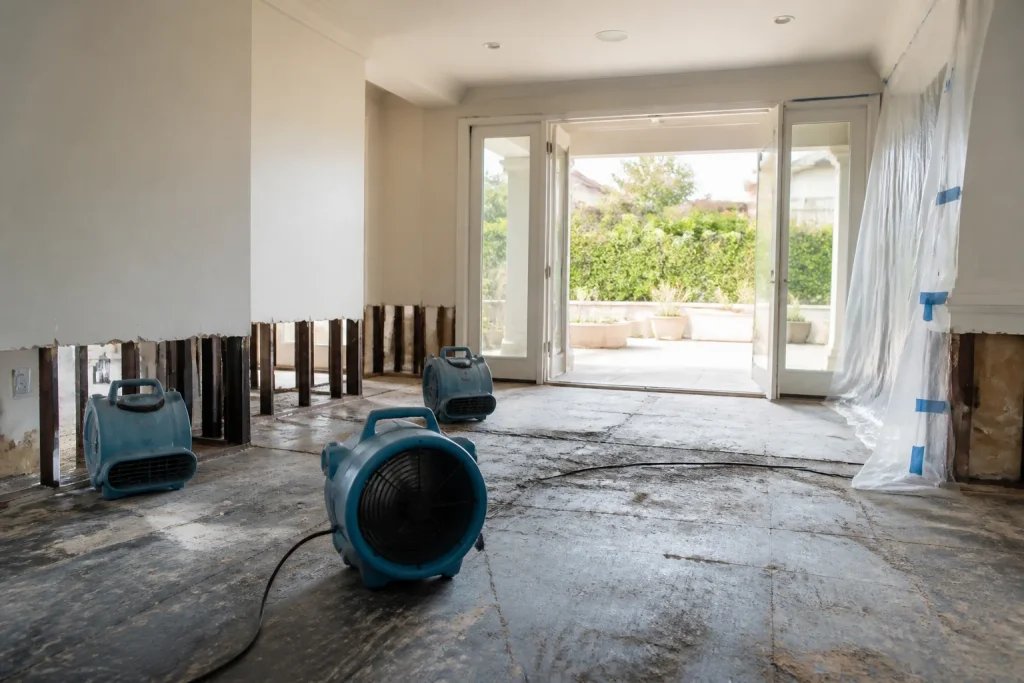
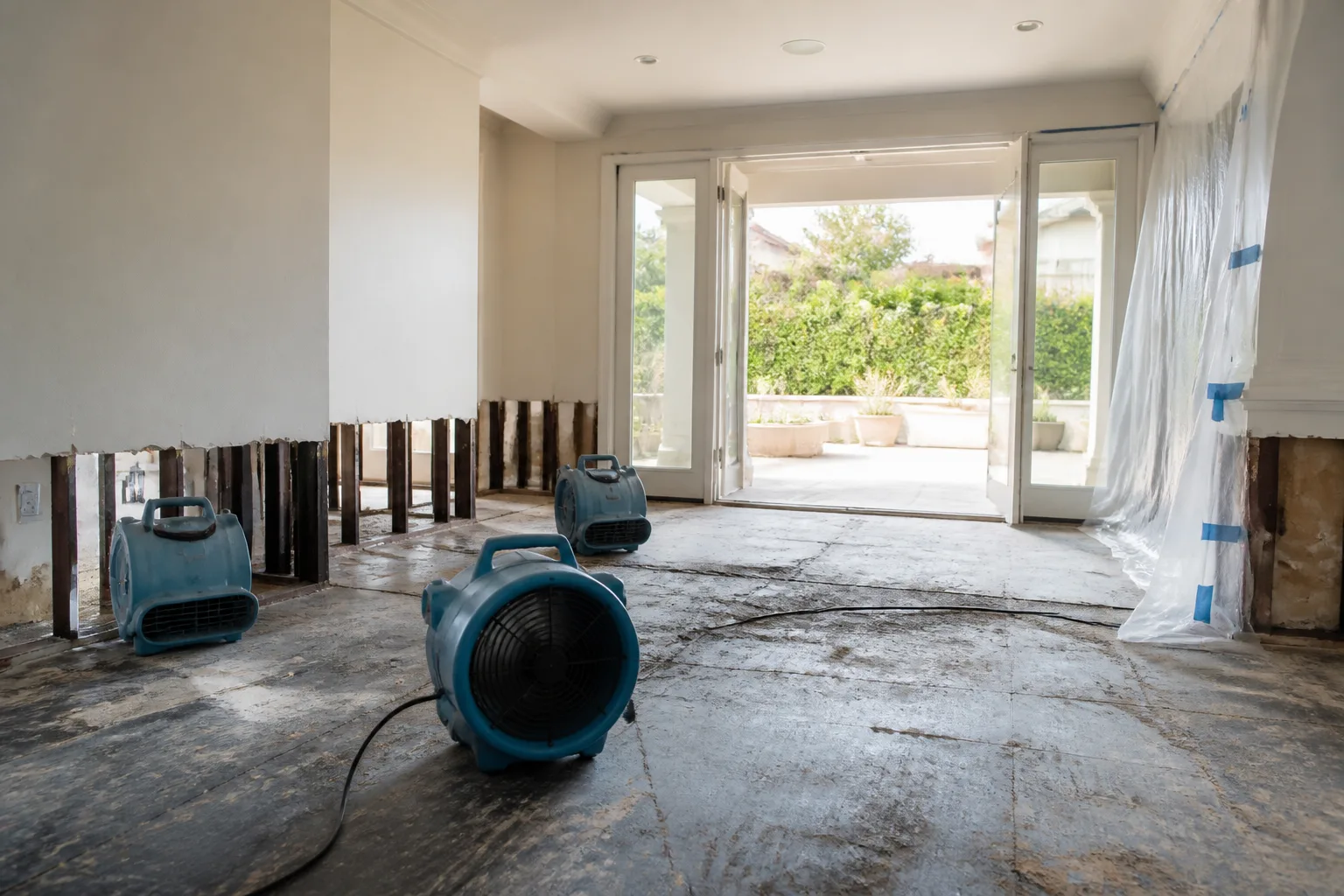
Every Dri-Eaz unit we deploy gets logged with its serial number, placement photo, and start/stop times. We photograph the equipment in place, the moisture readings at that location, and the overall room configuration. If an adjuster questions whether three air movers were necessary for that bedroom, we show them the psychrometric calculation and the drying chart.
Here’s where some contractors cut corners: they stage equipment for the initial photo, then remove half of it once the homeowner signs the work authorization. The machines you saw at 9 AM aren’t the machines running at 2 PM. We prevent this two ways. First, our technicians log amp-draw readings at setup and at each daily check – a running LGR pulls predictable amperage, and a dead or removed unit pulls zero. Second, we encourage homeowners to check the equipment serial numbers against the job log. The Garrison Standard says the equipment in your home matches the equipment on your invoice, period.
We also format our documentation to RIA and IFA standards where the carrier requests it, and we coordinate directly with adjusters who prefer Xactimate line-item verification. Your job file belongs to you, but we make sure it’s structured so anyone reviewing it can follow the logic from water loss to dry standard.
When to Call a Professional (and What to Expect)
If water has reached your subfloor, entered your wall cavities, or sat for more than a few hours, you need extraction and structural drying, not a wet-dry vacuum and hope. In Los Angeles, the combination of older plumbing, slab foundations, and seasonal humidity swings means water travels in ways that aren’t visible from the surface.
When you call (361) 317-7269, a live person answers. We ask five questions: when did the loss occur, what type of water (clean, gray, or black), how many areas are affected, is the source stopped, and is electricity on in the home. That lets us stage the right equipment and give you a realistic arrival window. We show up inside that window, in uniform, with background-checked technicians who put the scope and price in writing before touching anything.
Related services in Los Angeles: Water Damage Restoration in Los Angeles, Fire Damage Restoration in Los Angeles, and Mold Remediation in Los Angeles.
The Bottom Line
The Dri-Eaz name on a dehumidifier is a starting point, not a guarantee. What matters is the psychrometric plan behind it: correct equipment sizing, daily GPP and moisture-content logging, and documentation that holds up to insurance review. In Los Angeles, where coastal humidity and inland dryness create completely different drying environments, the technician’s judgment matters as much as the machine’s capacity.
At Keegan Water Damage Restoration, every job runs to The Garrison Standard: written price before work starts, background-checked uniformed technicians, professional-grade equipment from Dri-Eaz, Phoenix, XPOWER, B-Air, and Injectidry, and the 365-Day Done Right Promise on every repair. If you’re dealing with water damage in Los Angeles and want a crew that logs the numbers, shows you the readings, and puts everything in writing, call (361) 317-7269 for a free estimate.
Frequently Asked Questions
Most residential drying jobs in Los Angeles run $1,800 – $4,500 for equipment and labor over three to five days, depending on the Class of water loss, the number of affected rooms, and whether demolition is needed. Class 1 surface spills cost less; Class 3 or 4 losses with ceiling involvement cost more. We put the price in writing before any work starts, and estimates are free. Call (361) 317-7269 for an exact quote on your situation.
Sometimes, but not always. Injectidry systems and directed drying can save drywall and plaster when the water source is clean and we start within 24 – 48 hours. If water has been sitting longer, or if it’s Category 2 or 3 water, affected materials usually need controlled demolition to prevent mold and ensure the cavity dries to standard. We scope every Los Angeles job with moisture mapping and tell you exactly what can be saved before we cut anything.
Ask for the amp-draw log. A running Dri-Eaz LGR 7000XLi pulls approximately 6.5 – 8 amps at startup and settles to a steady draw. Your technician should log this at setup and at each daily visit. You can also check that the unit is producing condensate water in the collection tray or discharge hose, and that warm, dry air is exhausting from the machine. At Keegan, we photograph serial numbers and placement, and we welcome homeowners to verify against the daily log.
Most Los Angeles homeowners policies cover reasonable and necessary drying equipment as part of the mitigation phase, provided the loss is sudden and accidental, not gradual or maintenance-related. The key is documentation: equipment logs, daily moisture readings, and photos of placement. We format every job file to support direct adjuster billing, and we coordinate with your carrier to verify coverage before work starts when possible. Call (361) 317-7269 and we’ll review your policy specifics.
Written by Shane Pruitt, Owner at Keegan Water Damage Restoration, serving Los Angeles since 2005.
Need Damage Restoration Help?
Call Keegan Water Damage Restoration - licensed & insured, here with fast after-hours help in Los Angeles.
(361) 317-7269