
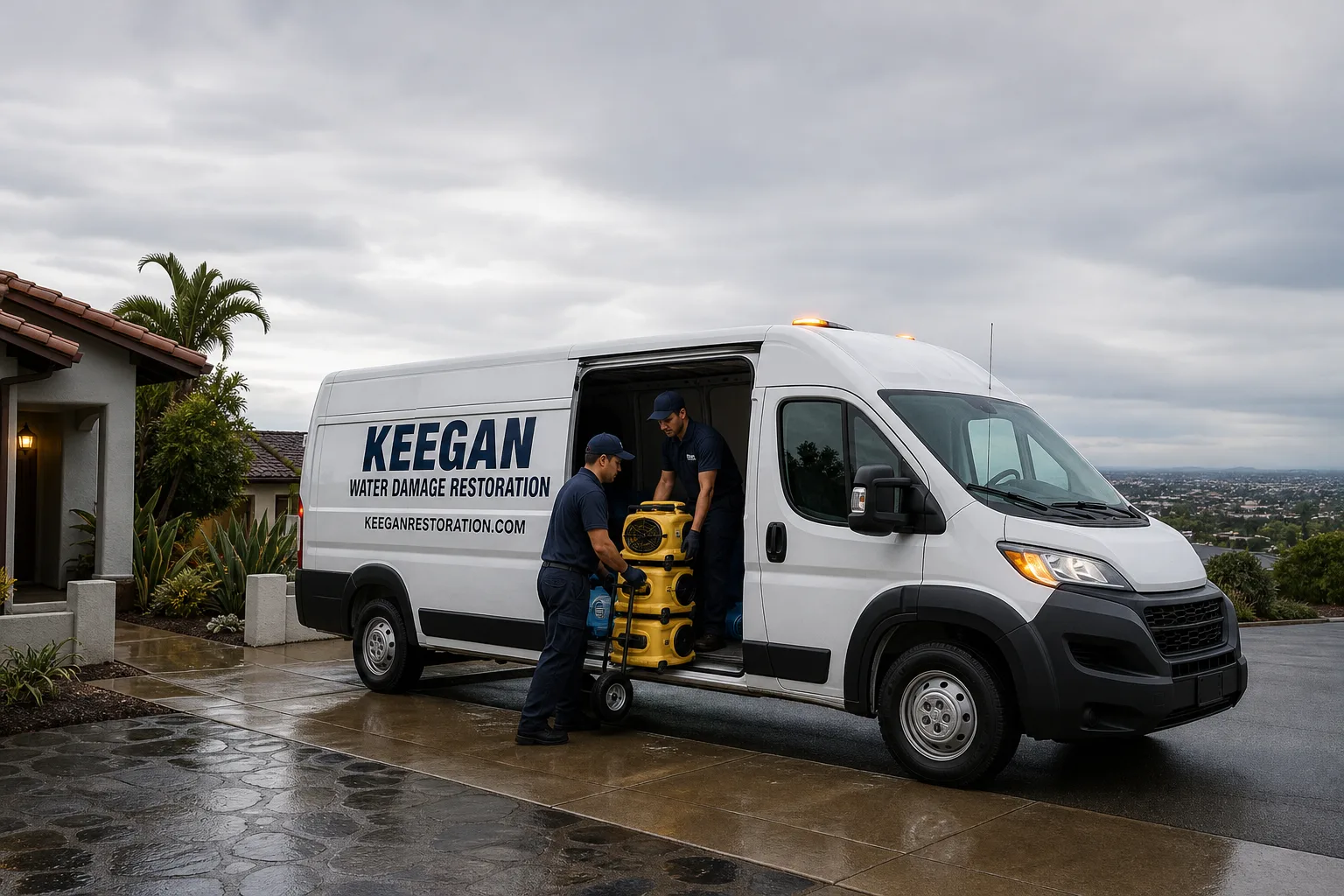
Free visual inspection and a written scope of work before any mitigation begins - photos, moisture readings, and drying logs go in your claim file
The scope we write is the scope we bill. Anything new gets shown to you, in writing, before we touch it.
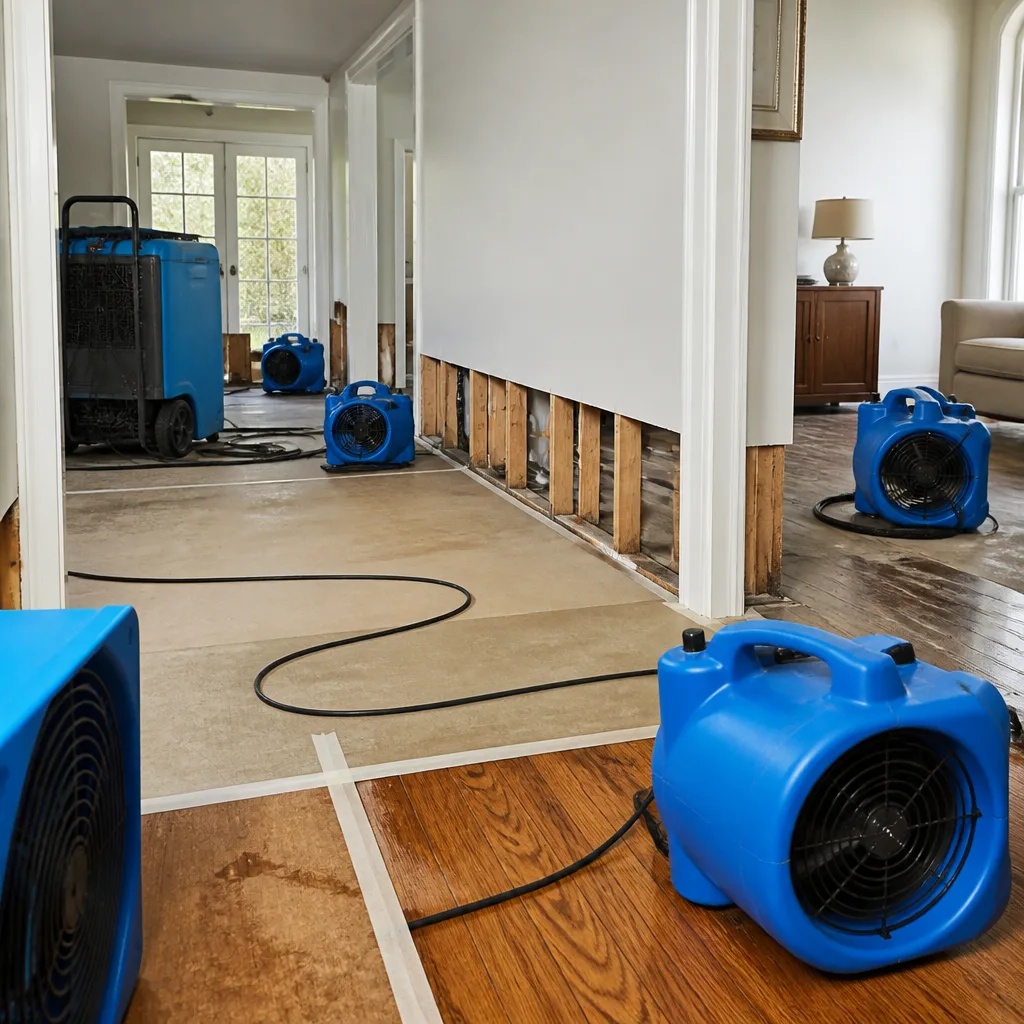
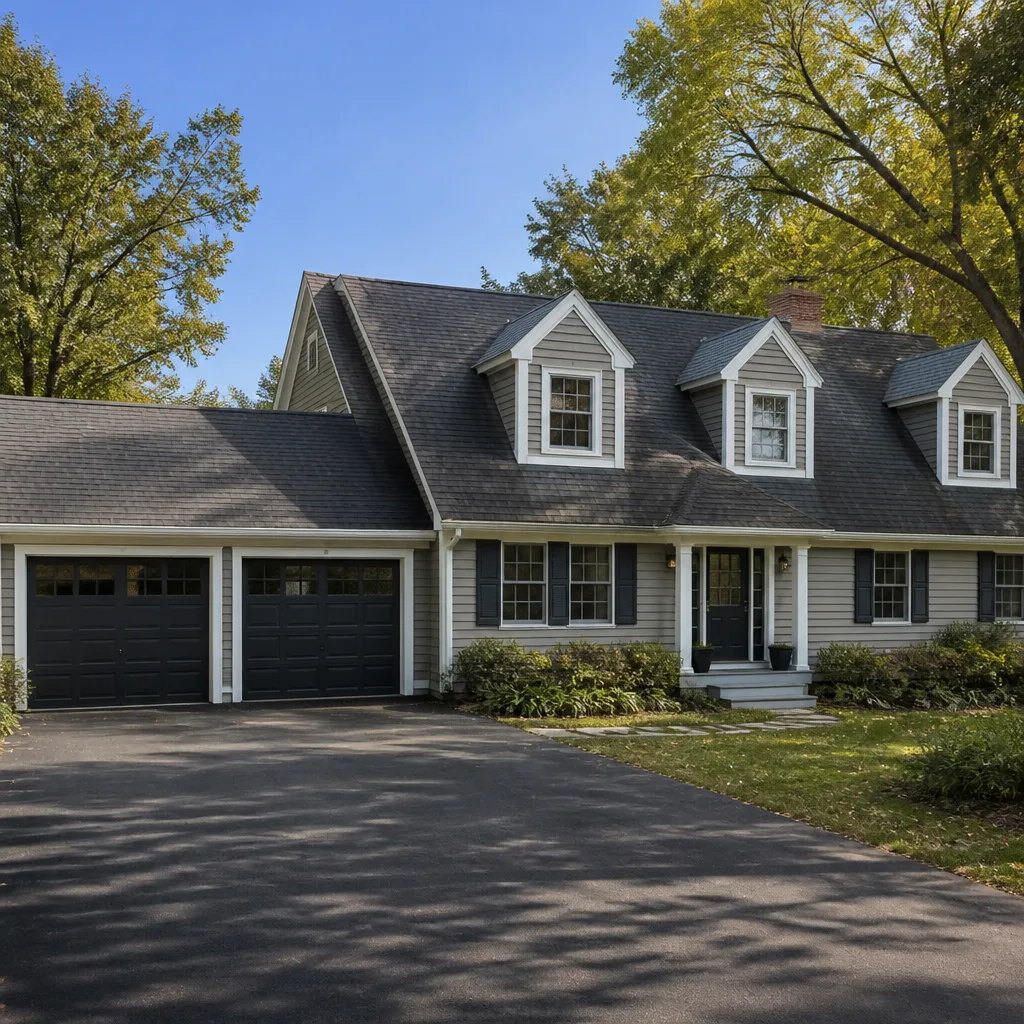
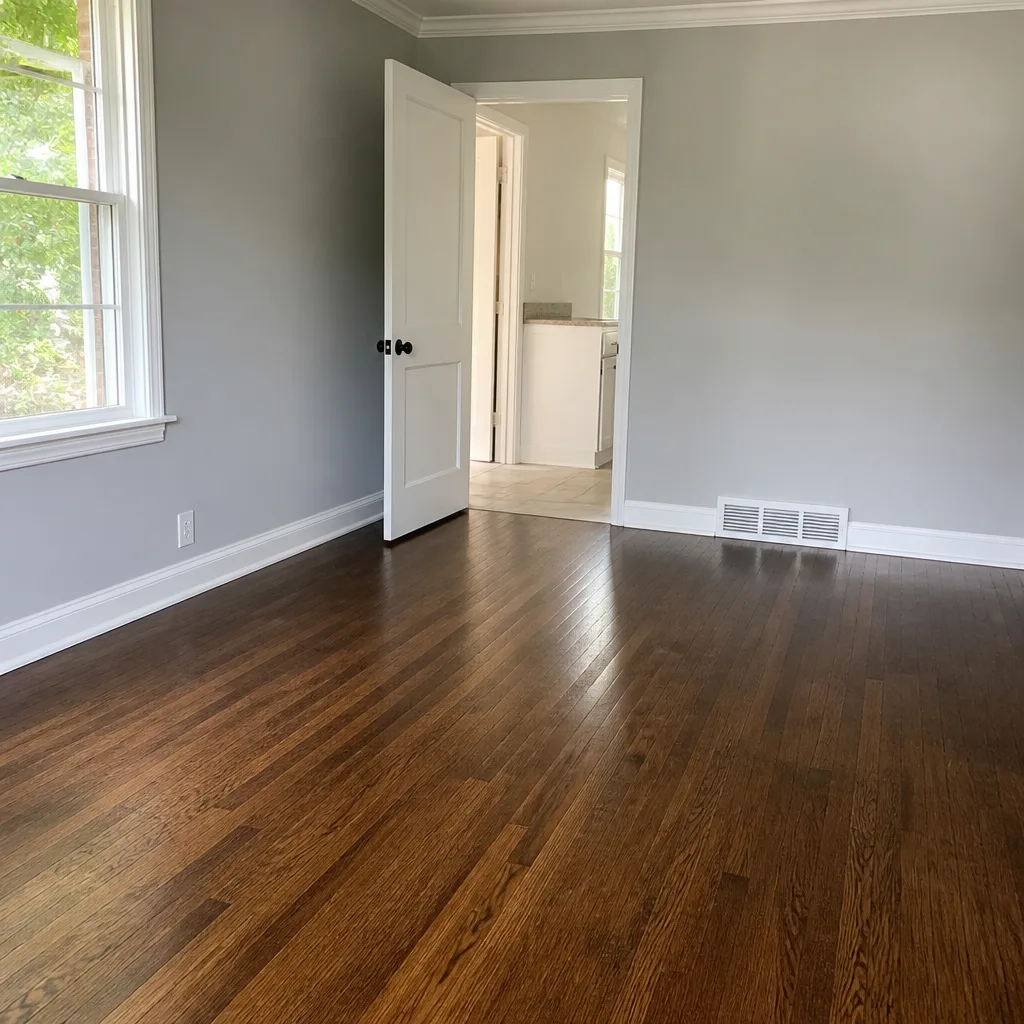
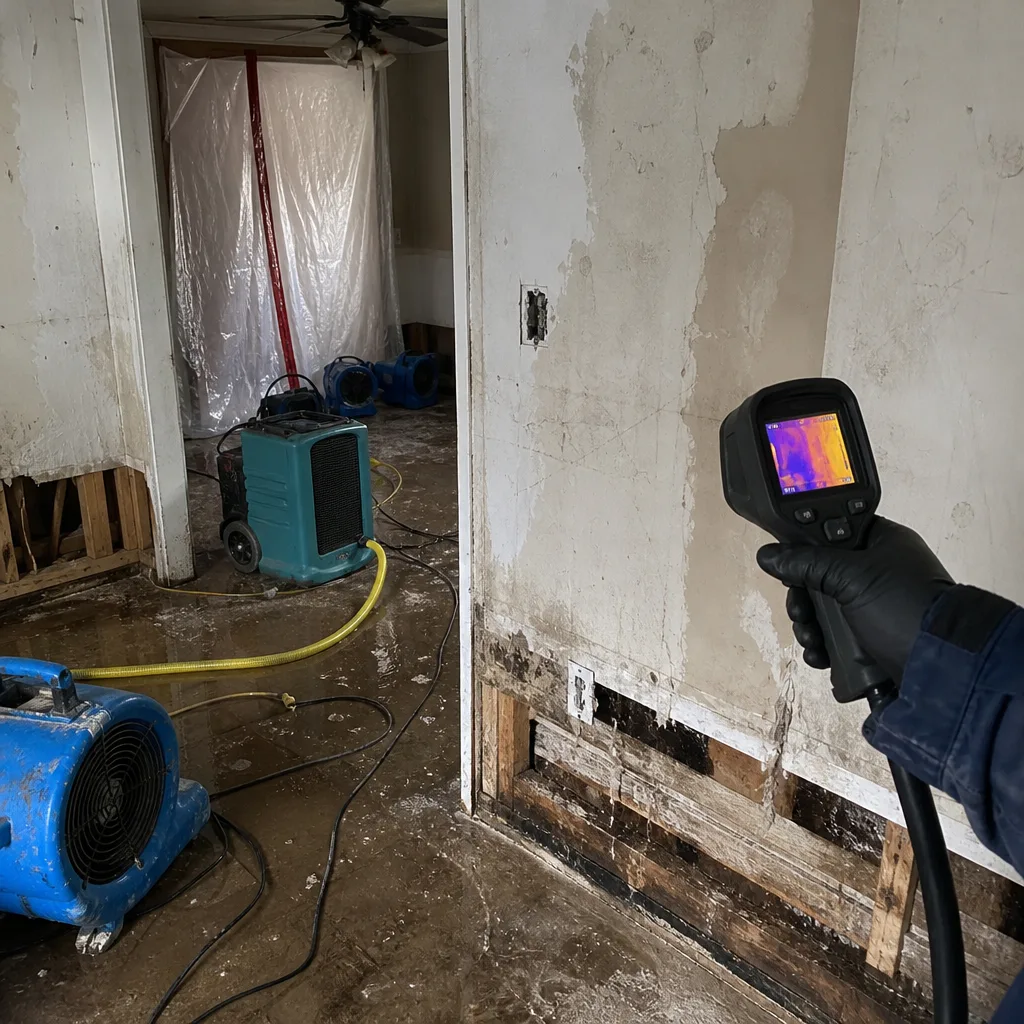 Before
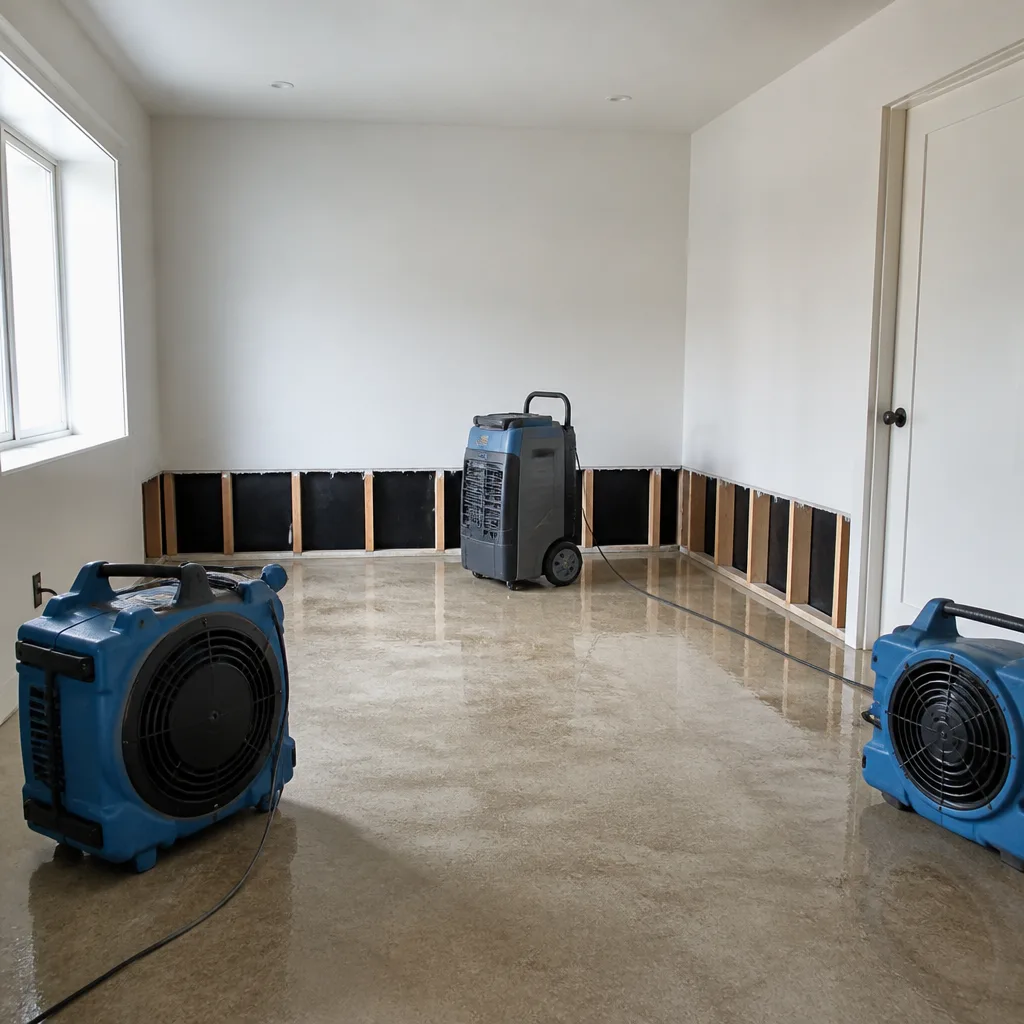 After
After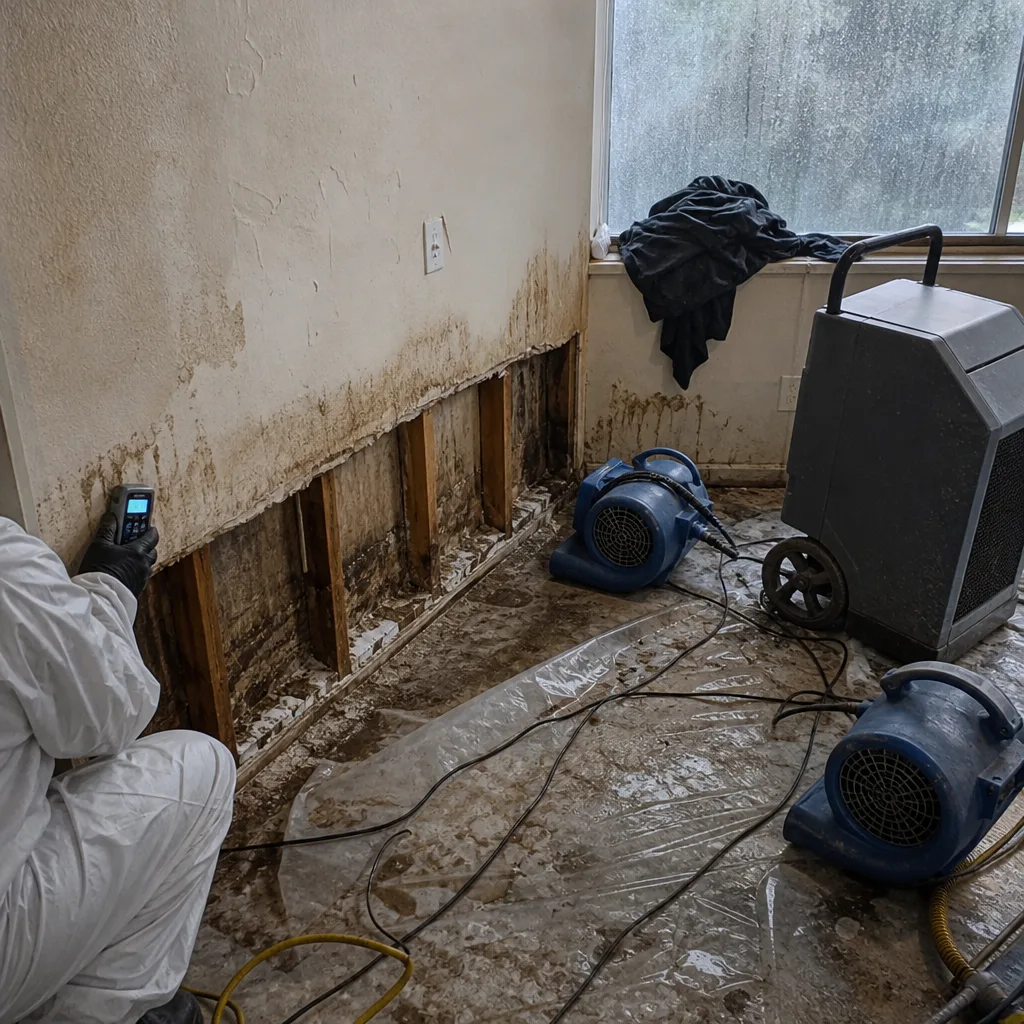 Before
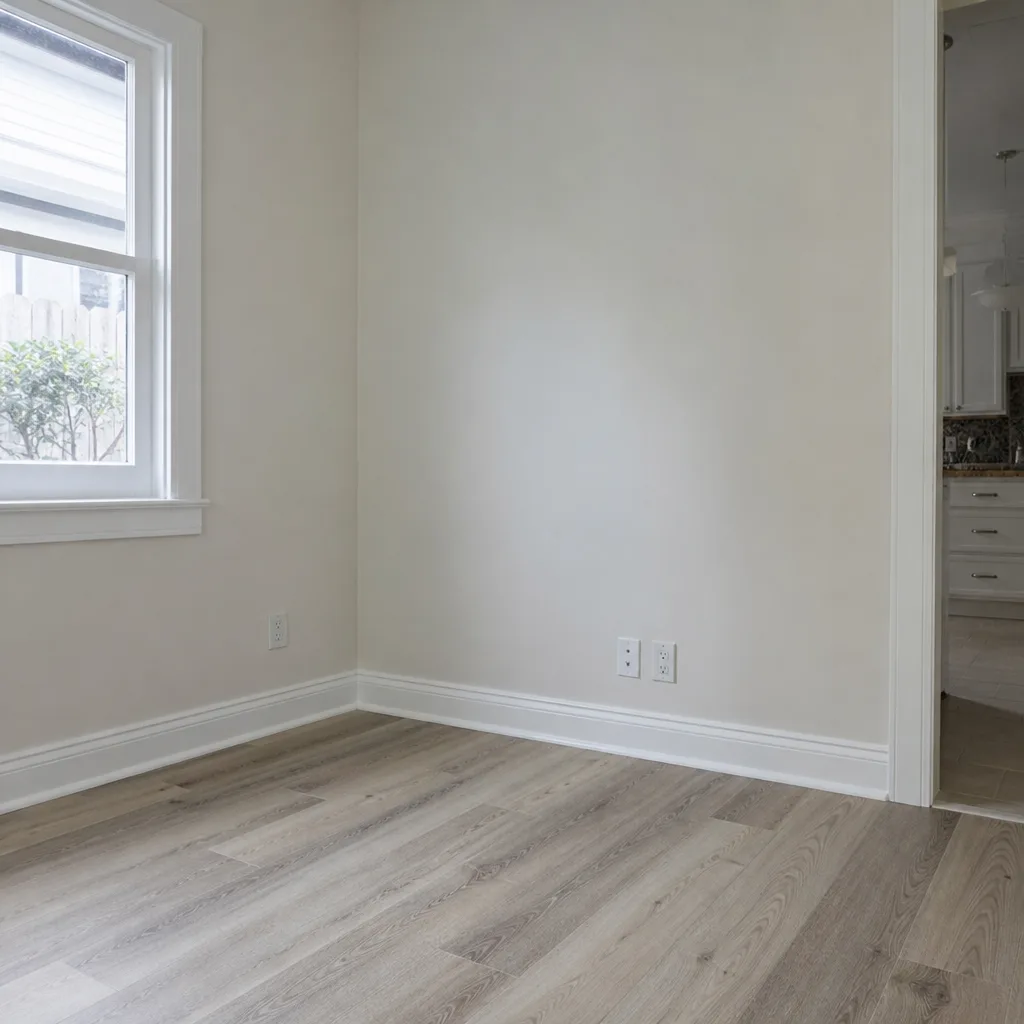 After
After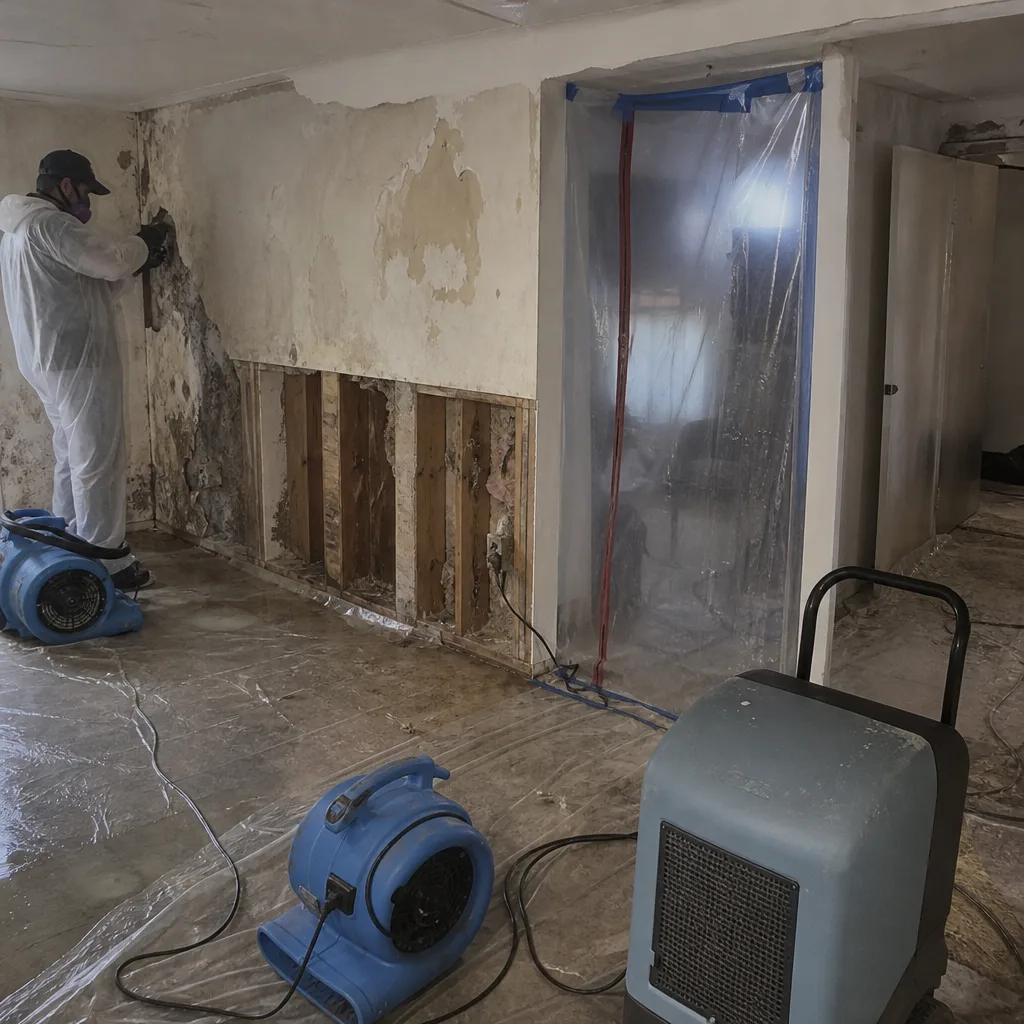 Before
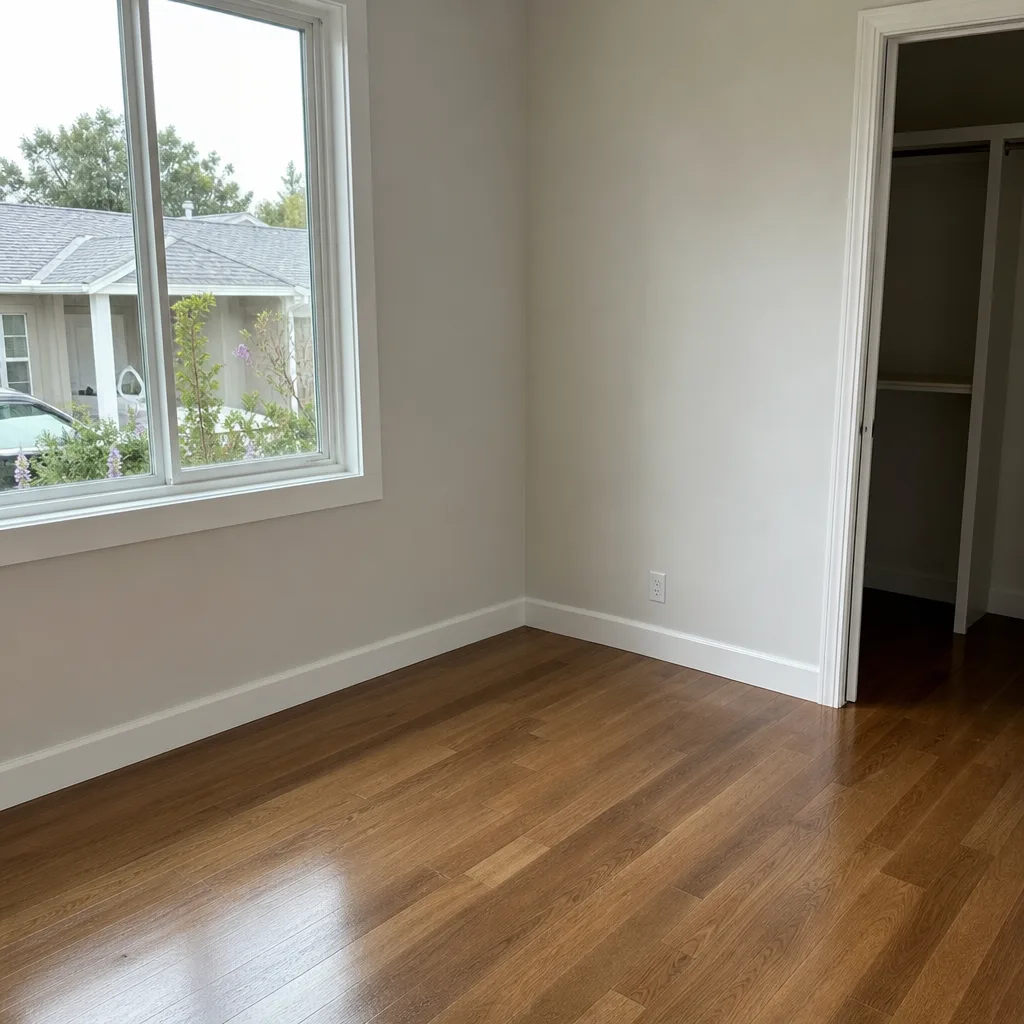 After
AfterWater Damage Restoration Stopped Working
What’s Happening
If your water damage restoration stopped working, the most common cause is incomplete drying – moisture that looked gone at the surface but was never fully extracted from the subfloor, wall cavity, or structural framing beneath. This is not a rare failure; it’s the predictable result of stopping the drying process too early, using undersized equipment, or skipping moisture readings during the job.
What you’re likely seeing right now is the second wave: warped flooring that buckled after the fans were packed up, a musty smell returning in a room that was supposedly dried out, or soft drywall that passed a visual check but never passed a meter test. Sometimes the tell is a fresh water stain appearing on a ceiling that was patched two months ago. Other times it’s a floor that sounds hollow where it used to feel solid. All of these point to the same underlying problem – the water didn’t actually leave. It went deeper, and now it’s made itself known again.
Why It Happens
Drying Was Stopped Too Early
Professional drying is measured in moisture content readings, not calendar days and not how dry something looks. If the company doing your restoration pulled equipment before those readings hit the target levels defined by IICRC standards, moisture stayed behind inside the material. You’ll recognize this failure because the problem resurfaces in exactly the same spot, usually within weeks to a few months after the job closed.
The Equipment Wasn’t Matched to the Job
A single consumer-grade dehumidifier and two box fans cannot dry a water-damaged subfloor or a cavity wall. Professional restoration requires calibrated drying systems – units like the Dri-Eaz or Phoenix commercial dehumidifiers and XPOWER or B-Air air movers, deployed in calculated quantities based on the affected square footage and material types. If the equipment on your job looked like something rented from a hardware store, that’s likely why you’re back here.
Water Got Into Cavities That Weren’t Opened
Water follows gravity and finds every gap – behind baseboards, into the wall cavity, under flooring, into the subfloor below. If no one checked those spaces with a moisture meter or an Injectidry-style drying system designed to push conditioned air into closed cavities, the visible surface dried and the hidden material did not. The sign that this happened is a smell coming from inside a wall, or flooring that feels different underfoot even after the visible water was removed.
The Source Was Never Fully Stopped
Restoration can’t outrun an active leak. If the original water source – a slow slab leak, a failed supply line behind the wall, a roof penetration letting in seasonal rain – was not found and repaired before drying began, the drying equipment was fighting a problem that was still feeding itself. The tip-off is recurrence: the damage comes back in the same area even after you’re told the job is done. Slab leaks in particular are easy to miss; they can run for weeks before the surface shows any sign at all, and by then the subfloor and framing have absorbed far more than anyone expected.
What to Do Right Now
- Stop using any plumbing you haven’t confirmed is working properly. If you suspect the original water source wasn’t fully identified or repaired, shut off the supply to that area of the house until someone can verify it. This costs you nothing and prevents the damage from compounding.
- Photograph everything you can see before touching it. Take photos with your phone – close-up shots of any staining, warping, soft spots, or discoloration. Date-stamp them if your camera app allows it. This documentation matters for your insurance claim, and it gives a technician context before they arrive.
- Note any smells and where they’re strongest. Musty or sour odors coming from a specific wall, floor section, or ceiling often point directly to where moisture is still active. Write down the location and when the smell is most noticeable – morning versus afternoon, after rain, when the HVAC runs. That pattern is diagnostic information.
- Don’t pull up flooring or open walls yourself. It’s tempting, and we understand why. But disturbing materials before a professional assessment can spread contamination, create safety hazards, and complicate your insurance documentation. Let the technician do the initial inspection with proper meters and tools.
- Do not run additional fans or consumer dehumidifiers over the area. If the original drying was incomplete, running more air over the surface won’t reach what’s hiding beneath it. It can also move mold spores if secondary growth has already started. Hold off until a professional assessment confirms what’s actually present.
How We Fix It
When your local Keegan Water Damage Restoration team arrives, the first thing a technician does is a full moisture assessment – not a visual check, a meter-based reading of every affected material. That means the floor, the subfloor, the wall cavity, the ceiling if water tracked upward. We’re looking for where the moisture actually is, not just where it was visible.
From that assessment, we put together a written scope of work with a firm price before any equipment comes off the truck. That’s how every job works under The Garrison Standard – price in writing before any work starts, no exceptions.
The restoration path almost always involves Water Damage Restoration to extract residual moisture and complete the drying with professional-grade equipment including Dri-Eaz, Phoenix, XPOWER, B-Air, and Injectidry systems calibrated to the specific materials involved. If secondary mold growth has already started – which is common when incomplete drying goes unaddressed for more than a few days – Mold Remediation is added to the scope before any structural work begins. Typical drying for a reactivated job runs several days depending on material depth and moisture levels. The work is covered by the 365-Day Done Right Promise: if something fails within a year of completion, we come back and make it right at no charge.
Frequently Asked Questions
It cannot wait. Moisture sitting in wall cavities and subfloors creates active mold growth within 24 to 72 hours under the right conditions – and those conditions (warmth, organic material, no airflow) are almost always present inside a wall cavity. What’s a repair job today becomes a remediation job next week. Call (361) 317-7269 now rather than watching it get worse.
A live person answers our line 24 hours a day, every day of the year, and your local Keegan team dispatches based on what’s in front of you. Call (361) 317-7269 and tell us what you’re seeing – we’ll tell you exactly when someone can be there. We don’t run phone trees or call-back queues.
Coverage depends on your specific policy, the cause of the original damage, and the documentation from the first job. What we can tell you is that our technicians document everything – photos, moisture readings, equipment logs – in a format structured to support an insurance claim, and we work directly with adjusters. Bring us what you have from the original job and we’ll take it from there.
That depends on how long the moisture has been sitting and what the inspection finds. If the incomplete drying was caught within a few days, a re-dry with proper equipment may be sufficient. If it’s been weeks or months – or if you’re noticing a persistent musty smell – there’s a real chance secondary growth is already present and remediation is part of the scope. A technician will tell you exactly what’s there, in writing, before any work starts.
Get It Fixed
Call (361) 317-7269 right now – a live person answers every call, day or night. Your local Keegan Water Damage Restoration team will assess what’s actually happening, put the scope and price in writing before any work starts, and back the repair with the 365-Day Done Right Promise.
Written by Shane Pruitt, Owner at Keegan Water Damage Restoration, part of the Garrison Partners family since 2005.
What Our Customers Say
"Quiet, focused crew. Everyone had a job and they did it."
- Alice M."Documented everything with photos for my insurance. No arguments from the adjuster."
- Carmen R."They pulled the wet drywall to two feet up and dried the studs. Replaced it clean and painted to match."
- Tom E.