
Last updated October 11, 2026
Free visual inspection and a written scope of work before any mitigation begins - photos, moisture readings, and drying logs go in your claim file
The scope we write is the scope we bill. Anything new gets shown to you, in writing, before we touch it.
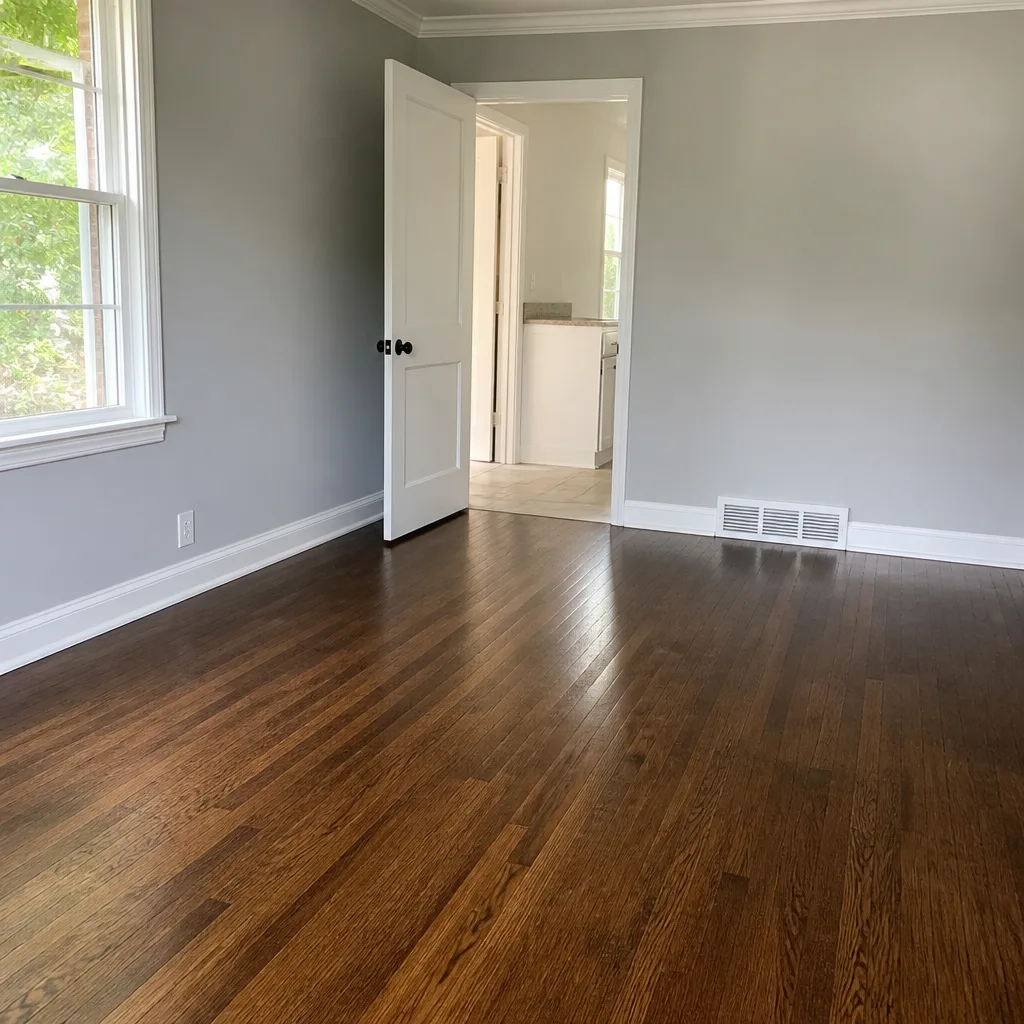
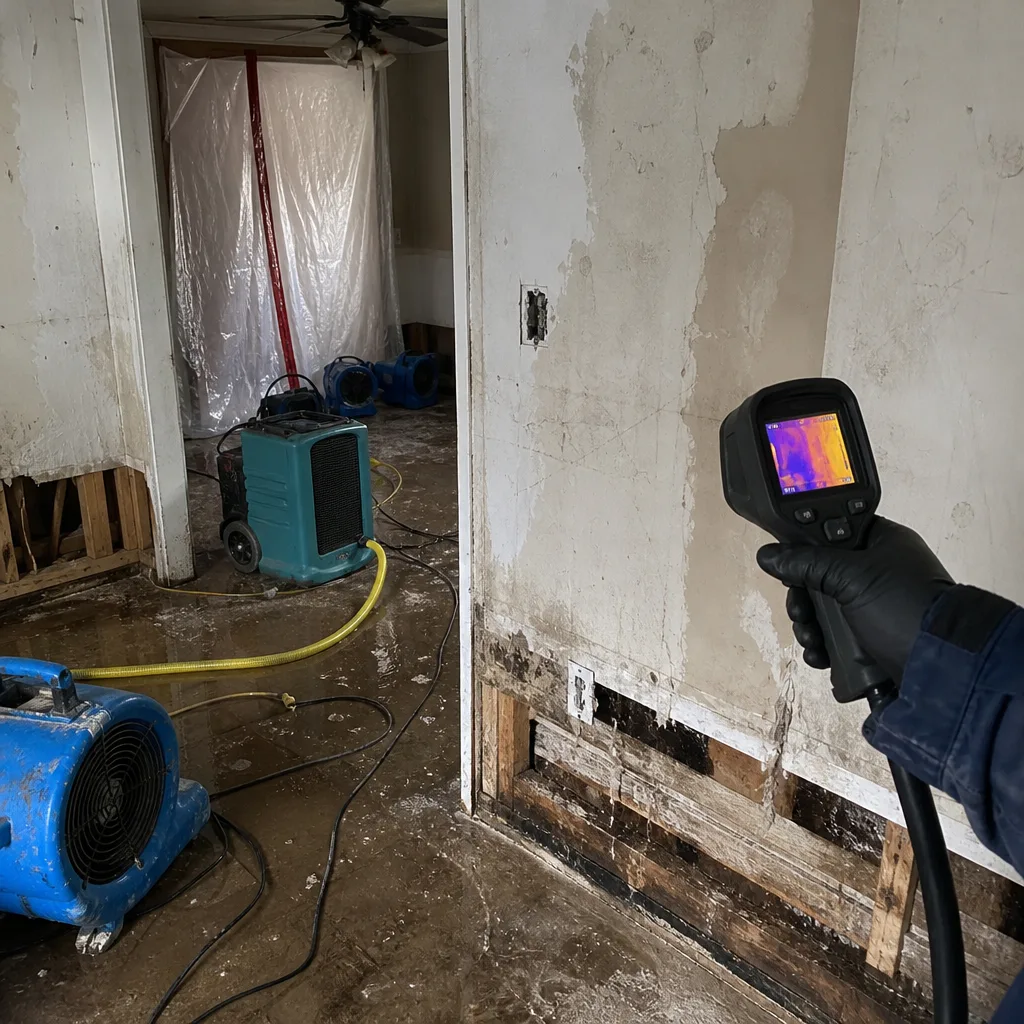 Before
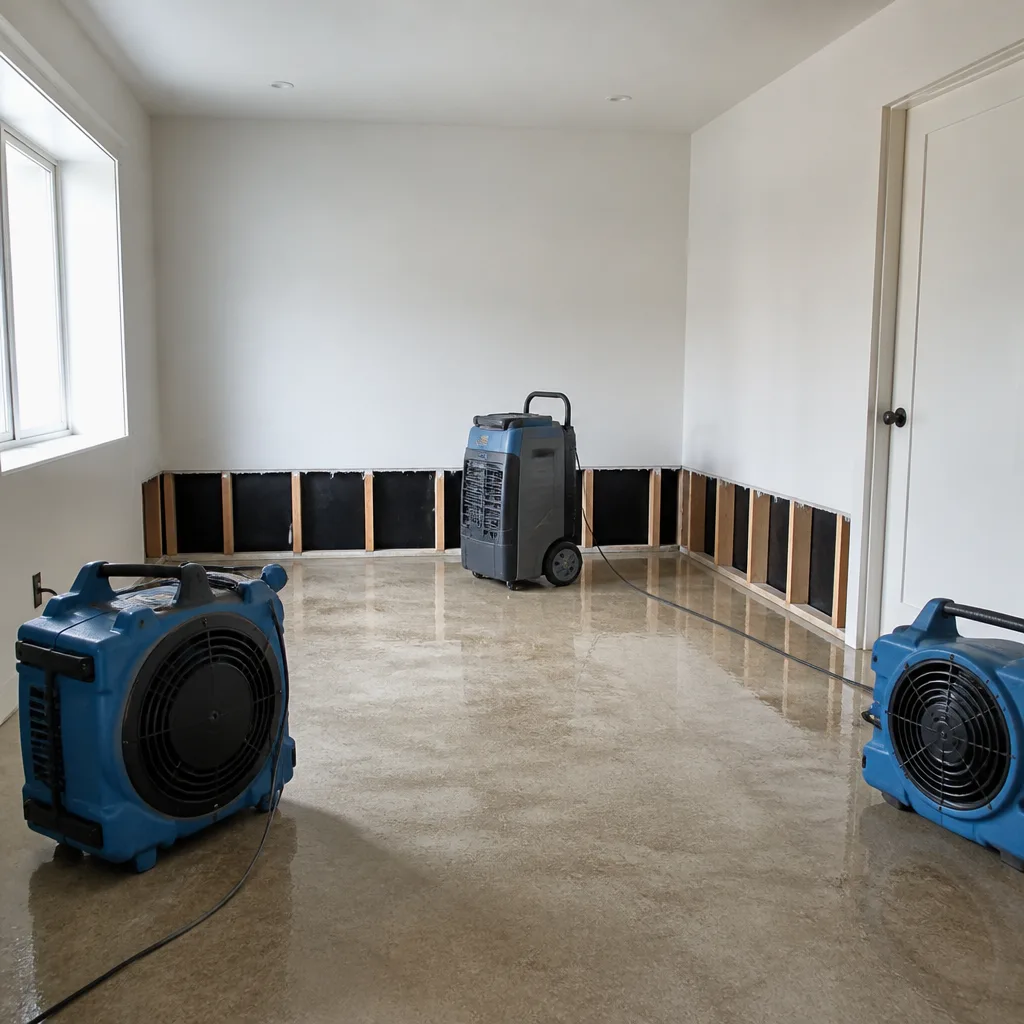 After
After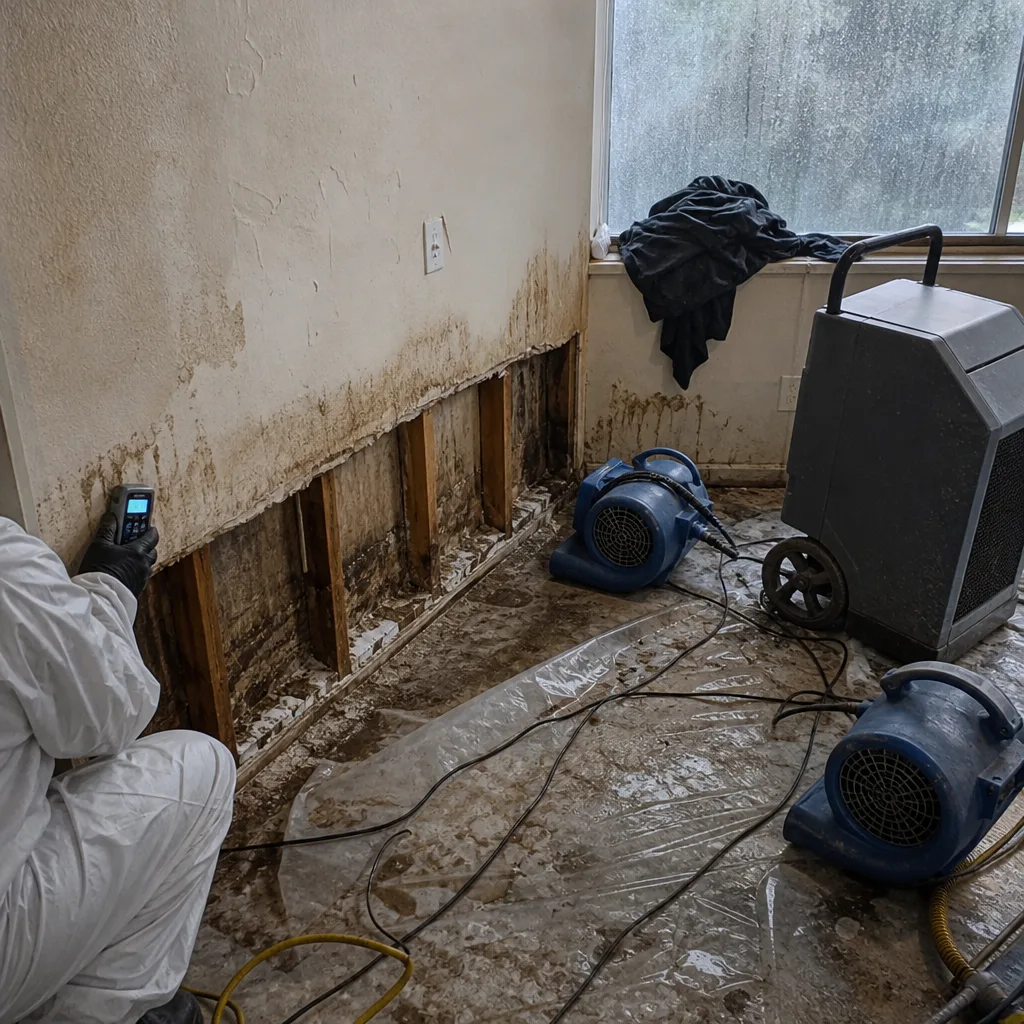 Before
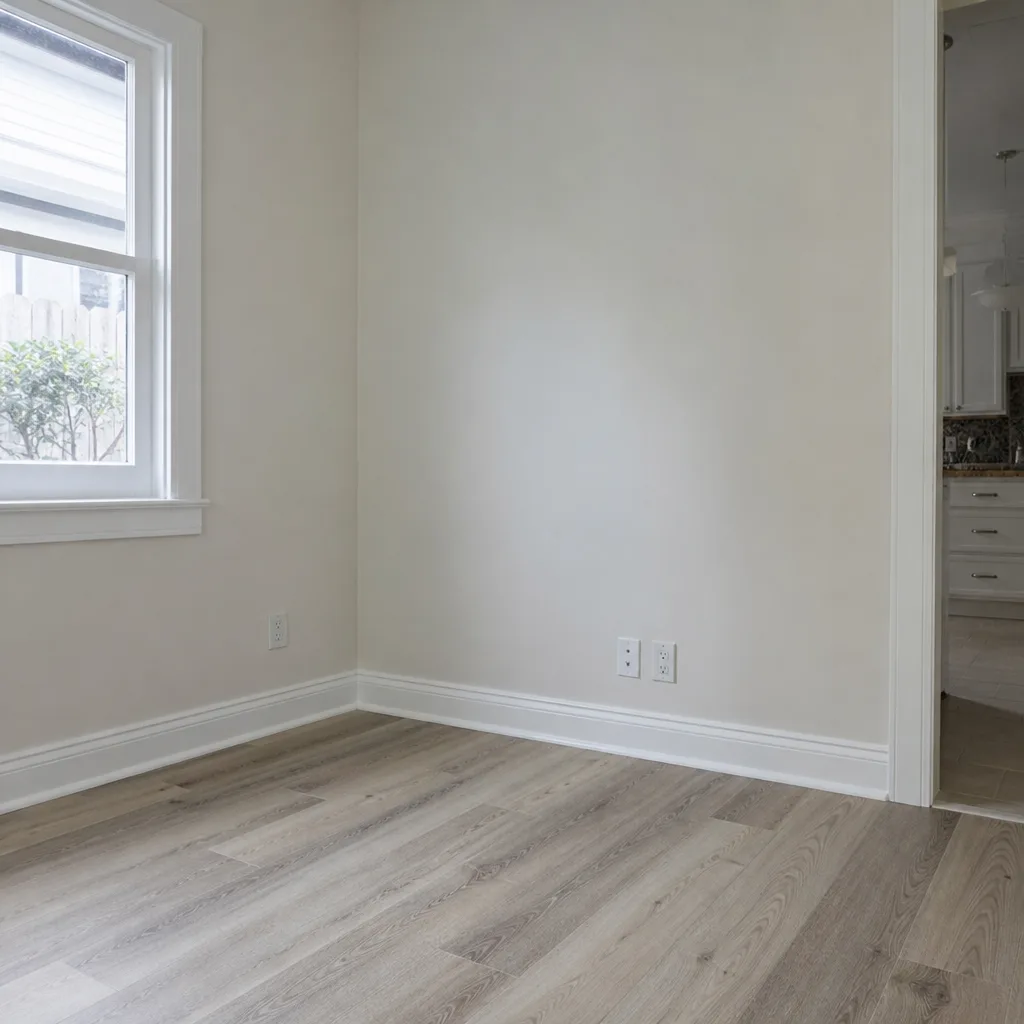 After
After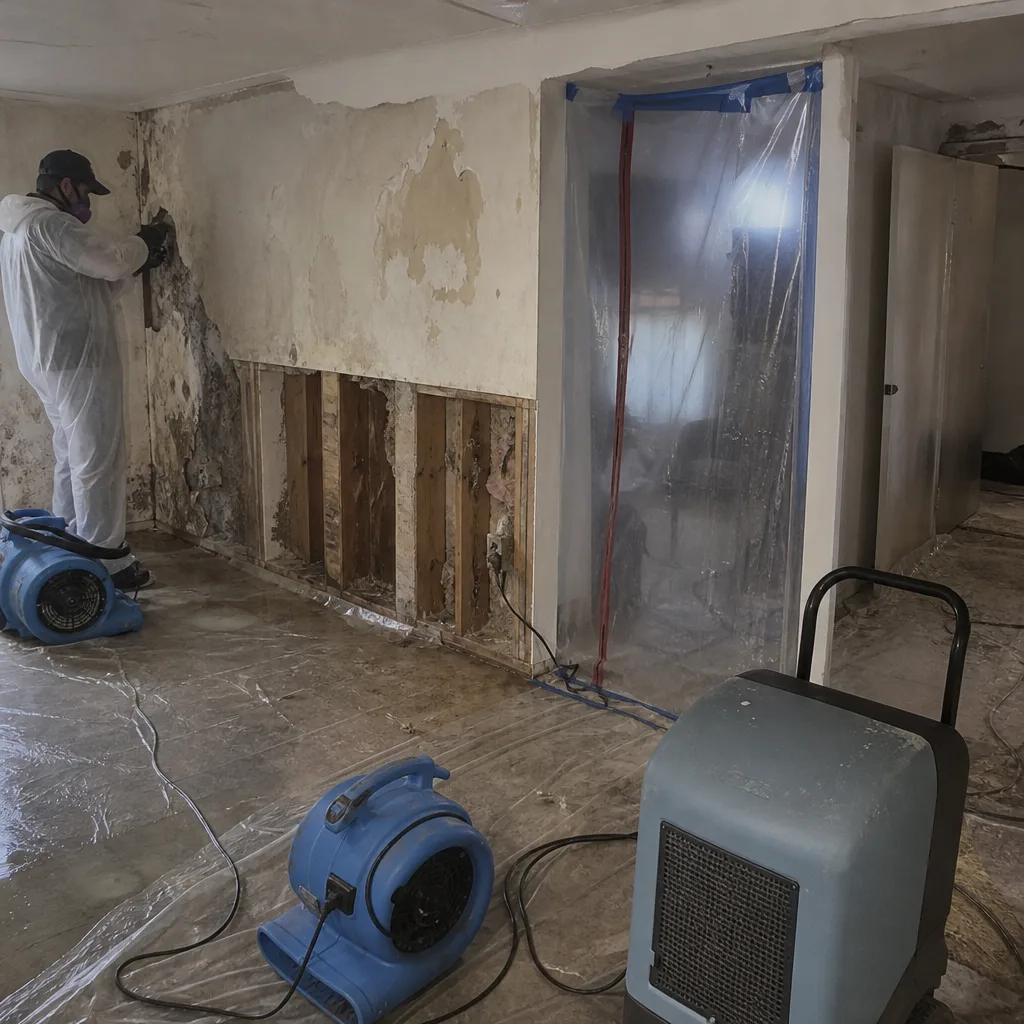 Before
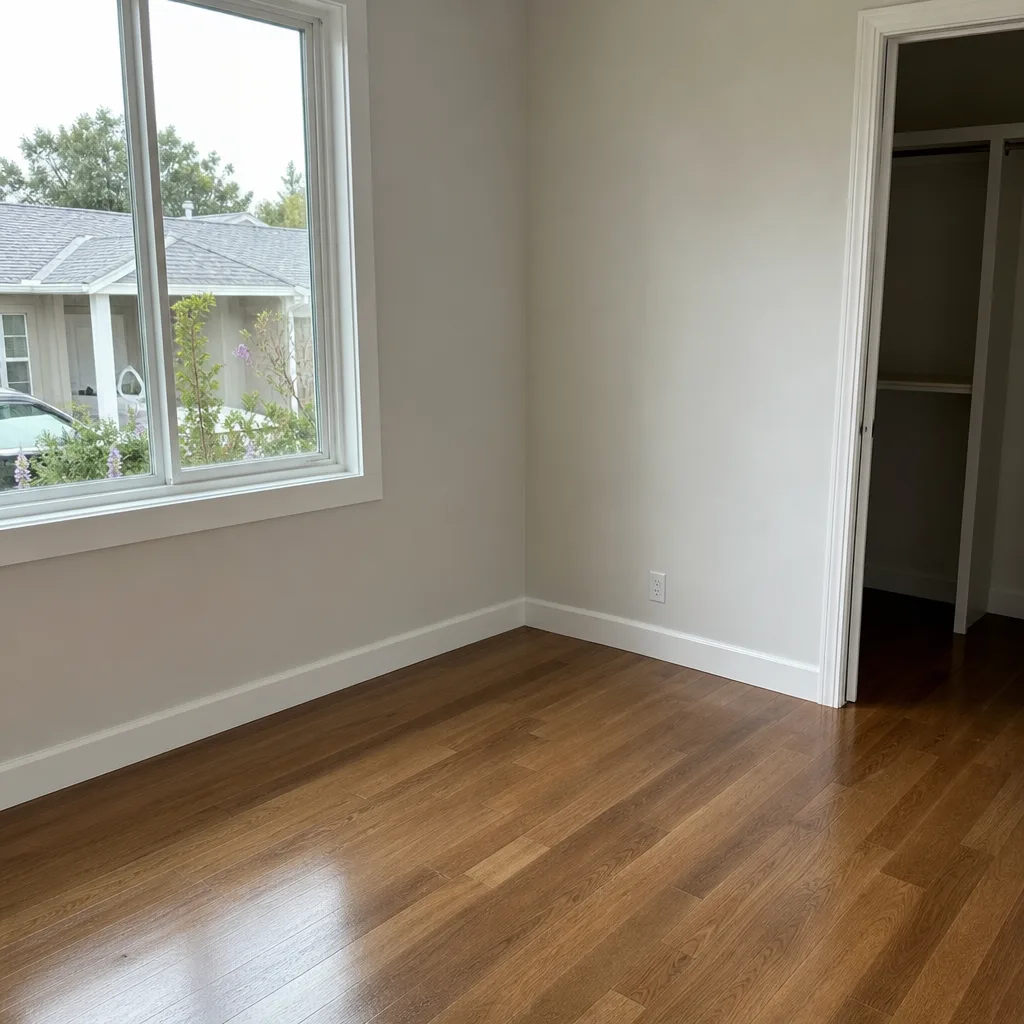 After
AfterDamage Restoration Emergency Preparedness Guide for Los Angeles Homes
After the 1994 Northridge earthquake, thousands of Los Angeles homes sustained significant water damage not from the quake itself but from broken supply lines that ran for hours before residents could locate and shut the main – a problem a two-minute annual drill would have solved. Most preparedness guides in Los Angeles focus on the earthquake kit, the go-bag, the evacuation route. Few address the restoration crisis that follows: the waterlogged subfloor from a sheared copper line, the smoke-ash infiltration into a home three miles from the fire line, the mold bloom in a sealed house left vacant during a wildfire evacuation. This guide builds a practical preparedness plan around those second-order damage events. You’ll learn how to document your home for faster insurance recovery, how to shut down your water system in under three minutes, how to protect your HVAC from wildfire smoke, and how to pre-qualify a restoration contractor before you’re searching reviews at midnight with water spreading across your kitchen floor.
Quick Answer
Los Angeles homeowners should prepare for damage restoration by documenting a pre-loss photo baseline of their home, locating and testing every water shutoff valve annually, running a two-minute household drill for pipe ruptures, protecting HVAC systems from wildfire smoke infiltration, and pre-qualifying one restoration contractor to a written standard before any emergency occurs. This preparation reduces claim disputes, limits secondary damage, and eliminates the scramble for qualified help during the critical first hours of a water, fire, or mold event.
Table of Contents
- How to Locate and Test Every Water Shutoff in Your Los Angeles Home
- Building a Pre-Loss Photo Baseline for Faster Insurance Recovery
- Wildfire Smoke and Ash: The Hidden Restoration Problem for Nearby Homes
- The First Two Hours: Your Water Damage Action Sequence
- How to Pre-Qualify a Restoration Contractor Before You Need One
- The Annual Household Damage Drill
- Common Mistakes to Avoid
- When to Call a Professional
- Frequently Asked Questions
How to Locate and Test Every Water Shutoff in Your Los Angeles Home
Los Angeles homes sit on varied geology – from the expansive clay soils of the San Fernando Valley to the hillside bedrock of the Santa Monica Mountains – and that ground movement translates to stress on rigid copper and galvanized supply lines. In our experience responding to water damage calls across Los Angeles, the homes that suffer least are the ones where every adult resident knows exactly where to find three specific shutoff points and can reach the main valve in under three minutes.
Here is the complete valve inventory every Los Angeles homeowner should locate, label, and test annually:
- Main water shutoff (street side or house side). In Los Angeles, older homes in neighborhoods like Highland Park or Echo Park often have a gate valve on the house side of the meter, while post-1980 builds in the West Valley typically use a ball valve. Know which you have. Gate valves fail from corrosion; ball valves seize from disuse. Turn yours off and back on once a year. If it won’t move smoothly, replace it before an emergency.
- Individual fixture stops. Under every sink, behind every toilet, at the washing machine box. These are your first line of defense for localized leaks. Test them. If a stop valve won’t close fully, the washer inside has hardened. Replace it during your annual check.
- Irrigation system shutoff. Los Angeles irrigation lines run at higher pressure than interior plumbing and are exposed to UV degradation and ground movement. The separate irrigation valve is typically near the main but may be in a different box. A sheared irrigation line can pump hundreds of gallons per hour into your foundation.
Label each valve with a waterproof tag. Time yourself walking from your bedroom to the main shutoff in the dark. In a real rupture, you may be doing this with water spraying, power possibly out, and adrenaline narrowing your focus. The two-minute drill isn’t excessive. It’s the difference between a mop-up and a full water damage restoration in Los Angeles requiring subfloor replacement.
Document valve locations with photos and store them in cloud backup. If you’re away and a housesitter or neighbor needs to respond, they shouldn’t be hunting behind landscaping or guessing which box in the sidewalk strip holds your meter.
Building a Pre-Loss Photo Baseline for Faster Insurance Recovery
Insurance claim disputes in Los Angeles often center on a single question: was that damage pre-existing? The burden of proof sits with the homeowner, and memory fades fast. A pre-loss photo baseline eliminates that dispute before it starts.
Set aside one hour annually, ideally before wildfire season or the winter rain period when Los Angeles sees its highest water damage call volume. Walk through your home with your phone’s camera and capture the following:
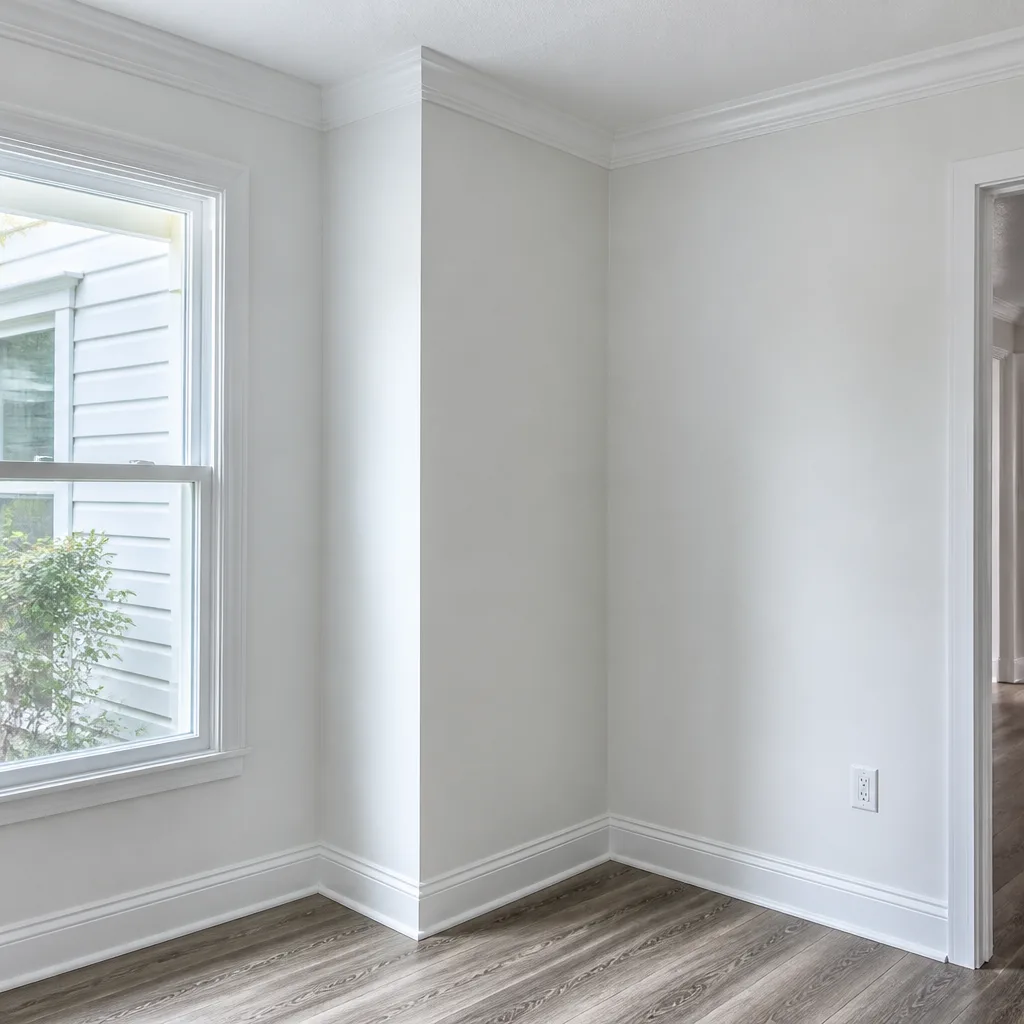
- All four walls of every room, corner to corner, showing wall condition, flooring, and baseboards
- Ceiling areas, especially beneath bathrooms, water heaters, and upstairs laundry
- Inside cabinets under sinks, showing no active leaks or prior stains
- Your water heater’s installation date plate and any expansion tank
- HVAC filter condition and ductwork at accessible points
- Exterior: roof condition from ground level, gutter function, grade drainage around foundation
- Any prior repairs, with close-ups showing completed, stable work
Store these with date stamps in cloud storage, not solely on your phone. Email a copy to your insurance agent with a note requesting acknowledgment. That creates a contemporaneous record.
After any loss, this baseline becomes your most powerful documentation tool. When an adjuster questions whether staining on a ceiling joist is new, you have dated proof of condition. When mold is found in a wall cavity, you can demonstrate whether moisture intrusion predated your policy period. At Keegan Water Damage Restoration home, we format every job’s documentation to support insurance claims, but the homeowner who arrives with a pre-loss baseline moves through the process faster and with fewer disputes.
In Los Angeles, where many homes have been modified over decades without permit records, understanding Damage Restoration Permits, Codes & Inspections in CA: What You Need to Know helps, and this documentation also protects you from inheriting prior owners’ concealed problems. A 1920s Spanish Colonial in Los Feliz may have three eras of plumbing and two of electrical. Photos showing what you actually maintain matter when a claim arises.
Wildfire Smoke and Ash: The Hidden Restoration Problem for Nearby Homes
Homes that never see flame can still require significant restoration after a Los Angeles wildfire season. The 2020 Bobcat Fire sent smoke and ash infiltration into homes more than fifteen miles from the burn perimeter. The restoration problem isn’t surface dust. It’s the acidic, particulate-laden residue that penetrates HVAC systems, settles into porous materials, and creates persistent odor and respiratory triggers.
The standard homeowner response – wiping surfaces and running the fan – often makes the problem worse by redistributing contamination through the duct network.
After any significant regional wildfire, even if your home was not under evacuation order, run this protocol:
- Do not run your HVAC in recirculation mode until the system has been inspected. The return air pathway pulls outdoor particulate directly through your filter and into the coil and blower assembly. Standard residential filters, even MERV 13, do not capture the ultrafine particles in wildfire smoke.
- Replace the filter immediately with a fresh standard filter. Do not install a high-efficiency filter without verifying your system’s blower can handle the static pressure. An overloaded blower fails prematurely and creates a secondary repair.
- Inspect accessible ductwork and return plenums for ash accumulation. In Los Angeles, many homes have attic duct runs that pull from soffit intakes. Ash-laden air enters these intakes during Santa Ana wind events.
- Schedule professional duct cleaning if you detect persistent odor or visible residue. This is not a DIY job. Proper duct restoration requires negative-air containment, mechanical agitation, and HEPA-filtered collection. Our crews use Phoenix and XPOWER HEPA air scrubbers during this work, with full containment to prevent cross-contamination.
Soft goods – upholstery, drapes, bedding – may require specialized cleaning or replacement depending on smoke exposure duration. Document everything with photos before any cleaning attempt. Your insurer may cover content restoration as part of a smoke damage claim even when the structure itself was unharmed.
For homes in the wildland-urban interface zones of Topanga, Malibu, or the foothill communities above Pasadena, consider upgrading to sealed-combustion HVAC and dedicated outdoor air intakes with enhanced filtration. The upfront cost is substantial, but the reduction in annual smoke infiltration events pays back in both health outcomes and avoided fire damage restoration in Los Angeles calls.
The First Two Hours: Your Water Damage Action Sequence
The first two hours after water intrusion determine whether you’re facing drying and minor repair, or full gutting and reconstruction. Water follows gravity and capillary action through building materials on a predictable timeline: drywall wicks upward at approximately one inch per hour; subfloor saturation begins within two hours; mold colonization becomes likely after 48 hours but can start earlier in warm, humid conditions common in Los Angeles basements and crawl spaces.
Here is the exact sequence to run, in order, with no steps skipped:
- Ensure electrical safety. If water has reached outlets, switches, or electrical panels, do not enter the space. Call the fire department for power disconnect. This is non-negotiable.
- Stop the water source. Run your shutoff drill. Main valve first if the source is unclear. Fixture stop if localized.
- Document before touching anything. Photograph the water extent, the apparent source, and any damaged contents. Shoot video walking the affected area. This is your claim foundation.
- Call your insurance company’s claims line. Report the loss, request a claim number, and ask whether they have preferred restoration vendors. You are not obligated to use their vendors, but you must notify them promptly.
- Call your pre-qualified restoration contractor. If you followed the pre-qualification process below, this number is already in your phone. Describe the situation, share your claim number, and request dispatch.
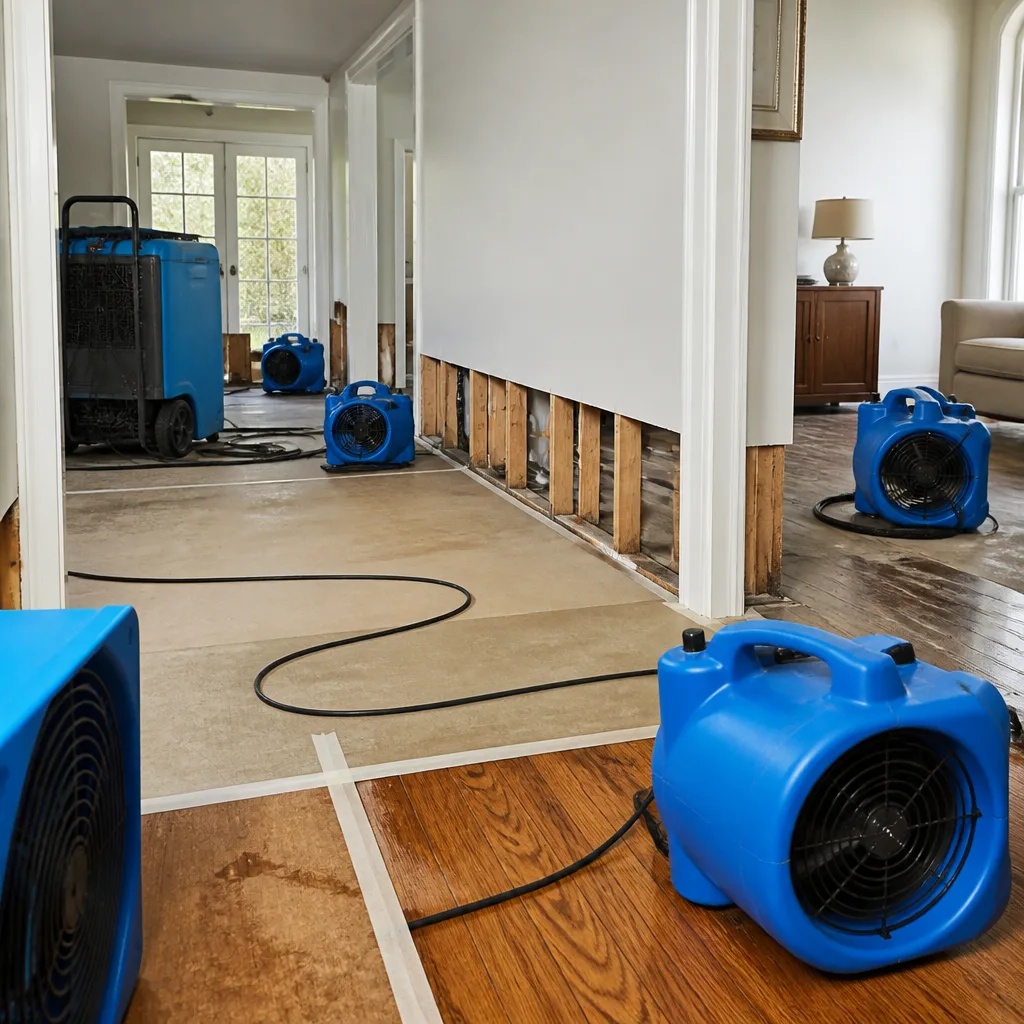
- Remove standing water only if safe and only with available tools. Do not rent equipment or attempt extraction with household vacuums. Improper extraction drives water deeper into subflooring. Wait for professional-grade extraction with Dri-Eaz or B-Air equipment and proper moisture detection.
- Move sensitive contents to a dry area. Documents, electronics, heirlooms. Do not attempt to dry or clean them yourself. Improper handling can destroy restoration potential and void insurance coverage for contents.
What not to do: do not run fans on standing water (this aerosolizes contaminants); do not cut open walls without verifying electrical and plumbing locations; do not discard anything before documentation; do not sign work authorizations with blank price fields.
At Keegan Water Damage Restoration, a live person answers every call, 24 hours a day, 7 days a week – including nights, weekends, and holidays. We dispatch background-checked, uniformed technicians with professional-grade extraction and drying equipment, and we put the written price before any work starts. Every job is documented to support your insurance claim, and every repair is backed by our 365-Day Done Right Promise.
How to Pre-Qualify a Restoration Contractor Before You Need One
The worst time to evaluate a restoration contractor is during the emergency itself. At 2:00 a.m. with water spreading through your hallway, you will accept the first available voice. Pre-qualification eliminates that vulnerability.
Run this evaluation on one or two Los Angeles-area restoration companies during a calm weekend. You’re not committing to hire. You’re verifying they meet a standard you can trust when speed matters.
The seven-point pre-qualification checklist:
- Verify live-answer availability. Call their advertised number on a Saturday evening. Does a person answer, or does a phone tree begin? At Keegan, a live person answers every call, 24/7 – no phone trees, no call-back queues when water is actively damaging your home.
- Request their guarantee in writing. Not a verbal assurance. A written document stating what is covered, for how long, and what triggers a return visit. Our 365-Day Done Right Promise is a written, one-year guarantee: if the repair fails, we return and make it right at no charge, with a free second visit included.
- Confirm pricing protocol. Ask specifically: “Will I receive a written price before any work begins, and is that price binding?” If they hedge, keep searching. The Garrison Standard requires the written price before work starts – always, on every job, no exceptions. The price never moves at the door.
- Ask about technician standards. Background checks? Uniforms? Do they dispatch employees or subcontract labor? We send background-checked, uniformed technicians on every job, dispatched from a location that runs to The Garrison Standard.
- Request equipment specifics. Professional-grade drying and extraction requires specific tools. Ask what brands they deploy. Our equipment roster includes Dri-Eaz, Phoenix, XPOWER, B-Air, and Injectidry – the professional-grade brands used in IICRC-standard restoration work.
- Verify insurance documentation support. Ask how they format job documentation for adjuster review. We photograph every phase, compile moisture logs, and present scope documentation formatted to streamline claim processing.
- Check for industry standards compliance. IICRC, RIA, and IFA references indicate ongoing education and standardized procedures, not improvised field work.
Store two qualified contractors in your emergency contacts. Primary and backup. When the event occurs, you’re executing a plan, not improvising under stress.
The Annual Household Damage Drill
Preparedness decays without practice. The annual drill takes twenty minutes and should involve every household member old enough to operate a valve. Schedule it before Los Angeles wildfire season (typically May) and again before winter rains increase pipe rupture risk.
The drill sequence:
- Time each adult locating and operating the main water shutoff. Under three minutes is the target. In the dark, with a flashlight only.
- Test every fixture stop valve. Replace any that seize or leak when operated.
- Update pre-loss photos for any rooms with changes, renovations, or new contents.
- Verify emergency contact numbers: insurance claims line, pre-qualified restoration contractor, utility emergency lines.
- Review the first-two-hours action sequence verbally. Each adult should be able to recite the steps in order.
- Check emergency kit supplies: flashlights, battery radio, phone chargers, basic tools for valve access.
Document completion with a dated checklist. Some Los Angeles insurers offer premium discounts for documented preparedness protocols. Ask your agent.
Common Mistakes to Avoid
- Assuming earthquake straps protect your water lines. Straps secure the water heater tank. They do nothing for the rigid copper supply lines that shear at fittings during seismic movement. Flexible braided supply lines at fixtures reduce this risk but must be inspected for corrosion annually.
- Photographing only high-value items for insurance. Adjusters dispute building materials, not just contents. Your pre-loss baseline must show wall condition, flooring type, ceiling texture, and baseboard style. These determine repair scope and cost.
- Running HVAC after wildfire to “clear the air.” Standard residential systems recirculate particulate through the entire duct network. Wait for professional assessment. The cost of improper operation is often full duct restoration plus coil cleaning.
- Waiting for the insurance adjuster before calling restoration. In Los Angeles, reputable restoration companies work on a certificate of satisfaction basis and bill insurance directly. Delaying mitigation while waiting for adjuster availability allows secondary damage to compound. Call your contractor immediately; coordinate with insurance in parallel.
- Accepting verbal estimates or “time and materials” agreements. Without a written scope and fixed price, you have no protection from scope expansion. The Garrison Standard requires written price before work starts for this reason.
- Neglecting the irrigation shutoff. Los Angeles homes with mature landscaping often have complex irrigation with multiple zones and aging PVC. A single sheared riser can flood a foundation area for hours. Include irrigation in your annual valve test.
When to Call a Professional
Call for professional restoration when water has affected more than a small, contained area you can dry with household towels within an hour; when water has reached walls, ceilings, or subflooring; when the source is unknown or may involve sewage; when electrical components are wet; when odor persists after initial cleanup; or when mold is visible or suspected. Fire and smoke damage always requires professional assessment due to hidden residue and structural evaluation needs.
Keegan Water Damage Restoration offers free estimates in Los Angeles. A live person answers every call, 24 hours a day, 7 days a week. Call (361) 317-7269 to speak with our dispatch team, or visit our mold remediation in Los Angeles page if you’re dealing with post-event microbial growth.
Frequently Asked Questions
Most Los Angeles water damage restoration projects range from $1,200 for limited extraction and drying to $8,500 or more for full subfloor and drywall replacement after significant supply line ruptures. The final cost depends on water category (clean, gray, or black), affected square footage, and whether structural materials require removal. Call (361) 317-7269 for an exact quote – estimates are free, and we put the written price before any work starts.
Standard homeowners insurance in Los Angeles excludes earthquake damage, including the water damage that follows seismic pipe rupture. You need a separate earthquake policy or endorsement, and even then, coverage for secondary water damage varies by carrier. Document your shutoff valve maintenance and annual drill completion – some insurers consider this in claim evaluation. We format every job’s documentation to support your adjuster’s review regardless of policy type.
Response time varies by contractor and current event volume. During regional wildfires or after significant seismic events, even well-staffed companies experience delays. This is why pre-qualification matters: established relationships and pre-loaded job files accelerate dispatch. At Keegan, a live person answers every call, 24/7, and we dispatch background-checked, uniformed technicians as rapidly as conditions allow. Call (361) 317-7269 to establish that relationship before you need it.
Visible mold growth exceeding ten square feet, mold resulting from Category 2 or 3 water (gray or black water), or mold in HVAC systems requires professional remediation with containment and negative air pressure. Surface cleaning with household products is appropriate only for very limited, recent growth on hard surfaces from clean water sources. When in doubt, have it assessed. Improper disturbance of mold colonies releases spores and worsens contamination. We provide mold remediation in Los Angeles with full containment and HEPA filtration.
Upgrade to MERV 13 or higher filters compatible with your HVAC system, ensure all windows and exterior doors seal properly, close fireplace dampers, and run bathroom and kitchen exhaust fans minimally during heavy smoke events. After regional fires, replace filters immediately and inspect accessible ductwork before restarting normal HVAC operation. For persistent odor or visible ash in ducts, schedule professional cleaning with HEPA-contained equipment.
A meaningful guarantee specifies the coverage period (one year is standard for quality work), what constitutes a failure, the response timeline for return visits, and whether return visits incur additional charges. Verbal guarantees are unenforceable. Our 365-Day Done Right Promise is a written, one-year guarantee: if the repair fails, we return and make it right at no charge, with a free second visit included. This is The Garrison Standard, and it applies to every repair we complete.
The Bottom Line
Los Angeles homeowners invest significant effort in earthquake kits and evacuation plans, but the damage that follows the primary disaster – the burst pipe, the smoke-ash infiltration, the mold in a sealed vacant home – causes more restoration expense and insurance dispute than the initial event itself. A two-minute annual shutoff drill, a one-hour photo documentation session, a post-wildfire HVAC protocol, and a pre-qualified restoration contractor transform you from reactive victim to prepared homeowner. The cost is minimal. The return, measured in reduced damage, faster claims, and eliminated midnight scrambling, is substantial. Build the plan now. Execute it when needed. The work you do in calm moments determines your outcome in crisis.
Written by Shane Pruitt, Owner at Keegan Water Damage Restoration, serving Los Angeles since 2005.