
Last updated October 11, 2026
Free visual inspection and a written scope of work before any mitigation begins - photos, moisture readings, and drying logs go in your claim file
The scope we write is the scope we bill. Anything new gets shown to you, in writing, before we touch it.
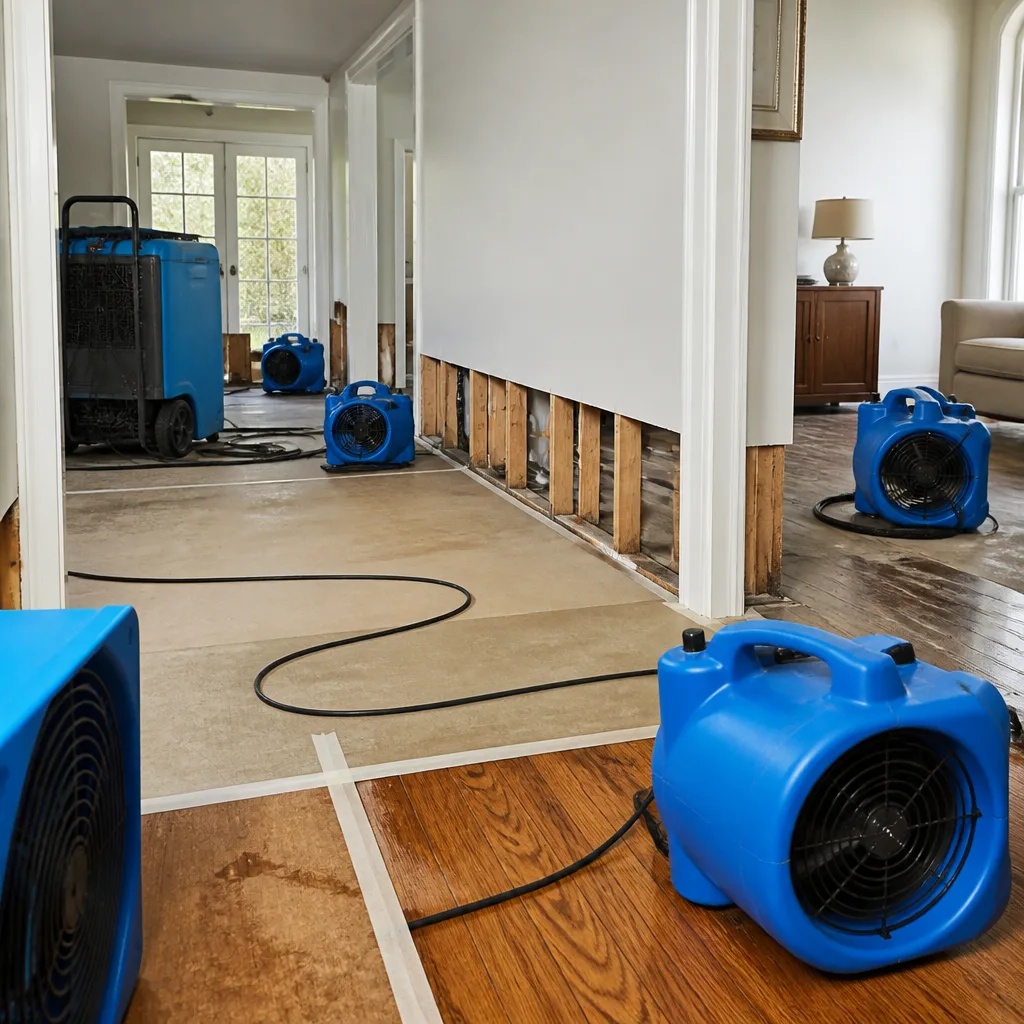
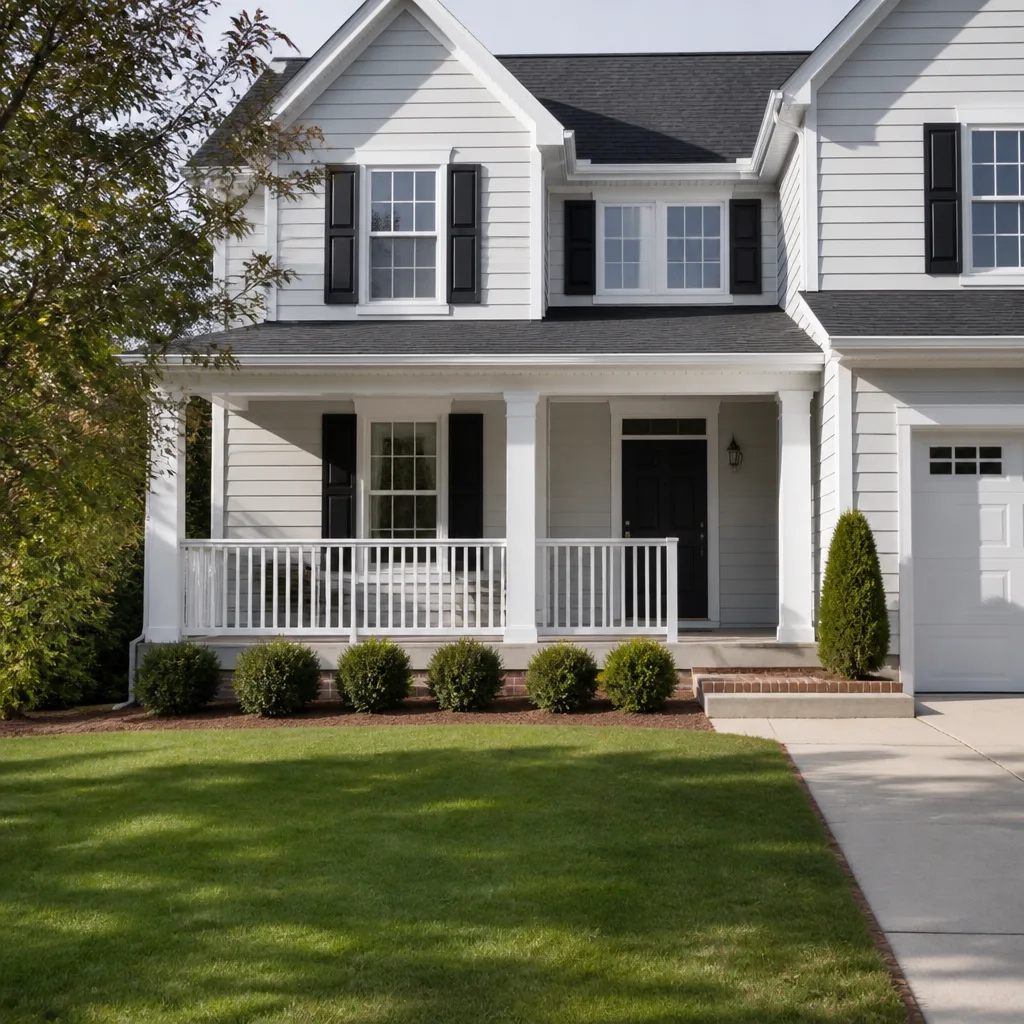
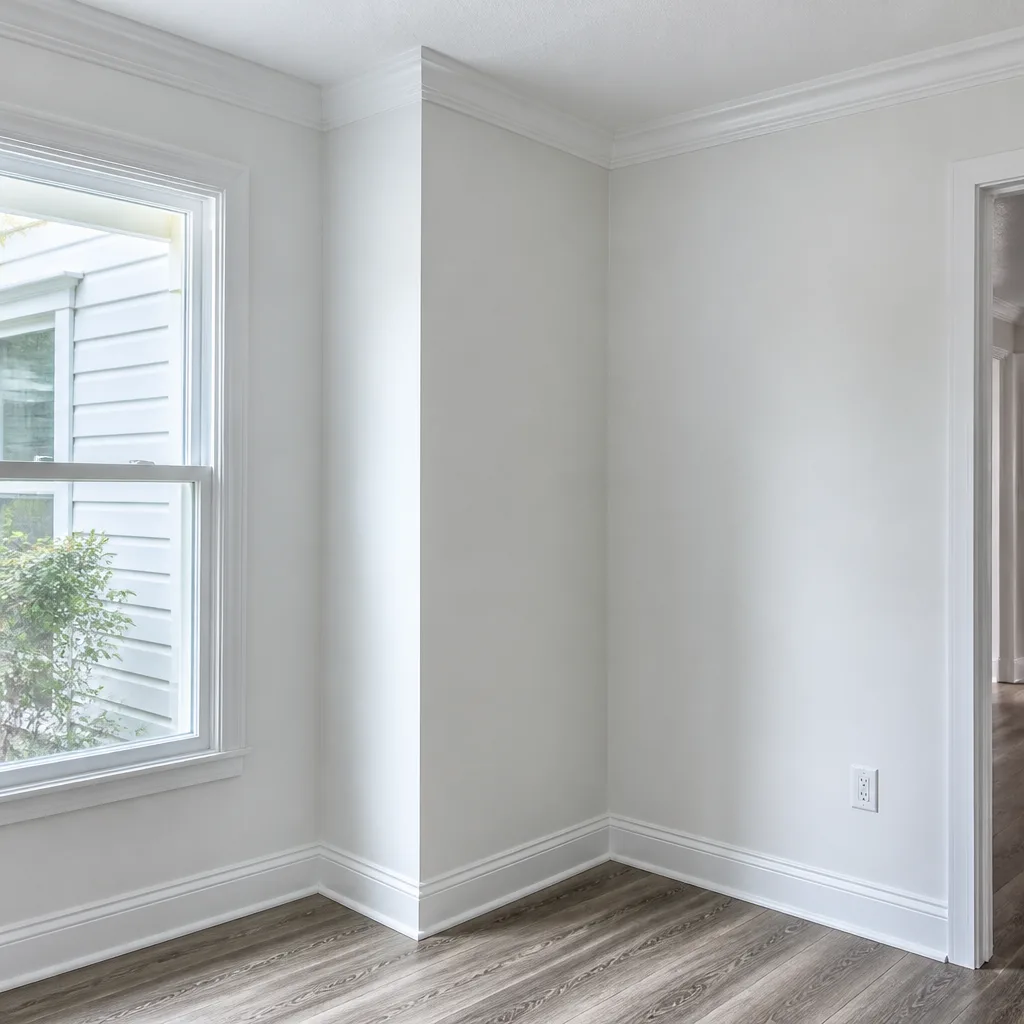
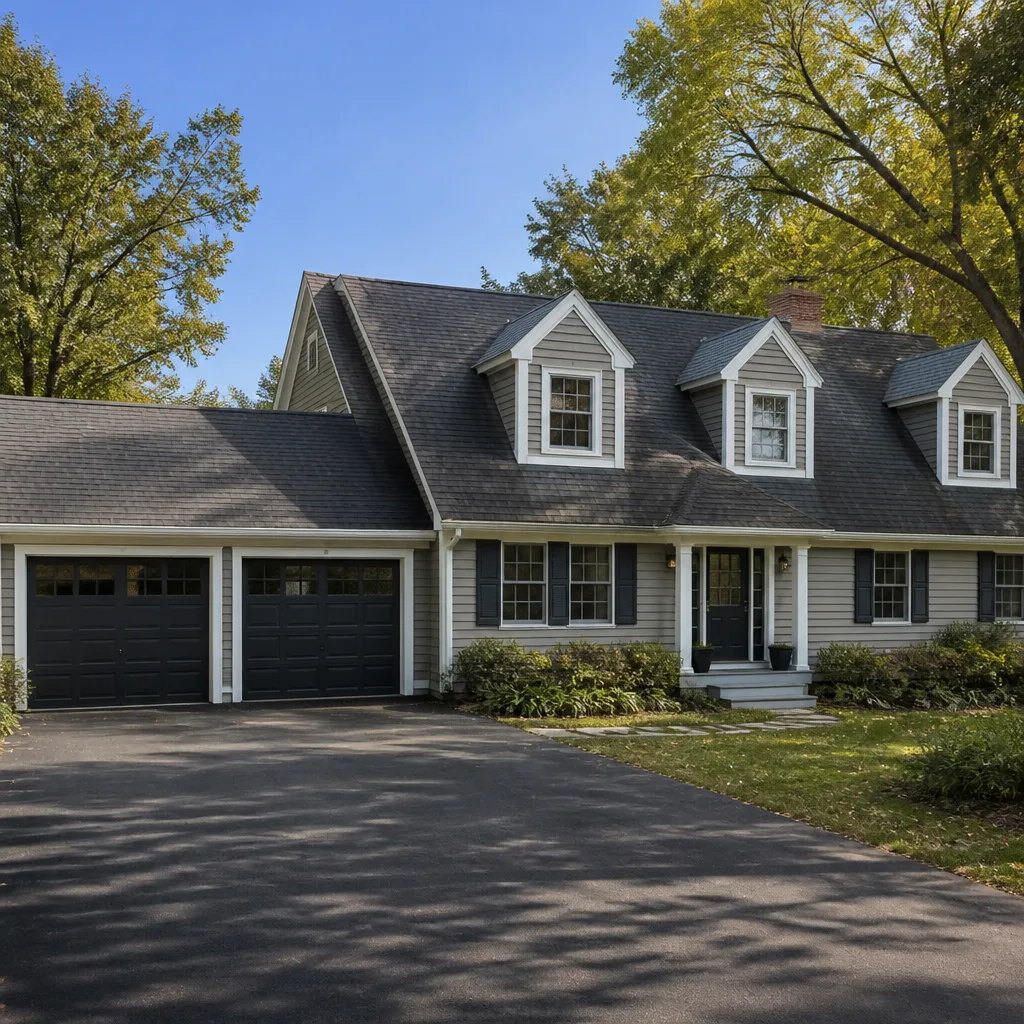
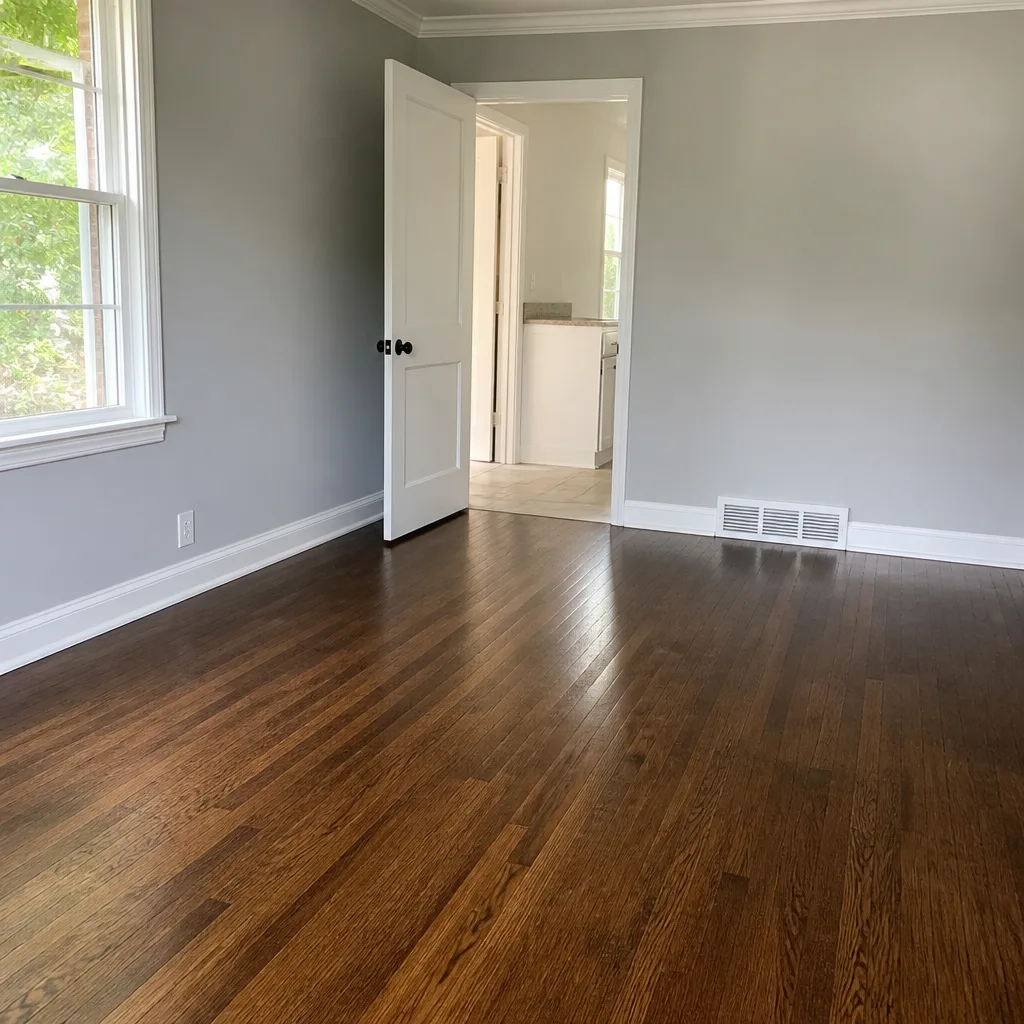
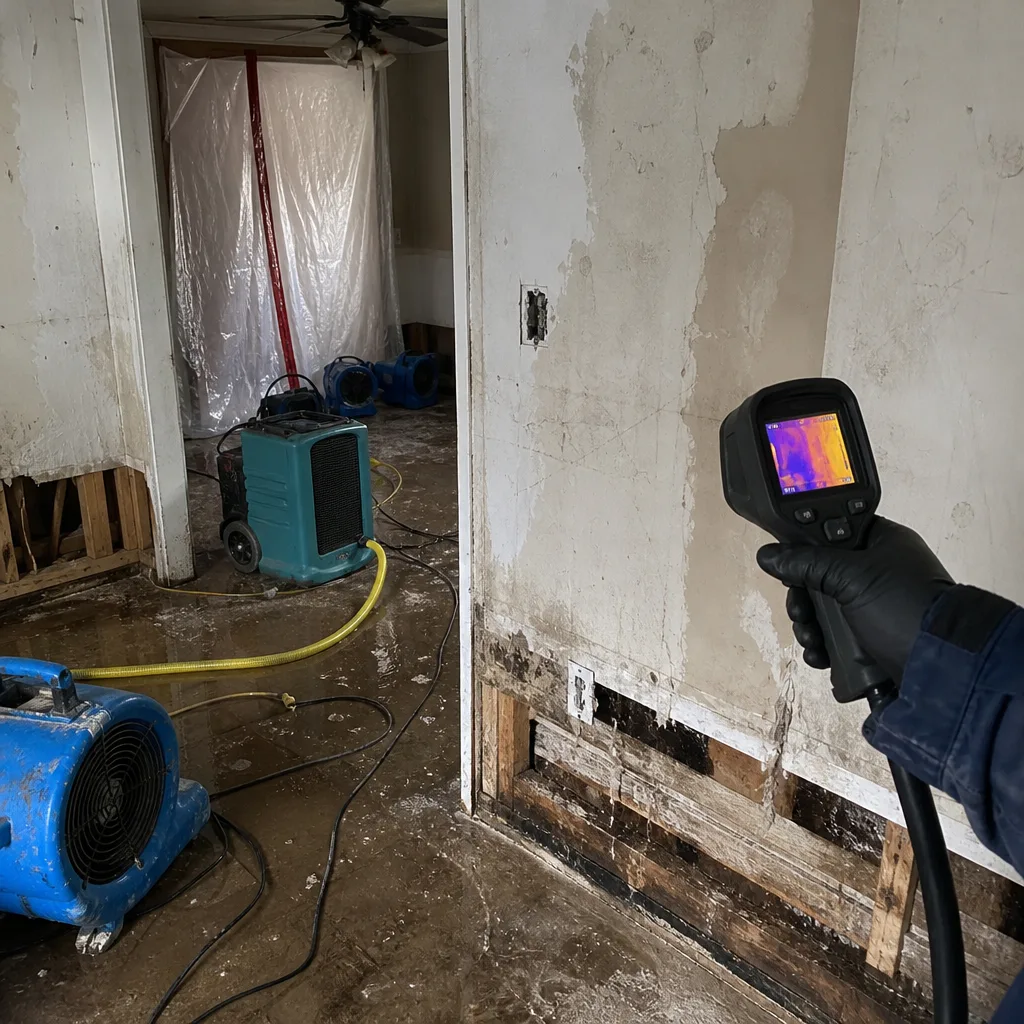 Before
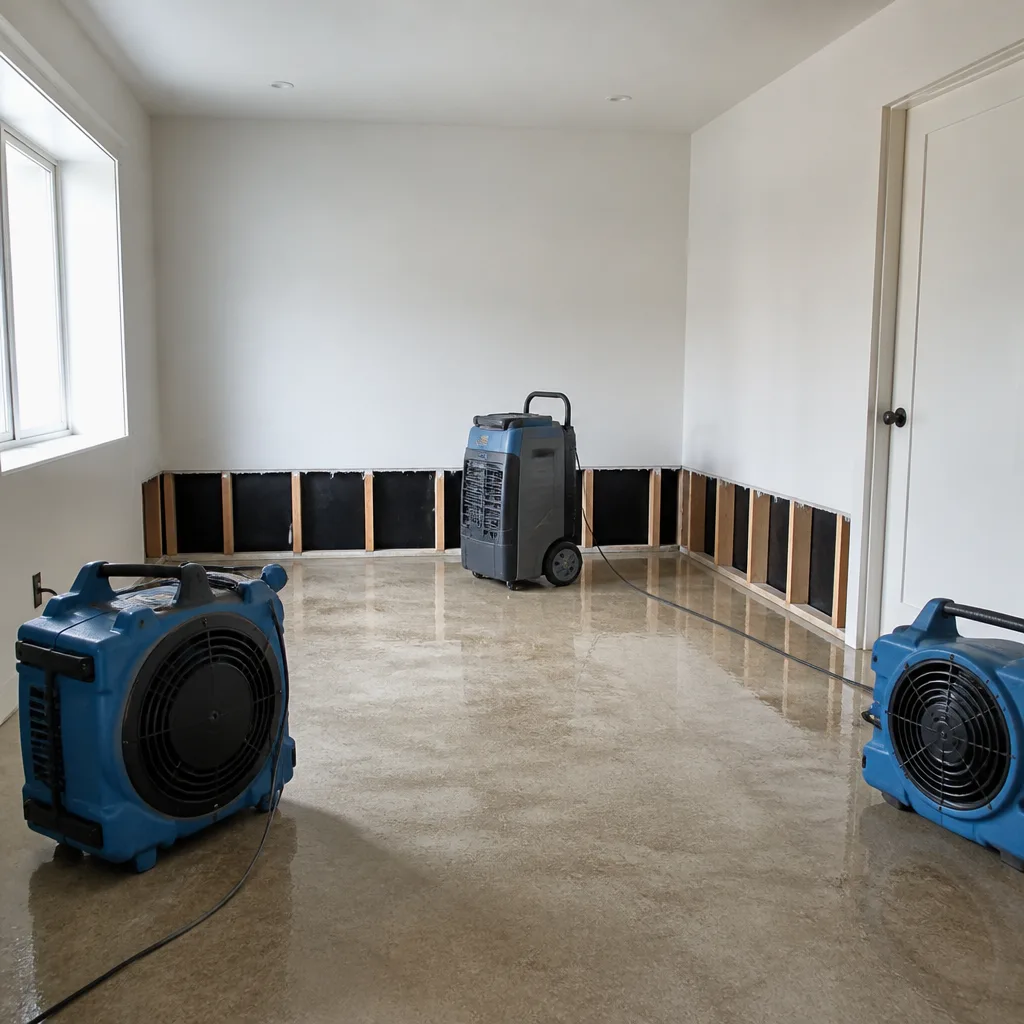 After
After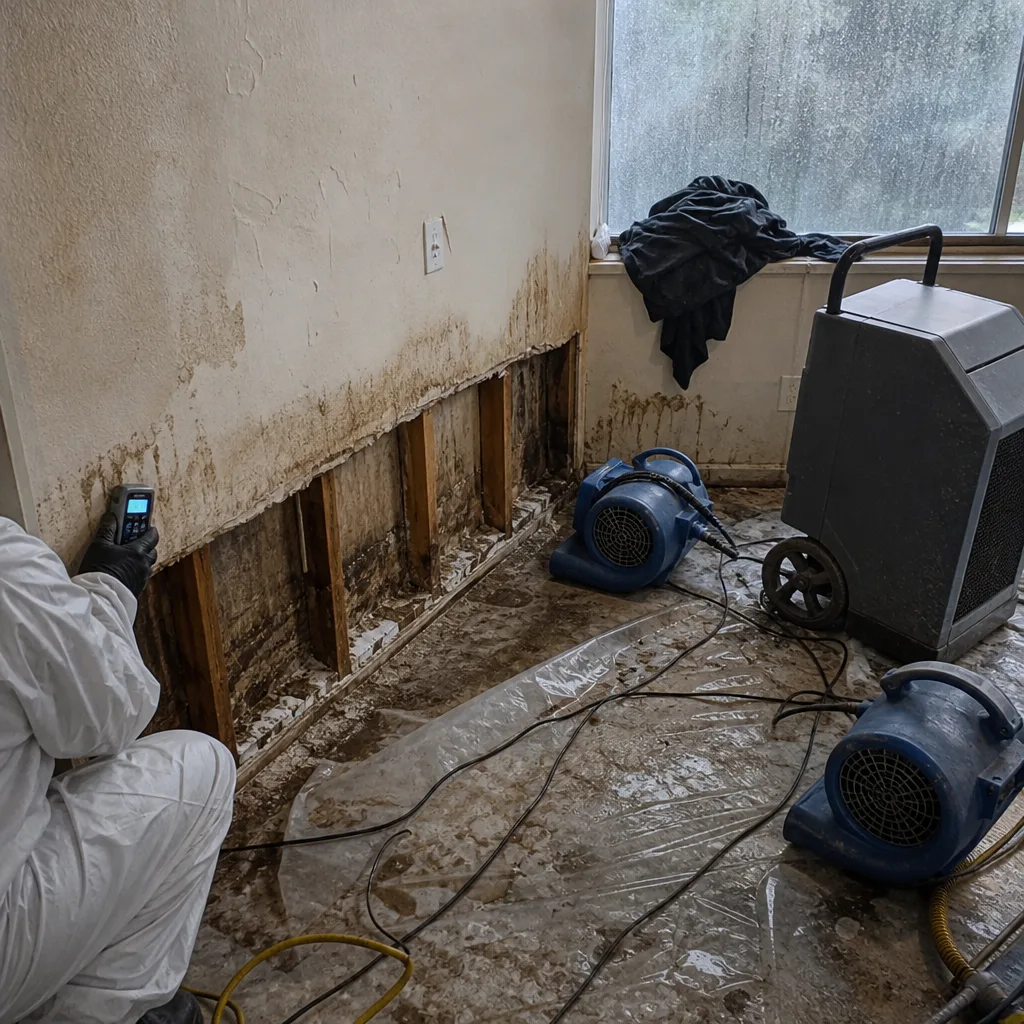 Before
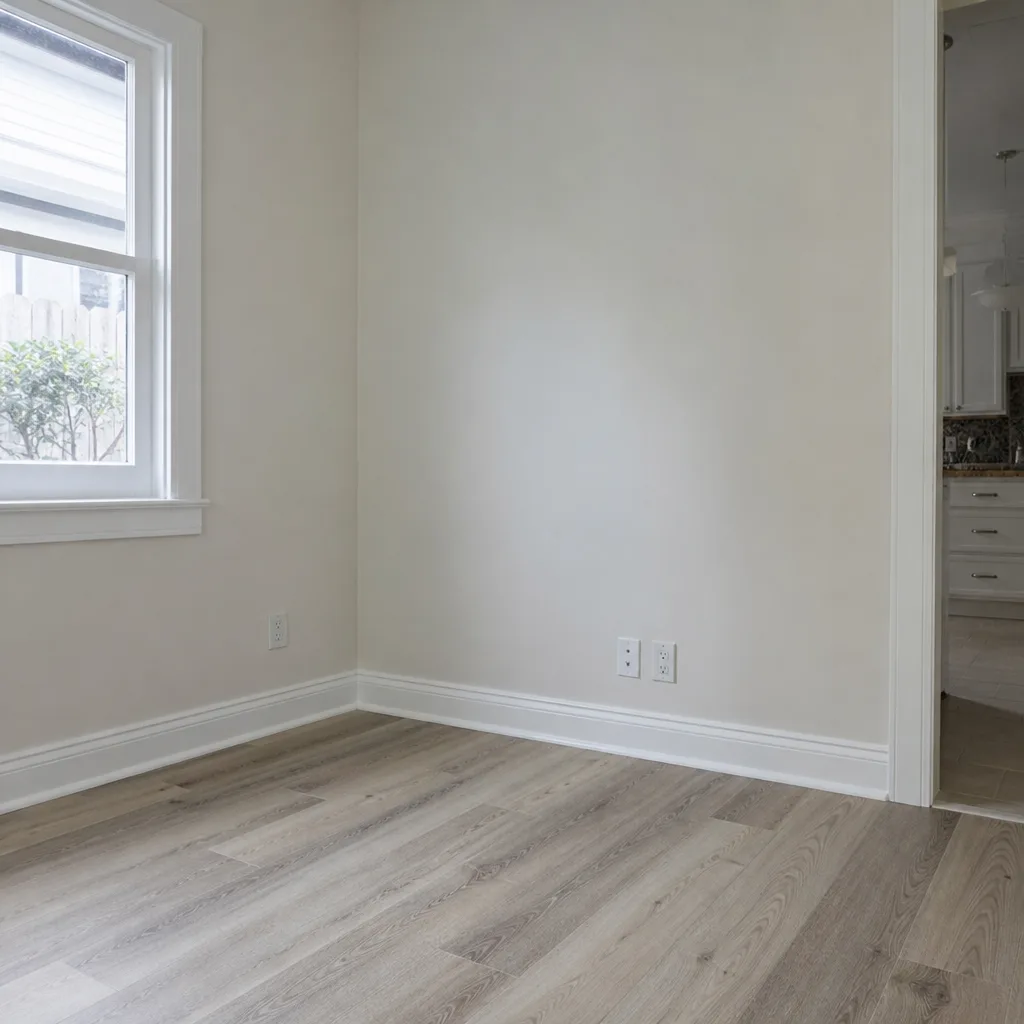 After
After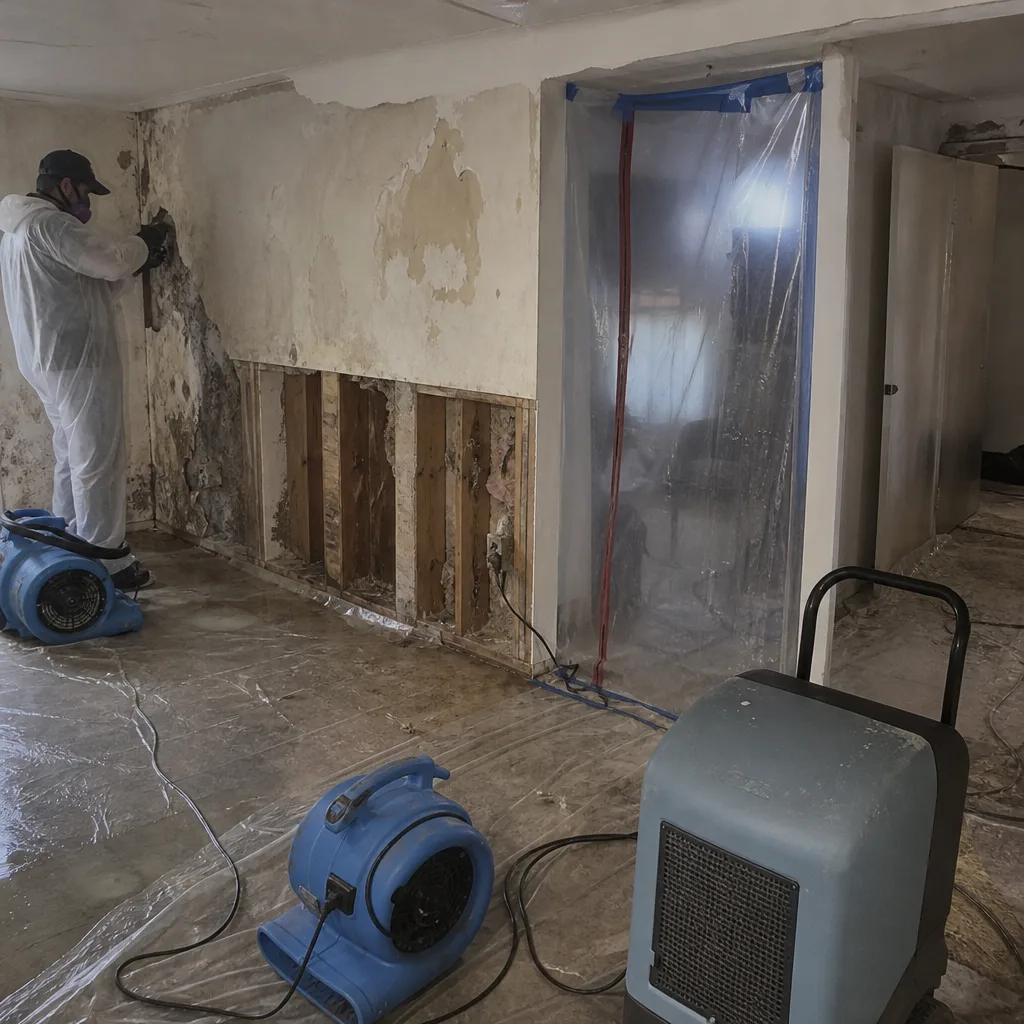 Before
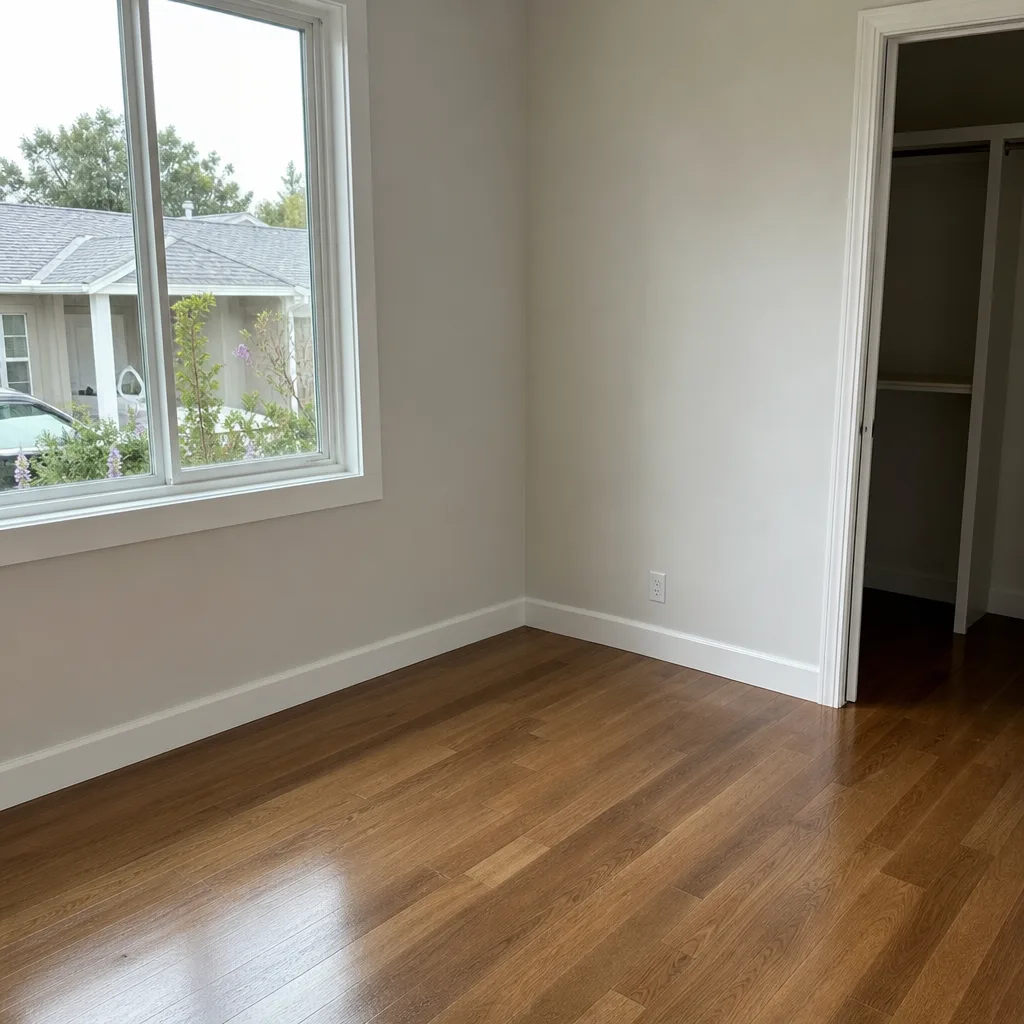 After
AfterHow to Hire a Damage Restoration Contractor in Los Angeles: A Step-by-Step Guide
California does not require a separate license to perform water damage mitigation. The company that shows up after your pipe bursts in Silver Lake or your washer line fails in Encino may be operating on a general contractor’s license, a mold remediation certificate, or nothing at all verified by the state. In Los Angeles, where the damage restoration industry has almost no barrier to entry – a van, a dehumidifier, and a Google Business profile is enough to start taking calls – the vetting process you run before hiring matters more than in almost any other trade. This guide gives you the exact questions and documents to request before anyone touches your property, and you can find more guides & resources on our blog.
Quick Answer
To hire a damage restoration contractor in Los Angeles, verify their California license class on the CSLB database, demand five written documents before work starts (scope, price, equipment list, timeline, and guarantee terms), confirm background-checked employees rather than day labor, and never sign an assignment of benefits at your door. A legitimate contractor will put the price in writing before touching anything and document every step for your insurance claim.
Table of Contents
- License Verification: What California Actually Requires
- The Five Written Documents You Need Before Work Starts
- Why Assignment of Benefits Agreements Cost Homeowners Control
- Background Checks and Employee Verification Standards
- How to Compare Bids When One Contractor Is Much Cheaper
- Equipment and Drying Standards That Actually Matter
- Insurance Documentation and Direct Adjuster Coordination
- Common Mistakes to Avoid
- When to Call a Professional
- Frequently Asked Questions
- The Bottom Line
License Verification: What California Actually Requires
The first thing to understand about Los Angeles damage restoration is that the state of California draws a sharp line between mitigation and reconstruction, but most homeowners never learn this until it’s too late.
Water damage mitigation – extraction, drying, dehumidification, and initial mold containment – does not require a contractor’s license if the job is under $500 in labor and materials. That threshold is meaningless on any real water loss, yet many operators in the Los Angeles market exploit the gap by classifying themselves as “emergency service providers” rather than contractors. For any job involving structural repair, drywall replacement, subfloor work, or reconstruction, a C-61/D-49 (Specialty Contractor, Machanical and Electrical Equipment) or B-General Contractor license is required.
Here’s how to verify a license in under two minutes:
- Go to checkthelicensefirst.com (the official CSLB database)
- Enter the contractor’s license number or business name
- Confirm the license status shows “Active” – not “Suspended,” “Revoked,” or “Cancelled”
- Check the classification matches the work being performed
- Verify workers’ compensation insurance is on file (required if the contractor has employees)
- Note the bond amount – currently $25,000 for California contractors
Red flags we see regularly in Los Angeles: a contractor who provides only an EPA RRP certificate (for lead-safe work) and calls it a license; a mold “certification” from an online course with no state backing; or a business license from the city of Los Angeles that has nothing to do with contractor regulation. The CSLB database is the only verification that counts.
Fire damage restoration adds another layer. Any contractor performing smoke damage cleaning, deodorization, or structural repair after a fire needs proper licensing for the reconstruction scope. In our experience across Los Angeles, from the hillside homes in Pacific Palisades to the dense multifamily buildings in Koreatown, fire jobs that start unlicensed often end with homeowners paying twice – once for the failed mitigation, once for the licensed contractor who has to redo it.
The Five Written Documents You Need Before Work Starts
The Garrison Standard exists because we watched too many Los Angeles homeowners get a verbal estimate over the phone, sign a blank work authorization at 2 AM while water was still spreading, and receive a bill 40% higher than discussed. Every Keegan job starts with five documents. You should demand the same from any contractor.
1. Scope of Work
This document defines exactly what will be done, room by room, with square footage and material specifications. It should reference moisture mapping readings, affected materials (Class 1, 2, 3, or 4 water damage under IICRC standards), and demolition boundaries. Vague language like “dry out affected areas” is worthless. Specific language sounds like: “Extract standing water from 340 sq ft living room; remove 18 linear feet of wet drywall at 24 inches high; install 4 Dri-Eaz LGR 7000XLi dehumidifiers and 12 Phoenix AirMax air movers; monitor with daily psychrometric readings until equilibrium.”
2. Itemized Price
Not a lump sum. Not a “not to exceed” with open-ended line items. Each phase of work should carry its own price: extraction, demolition, equipment rental per day, monitoring visits, and reconstruction. In the Los Angeles market, we see prices ranging from $1,200 for a contained Class 1 water loss in a single room to $8,000-$15,000 for a whole-house Category 3 flood with multiple days of drying. The written price should match the scope exactly. If the contractor won’t put numbers on paper before starting, that’s not discipline – it’s a setup.
3. Equipment List
Professional-grade equipment matters because drying science is unforgiving. The document should list manufacturer, model, and quantity of every machine. In our Los Angeles work, we deploy Dri-Eaz and Phoenix dehumidifiers, XPOWER and B-Air air movers, and Injectidry systems for hardwood and wall cavity drying. A contractor who shows up with hardware store fans and a single residential dehumidifier is not equipped for structural drying in a Los Angeles climate where coastal moisture and inland heat create wildly different psychrometric conditions.
4. Timeline
Mitigation has phases, each with a target completion. Day 1: extraction and initial setup. Days 2-5: active drying with daily monitoring. Day 6+: verification of dry standard and equipment removal. The timeline should state who performs monitoring, how often, and what dry standard applies (typically within 10% of unaffected materials’ moisture content per IICRC S500).
5. Guarantee Terms
Every repair should carry a written guarantee with specific duration, coverage, and process for claims. Our 365-Day Done Right Promise covers every Keegan repair for a full year – if it fails, we return and make it right at no charge, with a free second visit included. Any guarantee shorter than one year, or any guarantee that requires you to pay a service fee to invoke it, should be questioned.
Why Assignment of Benefits Agreements Cost Homeowners Control
In Los Angeles, especially after major rain events or wildfire seasons, door-to-door restoration sales teams appear in affected neighborhoods with clipboards and urgency. One document they push hard is the Assignment of Benefits (AOB) – and signing it can permanently remove your control over your insurance claim.
An AOB transfers your insurance policy rights to the contractor. They bill your insurer directly, negotiate the claim, and in many cases, sue your insurance company if payment is disputed. You lose the ability to dispute charges, choose alternative contractors, or even see detailed billing. Florida banned AOBs for property insurance after years of abuse; California still permits them, and Los Angeles homeowners sign them under stress without understanding the consequences.
How to spot an AOB:
- Language stating “I hereby assign all insurance rights, benefits, and causes of action” to the contractor
- A provision allowing the contractor to sue your insurer in your name
- A clause preventing you from terminating the agreement even if work is unsatisfactory
- Any document presented for signature before you’ve spoken to your insurance adjuster
At Keegan, we never use AOBs. We document every job to support your insurance claim, coordinate directly with your adjuster at your request, and keep you as the policyholder in full control. The price we put in writing is the price your insurer sees. No hidden markups, no litigation financing, no surprises.
Background Checks and Employee Verification Standards
The difference between a professional restoration crew and a day-labor operation shows up in your home at 11 PM when you’re already distressed. In Los Angeles, where many contractors pull workers from informal labor pools, you have every right to ask who will actually be inside your house.
Questions to ask any contractor:
- Are your technicians W-2 employees or 1099 subcontractors?
- Does your company perform background checks, and can you confirm the results?
- Do technicians arrive in marked vehicles with company identification?
- Is there a supervisor on-site who is IICRC-certified in Water Damage Restoration (WRT) or Fire and Smoke Restoration (FSRT)?
The Garrison Standard requires background-checked, uniformed technicians on every job. We’ve seen too many Los Angeles homeowners discover that the “crew” who arrived were hired that morning from a parking lot, had no restoration training, and disappeared when problems emerged. A legitimate contractor can tell you the name of your lead technician before dispatch and confirm their certification number.
Employee verification also protects you from liability. If an uninsured worker is injured in your home and the contractor lacks workers’ compensation coverage, your homeowner’s policy may be targeted. The CSLB verification step we described earlier confirms this coverage is on file.
How to Compare Bids When One Contractor Is Much Cheaper
In Los Angeles, bid spreads of 40-60% are common on restoration jobs. The low bid is rarely a bargain. Here’s what gets cut, and what it costs you later.
Equipment Quantity and Quality
Proper drying requires sufficient air changes per hour and dehumidification capacity calculated by psychrometric formula, not guesswork. A contractor who halves the equipment count saves rental costs but extends drying time, increasing secondary damage risk. We see this in Los Angeles basements and crawl spaces where incomplete drying leads to mold blooms within 72 hours. Learn the Mold Remediation Warning Signs Every Homeowner Should Know to catch problems early.
Monitoring Frequency
Daily moisture readings with documented progress are standard. Some low bids include “monitoring as needed” – which often means one visit mid-job and a final pickup. Without daily data, you cannot prove dry standard was achieved, and your insurer may reject subsequent mold claims as unrelated.
Demolition Precision
Cutting drywall with a sledgehammer is faster than surgical removal with containment. The low-bid contractor may demo 40% more material than necessary, increasing your reconstruction cost beyond any initial savings.
Containment and Protection
Isolating the work area with polyethylene barriers and negative air pressure protects unaffected spaces from cross-contamination. This step is often abbreviated or omitted on cheap bids, especially in Los Angeles condos and townhomes where shared HVAC systems distribute contaminants building-wide.
Documentation for Insurance
Photo documentation, moisture logs, and detailed scope notes take technician time. The contractor who skips this saves labor hours but leaves you without evidence if your insurer disputes the claim. At Keegan, every job is documented to support your insurance claim – it’s built into our process, not billed as an add-on.
When comparing bids, demand the five documents from each contractor and line-item the differences. A legitimate low bid will explain exactly where savings come from. A suspicious one will pressure you to sign before you can compare.
Equipment and Drying Standards That Actually Matter
Los Angeles spans microclimates from the marine layer in Santa Monica to the dry heat of the San Fernando Valley. The same water loss requires different equipment configurations depending on location, season, and building envelope. A contractor using cookie-cutter setups is not performing restoration – they’re running a rental business.
Professional-grade equipment references you should see on any legitimate job:
- Dri-Eaz or Phoenix LGR dehumidifiers – low-grain refrigerant units that remove moisture below 40 grains per pound, essential in humid coastal conditions
- XPOWER or B-Air air movers – axial and centrifugal designs for different airflow patterns across wet surfaces
- Injectidry systems – for hardwood floor rescue and wall cavity drying without full demolition
- Thermal hygrometers and moisture meters – documented daily readings, not touch-and-go estimates
IICRC S500, the standard for water damage restoration, specifies drying goals based on material-specific moisture content, not arbitrary time limits. A contractor who says “we’ll run equipment for three days” without referencing moisture readings is guessing. The correct statement: “We’ll achieve 10-12% moisture content in wood framing, verified with pin and pinless meters, before equipment removal.”
In our Los Angeles work, we’ve salvaged original hardwood in 1920s Spanish Revival homes in Los Feliz using Injectidry mat systems that less-equipped contractors would have demolished. The equipment list in your written scope directly predicts whether you’ll preserve original materials or pay for full replacement.
Insurance Documentation and Direct Adjuster Coordination
Insurance is almost always in the room, even when unstated. The quality of your contractor’s documentation determines whether your claim is paid promptly, disputed, or denied.
Every Keegan job produces:
- Pre-loss photo documentation of affected and adjacent areas
- Moisture mapping with readings at multiple depths and locations
- Daily psychrometric logs (temperature, relative humidity, specific humidity, dew point)
- Equipment placement diagrams with serial numbers
- Demolition sketches with square footage calculations
- Final dry standard verification with photo evidence
This documentation is formatted to support your insurance claim – not as a favor, but as standard process. When we coordinate directly with adjusters, we provide the same packet we’d want if we were the policyholder: complete, organized, and defensible.
In Los Angeles, where wildfire and flood claims have strained insurer resources, incomplete documentation triggers delays. We’ve seen homeowners wait 90 days for payment because their previous contractor’s “invoice” was a single line item with no supporting evidence. The five documents we require before work starts become the foundation of your claim file.
Common Mistakes to Avoid
- Hiring based on response speed alone. The contractor who arrives in 20 minutes may be the one parked closest, not the most qualified. Verify credentials even in emergencies.
- Signing work authorizations with blank price fields. In Los Angeles, this is how $2,400 estimates become $7,800 bills. If the price isn’t filled in, don’t sign.
- Accepting verbal promises about guarantees. The 365-Day Done Right Promise is in writing on every Keegan job. If another contractor’s guarantee isn’t documented, it doesn’t exist.
- Ignoring the difference between mitigation and reconstruction licensing. The same company can perform both, but they need proper classification for each phase. Verify both.
- Letting the contractor choose your adjuster meeting time without you. You need to hear the scope discussion directly. Absent homeowners often discover “agreed” scopes they never approved.
- Assuming all mold remediation follows the same standard. California requires separate assessment and remediation contracts for mold jobs over $1,000 – a protection against conflict of interest that many homeowners and contractors ignore.
- Paying large deposits before work begins. On insurance jobs, reputable contractors bill upon completion or in approved progress payments. Upfront demands for 50% or more are a warning sign.
When to Call a Professional
Some damage scenarios in Los Angeles demand immediate professional response regardless of your DIY comfort level. Category 3 water (sewage, seawater intrusion, or groundwater flooding) carries bacterial and viral contamination requiring proper PPE and disposal. Fire damage with structural compromise needs engineering assessment before any cleaning begins. Mold coverage exceeding 10 square feet, or any mold resulting from Category 3 water, requires containment protocols most homeowners cannot safely implement. Our Mold Remediation Maintenance Schedule: What to Do and When outlines the proper protocols.
Even Category 1 clean water losses escalate quickly in Los Angeles buildings with stucco exteriors and limited wall cavity ventilation – common in mid-century construction from Sherman Oaks to Alhambra. What appears contained on the surface often spreads through stud bays and subfloors.
Water Damage Restoration in Los Angeles from Keegan Water Damage Restoration offers free estimates – call (361) 317-7269. A live person answers 24 hours a day, including nights, weekends, and holidays. We’ll put the scope and price in writing before any work starts, and every repair is backed by our 365-Day Done Right Promise.
Frequently Asked Questions
Most contained water damage mitigation in Los Angeles runs $1,200 to $4,500 for extraction, drying, and minor demolition; whole-house Category 3 flooding with reconstruction can reach $15,000 to $35,000. The exact price depends on water classification, affected square footage, and whether original materials can be salvaged. Call (361) 317-7269 for a written estimate at no charge – we put the full price on paper before any work begins.
Most Los Angeles homeowner policies cover sudden and accidental water damage, but coverage limits, deductibles, and exclusions vary. Gradual leaks and maintenance-related damage are typically excluded. We document every Keegan job to support your claim and can coordinate directly with your adjuster. The key is complete documentation from day one – incomplete records are the leading cause of claim disputes.
For active water damage in Los Angeles, legitimate 24/7 services can typically dispatch within 60-90 minutes during normal demand periods; after major regional events, wait times extend based on call volume. At Keegan, a live person answers every call and provides realistic arrival windows – we don’t promise 20 minutes if we’re 45 minutes away. Speed matters, but accurate expectations matter more.
Not necessarily, but the contractor must hold proper licensing for each phase. In California, mitigation and structural repair often fall under different license classifications. Verify both on the CSLB database before signing. Keegan handles water damage restoration, fire damage restoration, and mold remediation with appropriate licensing for each scope.
The Garrison Standard is our written operating protocol: show up inside the window, price in writing before work starts, do it by the book, leave the site clean, and stand behind the work for a full year. Every independently owned and operated Keegan location follows this standard. It exists because we’ve seen what happens when contractors skip steps – and we don’t.
Ask for the equipment list by manufacturer and model in your written scope. Professional drying equipment carries brands like Dri-Eaz, Phoenix, XPOWER, and B-Air, with specifications for air flow (CFM), water removal capacity (pints per day), and operating temperature range. Hardware store dehumidifiers remove 30-50 pints daily; professional LGR units remove 130-235 pints in the same footprint. The difference determines whether your structure dries in 3 days or 3 weeks.
The Bottom Line
Hiring a damage restoration contractor in Los Angeles requires more diligence than most trades because the barriers to entry are so low and the consequences of failure so high. Verify the license on CSLB. Demand five written documents before work starts. Never sign an assignment of benefits. Confirm who will actually be in your home. Compare bids line by line, not just bottom line. And hold every contractor to equipment and documentation standards that protect your property and your insurance claim.
The discipline you apply before hiring determines the outcome more than any single decision after. At Keegan Water Damage Restoration home, we built our process around this reality – because we’ve repaired too many jobs that started with a blank work authorization and a promise that evaporated with the moisture.
Written by Shane Pruitt, Owner at Keegan Water Damage Restoration, serving Los Angeles since 2005.